
BMW iX3 first drive: It goes how far?
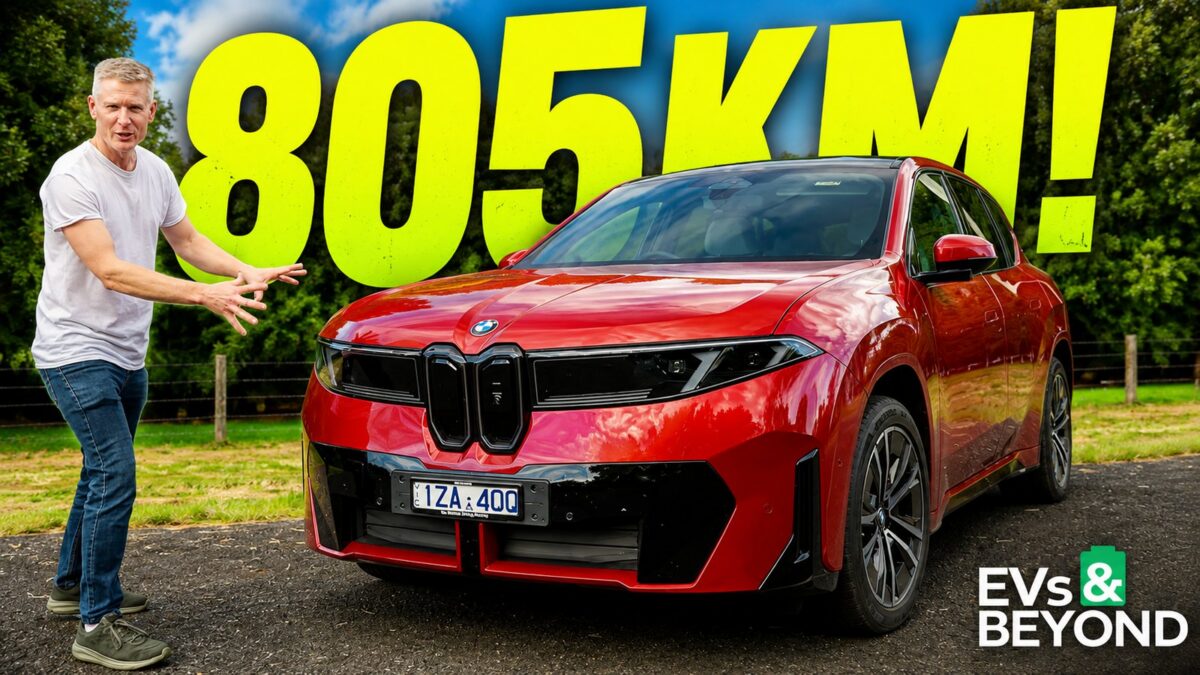
BMW’s clean-sheet electric SUV lands here at $125,900 with up to 805km of range. Gavin Shoebridge drives it in New South Wales and comes back reluctantly impressed.
At a glance
- Price
- $125,900
- Range
- 678-805 km (WLTP)
- Battery
- 113.4 kWh (108.7 usable)
- Power / torque
- 345 kW / 645 Nm
- Drivetrain
- Dual motor AWD
The alarm went off at 1am so I could jump the ditch and drive a car BMW reckons is a game changer. Problem is, we’ve all heard that phrase often enough for it to stop registering, so I went across with my expectations firmly parked.
I’ve come back mildly irritated about that, because they might be right.
The iX3 is the first production car on the Neue Klasse architecture, named for the range that hauled BMW back from the brink in the 1960s. This one doesn’t have quite so much riding on it, but the platform, battery, electronics and design language are all new, along with the way the car thinks. New Zealand pricing for the launch variant, the 50 xDrive, is $125,900, and M Sport is standard here rather than an option.
The numbers
Two motors give 345kW and 645Nm, good for 0-100km/h in 4.9 seconds. The front axle contributes 123kW and the rear unit is much larger at 240kW, so the weight split sits close to 50:50 and the car still behaves like a rear-driven BMW when you lean on it.
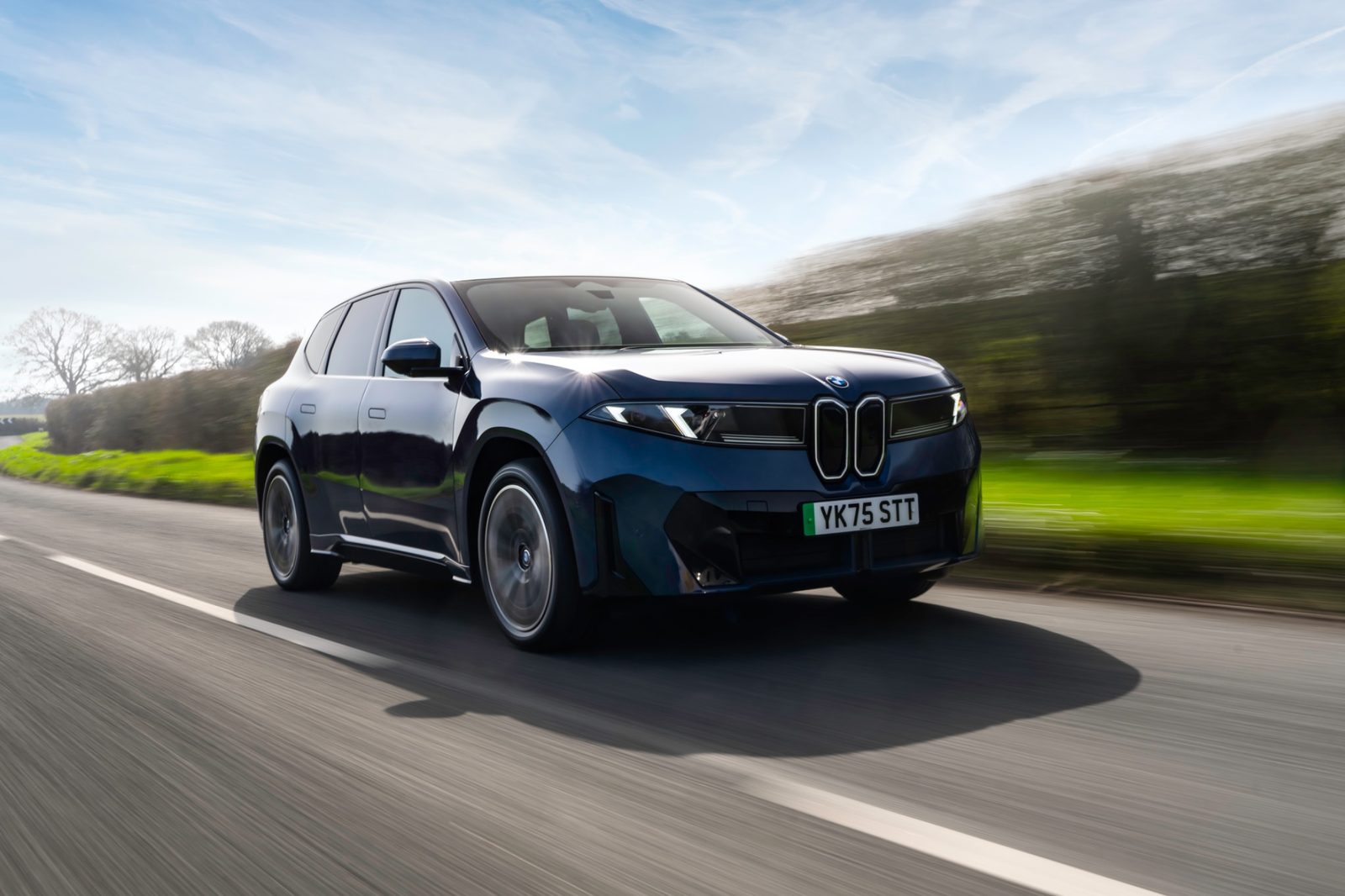
The battery holds 113.4kWh with 108.7kWh usable, and the WLTP range figure runs to 805km.
Fifteen years ago that number belonged in the same category as flying cars. Take the usual New Zealand haircut of about 15 percent off WLTP and you’re still looking at roughly 670km in the real world, which puts Auckland to Wellington on one charge within comfortable reach. As some may know, I’ve done that trip on a single charge before, in a Polestar 3, with the air conditioning off on a summer’s day, and to add insult to injury a Prius overtook me at one stage. Safe to say it wasn’t a joyous experience, but the iX3 could probably manage it without the martyrdom.
If that range figure is the reason you’re buying, order carefully. BMW New Zealand quotes a spread of 678 to 805km depending on how the car is specified, and the standard 20-inch wheel comes in two styles, with only the aerodynamic-finned version delivering the full 805km. It costs nothing extra. Go up to the 21s or 22s and the number falls away.
DC charging peaks at 400kW on the 800-volt system, so 10 to 80 percent takes 21 minutes. We have no public chargers in New Zealand capable of feeding it that fast yet, so file that one under aspirational. More useful day to day, BMW says New Zealand cars get AC Charging Professional as standard, meaning 22kW three-phase rather than the 11kW the factory fits by default. With three phase at home you’re full in 5 hours 45 minutes, against 11 hours on 11kW.
On the road
BMW put us on roads around Ballina in New South Wales and warned us beforehand that the surfaces had some imperfections. That was generous. I’d always assumed Australian roads were better than ours, but I was quickly disabused of that notion.
It made for a useful test, because the iX3 weighs 2285kg on the DIN measure, or 2360kg the way BMW New Zealand quotes it, with the battery accounting for roughly a third of that. BMW confirms there’s no adaptive damping and no air suspension anywhere in the range, just a conventional setup engineered specifically for this platform. It is firm. You feel broken tarmac, and I suspect the back streets of Tokoroa will be less forgiving than anything I found in New South Wales.
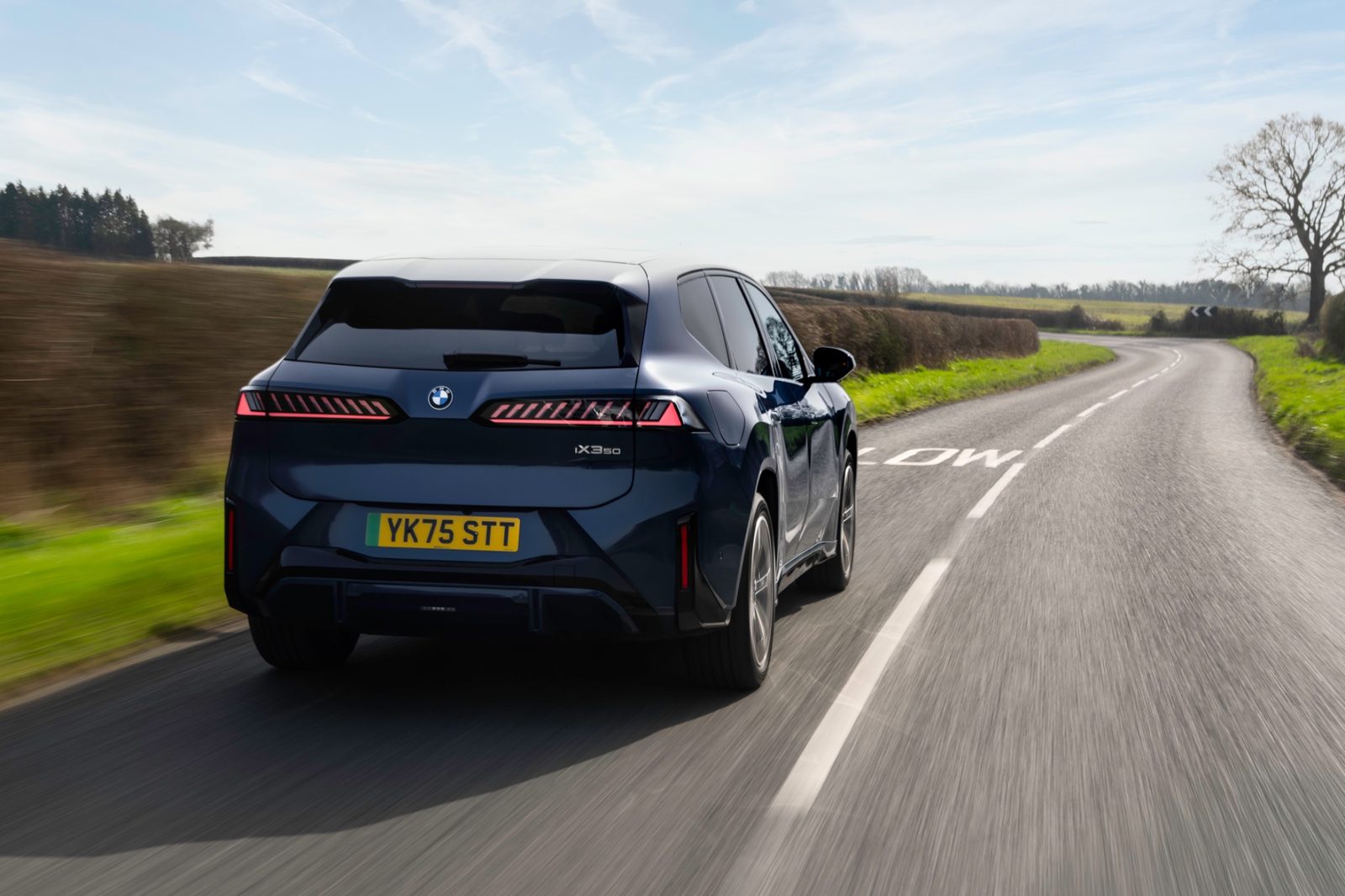
It doesn’t feel like 2.3 tonnes, though. There was exactly one moment across the whole drive where I felt the car working against its own mass, and it was barely perceptible. That’s proper engineering for something this heavy, and the firmness is the price of it. If you want a soft, pillowy, marshmallowy ride, this may not be for you. It’s a sporting SUV and it wants to be driven. After all, it’s a BMW.
Most of the credit goes to the Heart of Joy, the single control unit that now handles drivetrain, braking, steering and recuperation instead of separate computers negotiating with each other. It processes around ten times faster than what came before, and BMW groups several of the results under the name symbiotic drive. Bring the car to a halt and the rear motor takes over the last half metre of travel to cancel the head-nod, so you stop without the rebound. Come off a speed hump and it applies a touch of braking to stop the axle rocking. The blend between regenerative and friction braking is invisible, which anyone who has lived with an early EV will appreciate. Drop it into B mode and the adaptive regen reads the situation and sorts itself out.
Sport mode is worth finding, and the voice control actually locates it when asked, which isn’t something I say often. The suspension doesn’t change because it can’t, but the throttle sharpens and the seat bolsters inflate around you. There’s launch control too, activated with both pedals. The power delivery is binary, and it holds its line through mid-corner bumps without fuss.
Living with it
Inside is where it stops resembling any BMW I’ve ever sat in. The panoramic glass roof, standard here, is the most advanced the company has fitted, blocking all UVA and UVB and up to 90 percent of heat. Below it, Panoramic Vision runs almost the full width of the windscreen, pillar to pillar. It looks like a screen set 20 centimetres into the dashboard, but it’s a projection thrown up by three panels hidden underneath, and every Neue Klasse model from here will have it. The main touchscreen is 17.9 inches, angled towards the driver, and hexagonal.
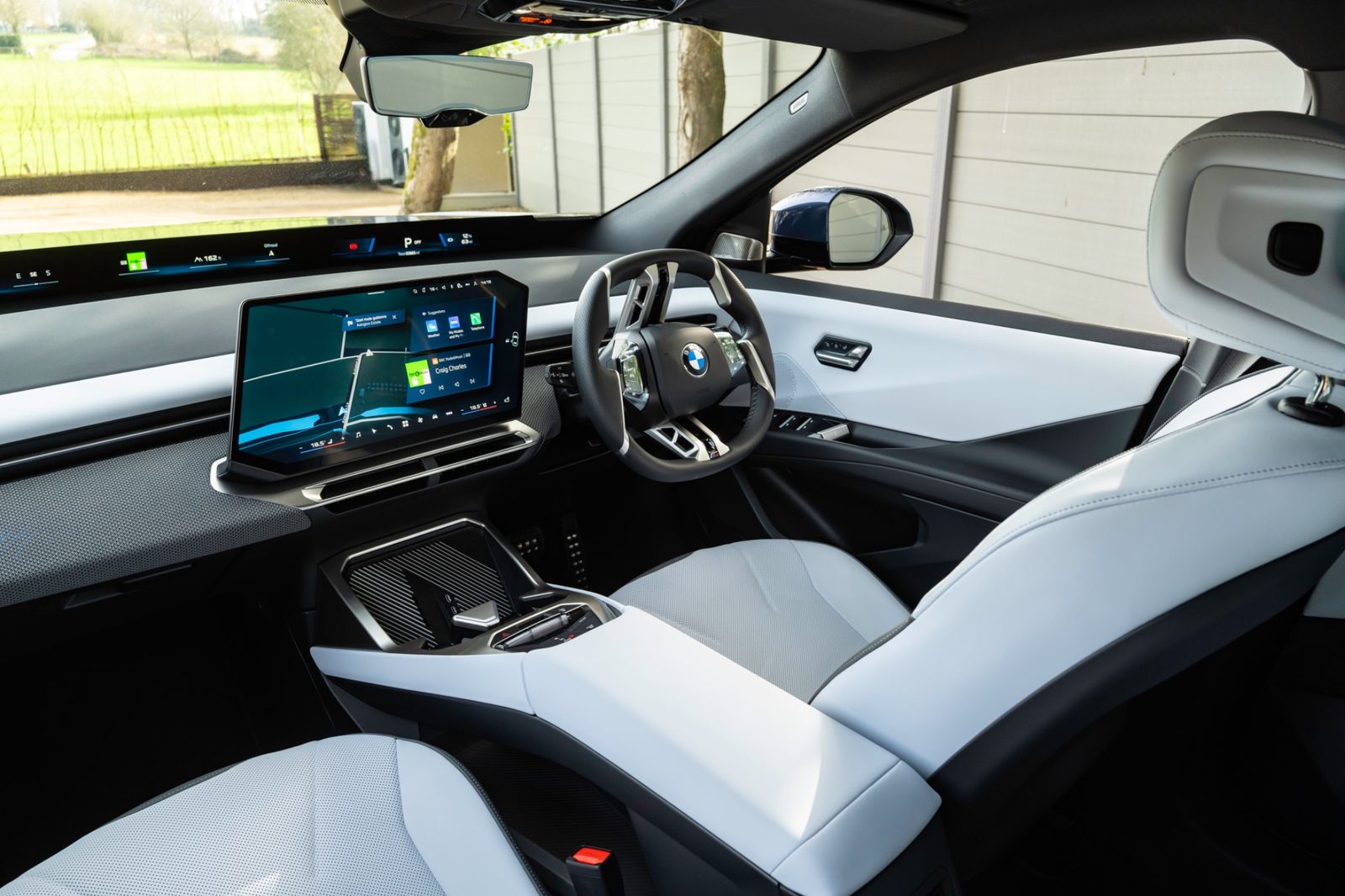
Running it all is the tenth generation of iDrive, and you can rearrange almost anything. You can also programme a start-up sequence so the car sets your temperature, starts your seat massage and silences the overspeed alert every time you get in. For those of us who learned to drive in cars that had the decency to shut up, that’s worth the entry fee on its own. Danke schön, BMW.
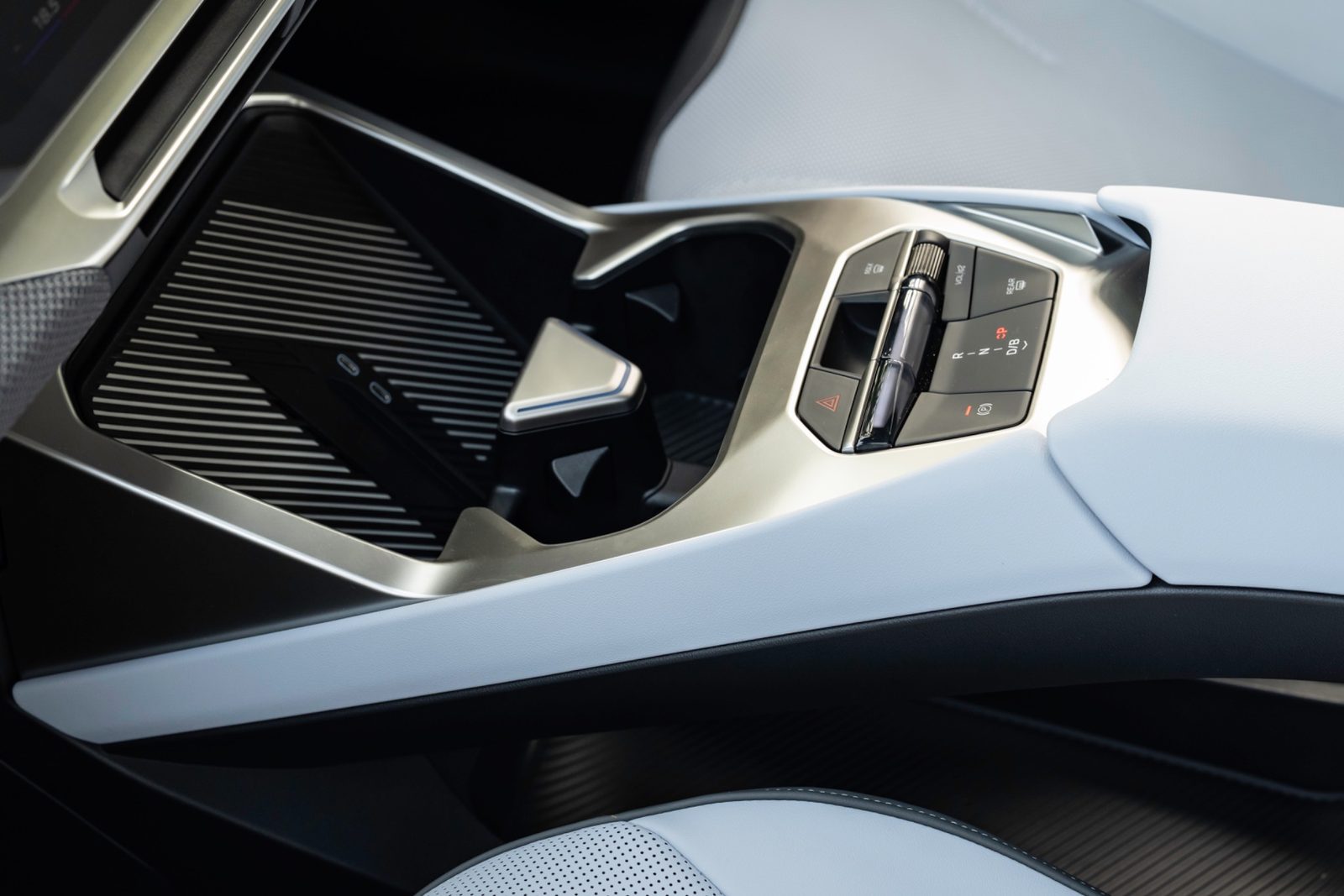
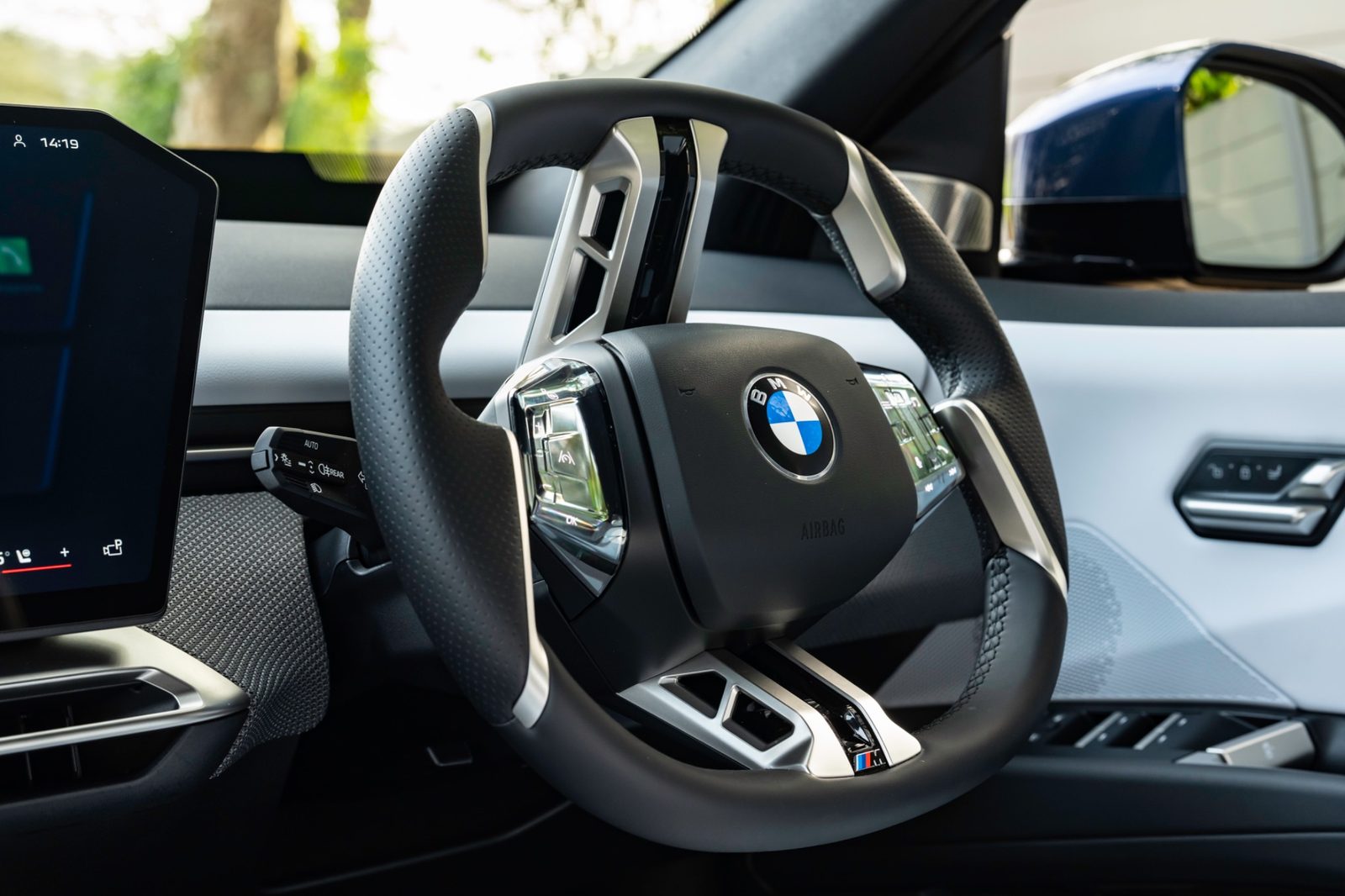
I do have complaints. The vents are adjusted through the screen, in the manner Tesla popularised, and putting a control on a screen doesn’t solve a problem that a knob had already solved. Reaching down to the climate controls earned me an averted gaze warning, which is a fine reward for using the interface BMW designed. The steering wheel is busy and I’m not sold on the flat top and bottom. It still beeps at you occasionally, though far less than most.
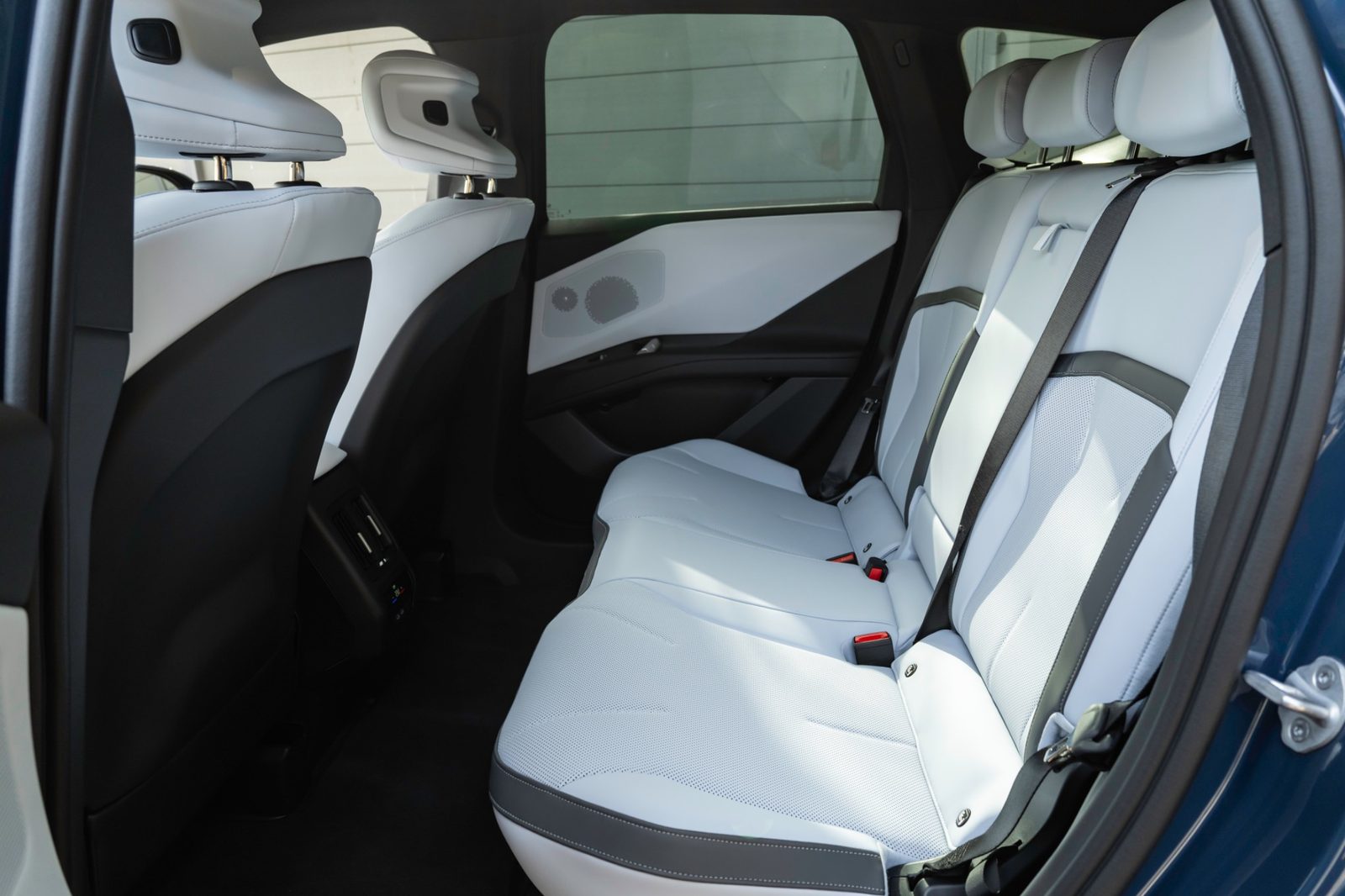
There’s decent space, helped by a 2897mm wheelbase that’s longer than the combustion X3’s. At 178cm I have plenty of head and legroom front and rear, though bigger drivers may find the centre console meets their left knee. Getting in didn’t produce my traditional old man groaning noise, which I count as an accolade. Multifunction front seats are standard, with heating and a seven-programme massage. The rear backrests adjust between 23 and 31 degrees, roughly Jetstar territory, and fold 40/20/40. Back there you get air vents, USB charging and a flat floor, but no seat heating. The boot holds 520 litres, or 1750 litres with the seats down, plus 58 litres under the bonnet where the factory stows the cables. A swing-away electric tow bar is available here, where Australia has to make do with a mechanical one, and it will pull 2000kg braked, which is strong for an EV.
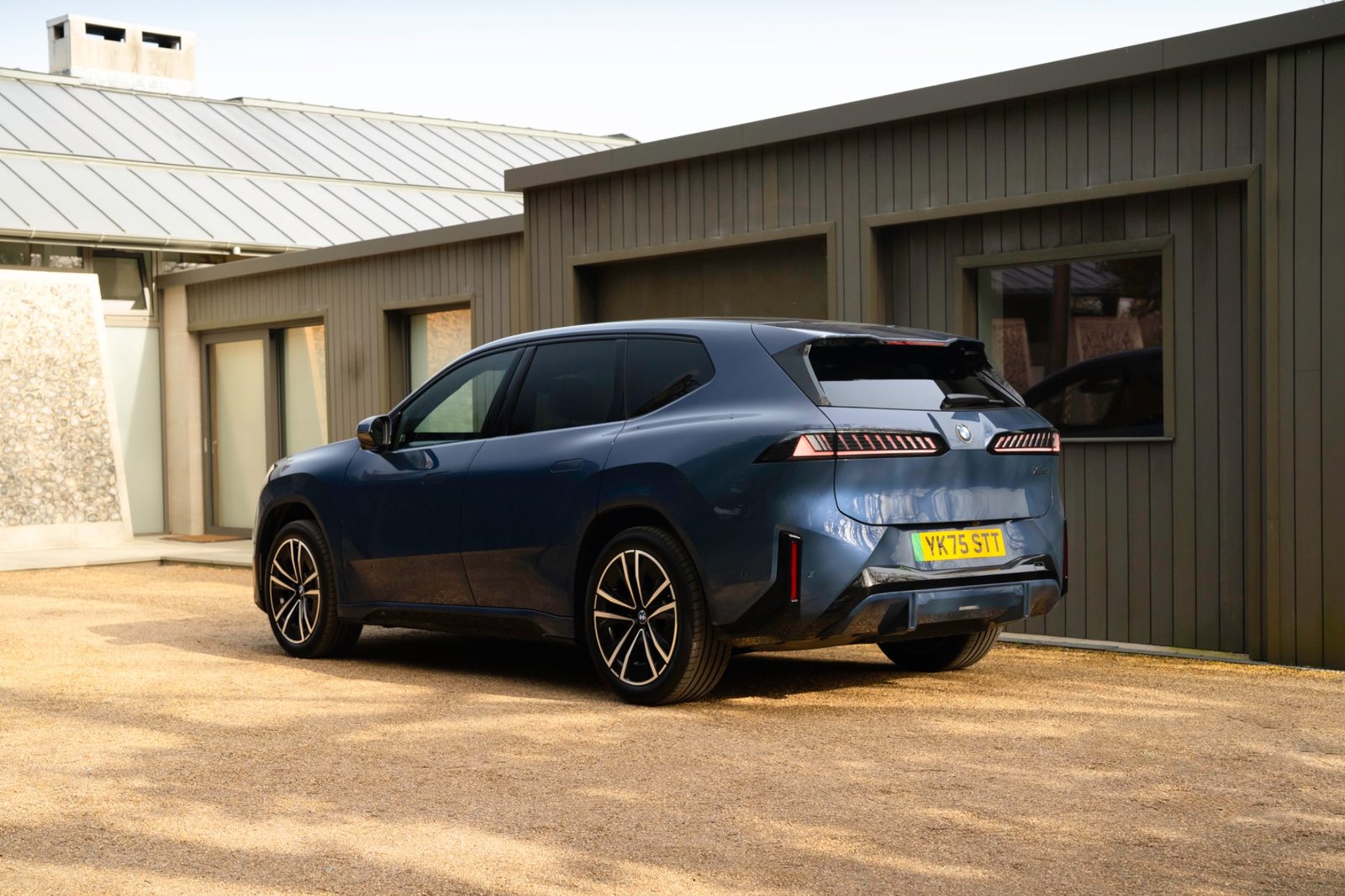
Outside, the bonnet line is higher than Willie Nelson, sitting above the window sill, and BMW says that’s deliberate. The oversized grille is gone, replaced by an illuminated panel with no airflow through it, because modern electric drivetrains simply don’t need it. Drag is down to 0.24, which is impressive for an SUV this size. The door handles sit flush and pop out as you approach, and if the car has iced over they pulsate back and forth to break through first, which is a thoughtful touch for anyone parking outside in Central Otago. The charge flap opens on its own as you walk up with the cable, then drops down over the connector like a small awning. The tail lights I’m less sure about, and the rear window is roughly the size of the one on a box of pasta.
The verdict
It arrives with a five-star ANCAP rating earned under the 2026 protocols, which is getting harder to achieve, and it does very nearly everything better than I expected it to. It’s expensive at $125,900, but the driving experience is unlike anything I’ve had before, and I’m not blowing smoke up BMW’s tailpipe when I say it.
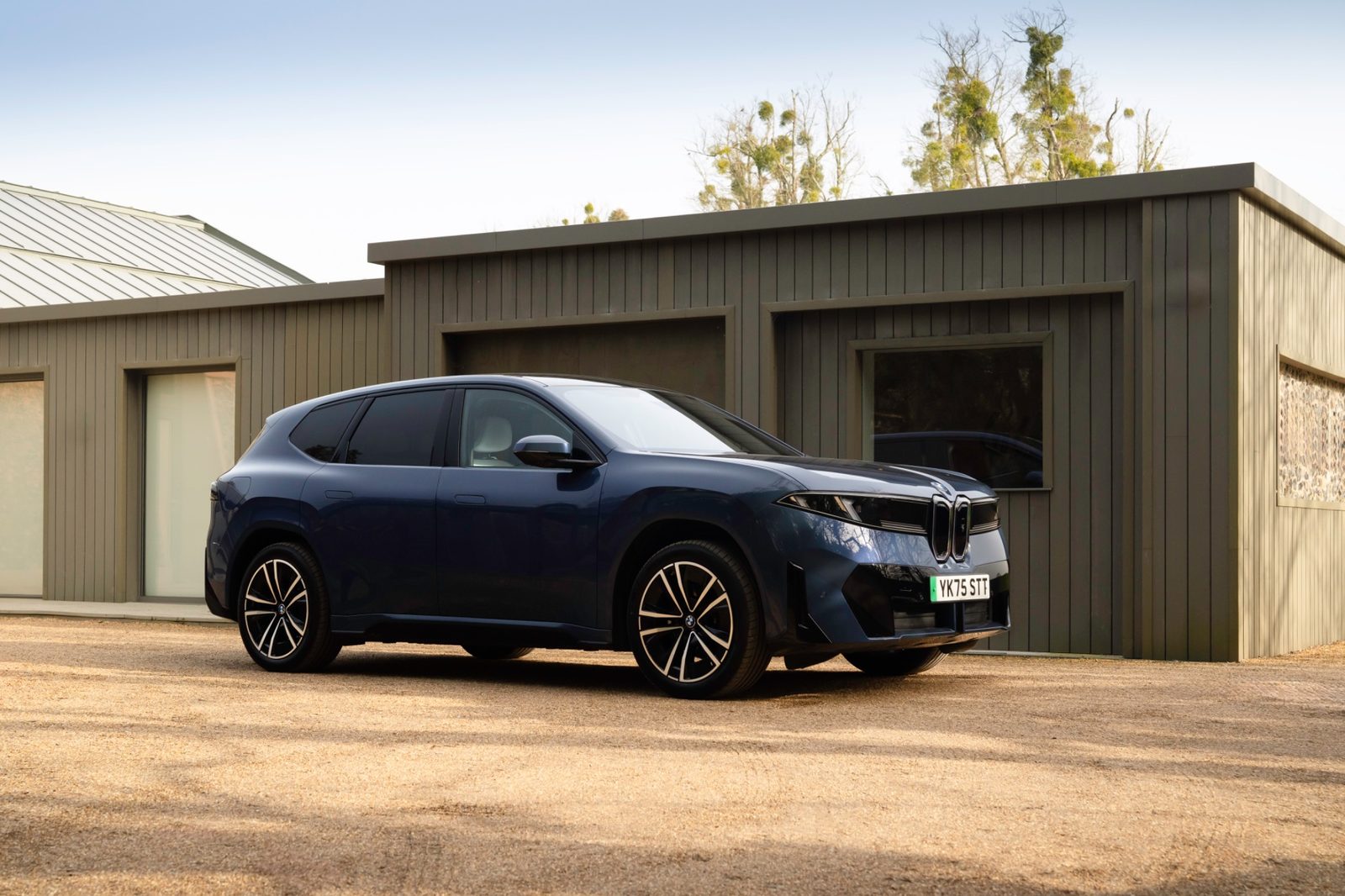
It’s a car that should be experienced. To the point I might just be a BMW fanboy now.
BMW iX3 50 xDrive
| Price | $125,900 |
| Powertrain | Dual motor, all-wheel drive |
| Output | 345kW / 645Nm (123kW front, 240kW rear) |
| Battery | 113.4kWh gross, 108.7kWh usable, NMC |
| Range | 678 to 805km WLTP |
| Consumption | 15.1 to 17.9kWh/100km WLTP |
| DC charging | 400kW, 10-80 percent in 21 minutes |
| AC charging | 22kW three-phase, 0-100 percent in 5h 45m |
| 0-100km/h | 4.9 seconds |
| Top speed | 210km/h |
| Drag coefficient | 0.24 |
| Kerb weight | 2285kg DIN, 2360kg EU |
| Wheelbase | 2897mm |
| Towing | 2000kg braked, 750kg unbraked |
| Boot | 520 to 1750 litres, plus 58 litres front |
| Wheels | 20-inch standard, 21 and 22-inch optional |
| Built in | Debrecen, Hungary |
| Safety | Five-star ANCAP, 2026 protocols |

Join the conversation