
Video: ‘I’m sold’, says US police officer after trying a Tesla patrol car
US police officers put UP.FIT Tesla Model Y patrol cars through driver training drills, with one declaring 'I'm sold'. NZ Police runs BMW i4s on highway patrol but says range keeps EVs off general duties.
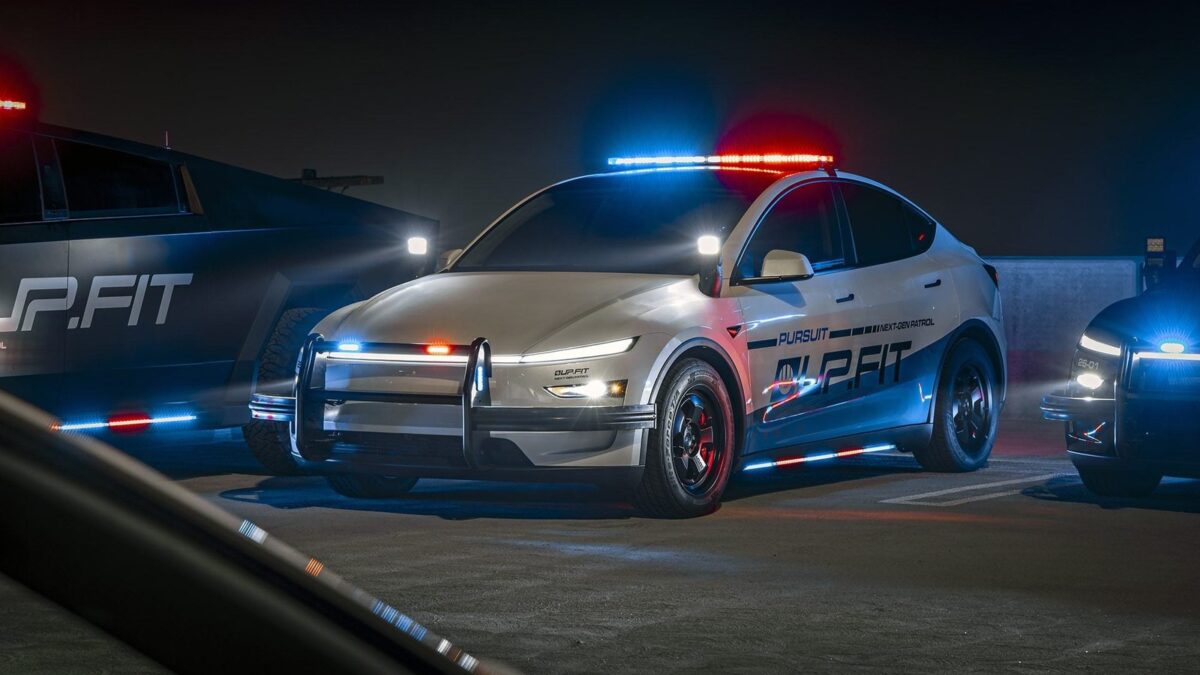
Officers from several American law enforcement agencies have put Tesla Model Y patrol cars through their standard driver training drills, many of them driving a Tesla for the first time, and one summed up the experience in two words: “I’m sold.”
The session was run by UP.FIT, the fleet division of California tuner Unplugged Performance, at the San Diego Sheriff’s Department’s Otay Mesa Emergency Vehicle Operations Course facility. Officers drove the converted Model Ys through the same exercises they use to train in their own Ford Explorers and Chevrolet Tahoes, and UP.FIT says they consistently picked out three things: the immediate torque when closing on a lead vehicle, the stability through turns, and regenerative braking that slows the car before the brake pedal is touched. A video from the company’s first such event, with the Gilbert Police Department in Arizona, has passed 400,000 views.
Tesla does not build a factory police vehicle, so UP.FIT does the conversion. Every patrol car gets upgraded brake pads, fluid and lines and a rear anti-roll bar, along with power systems that adapt the Model Y’s 16-volt and the Cybertruck’s 48-volt electrical architecture to the 12-volt equipment police cars rely on. Each build includes a Whelen lighting and siren controller, a prisoner partition, weapon mounts, a push bar, a light bar and a spotlight, with ballistic door protection and K9 enclosures among the options.
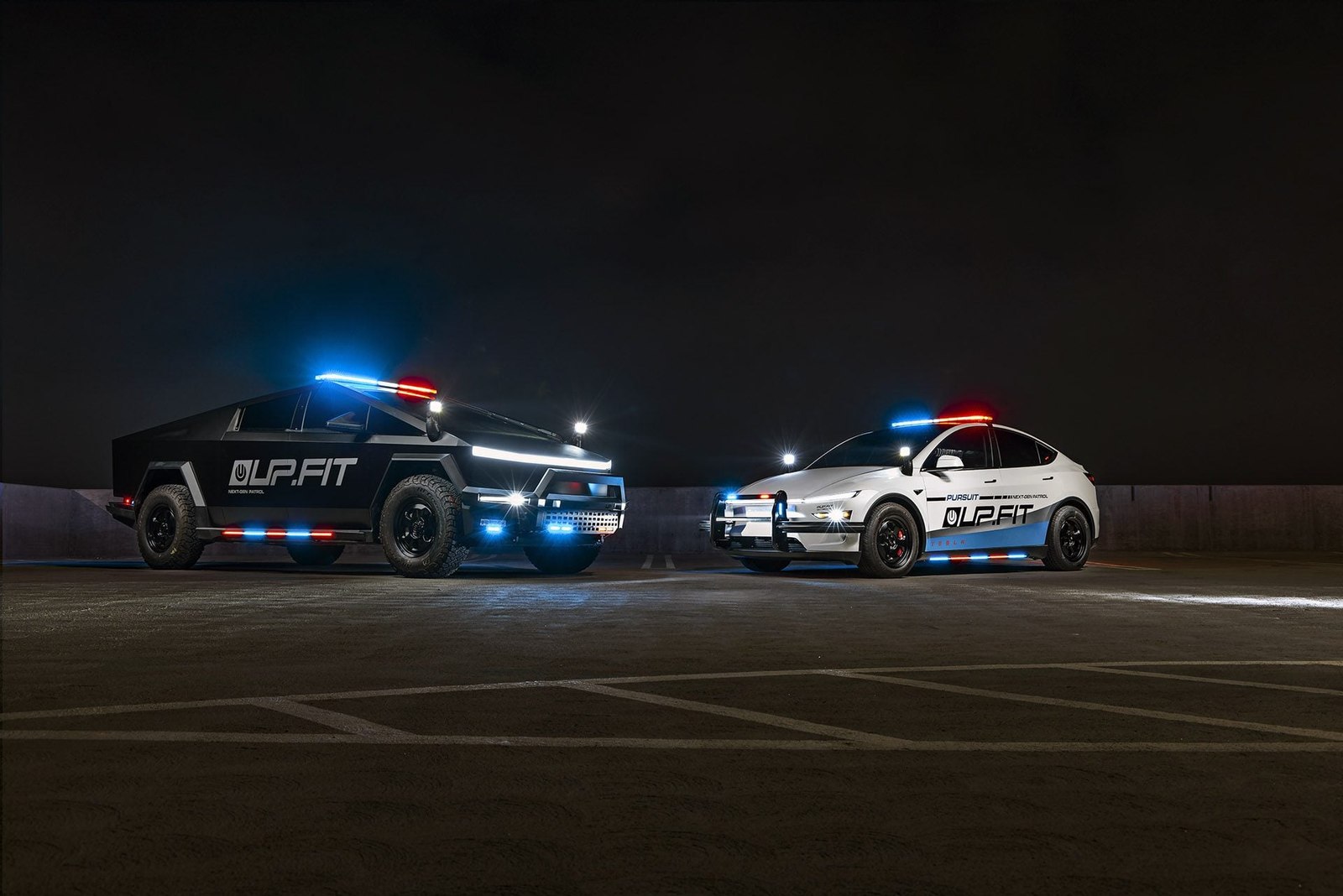
UP.FIT’s cost case centres on idling. It says a conventional police vehicle burns around 10,750 litres of fuel a year, about 6,180 litres of it while stationary, whereas the electric car runs its light bar, radio and in-car computer from the battery. The company puts five years of fuel and maintenance at about US$19,500 for its Model Y against almost US$84,000 for Ford’s Police Interceptor Utility, a saving of roughly US$12,900 a year per car. Citing US government data, it gives the Model Y a rollover risk of 7.9% against 15.1% for the Ford.
For tactical and specialty units the company offers the Cybertruck, whose stainless steel body is rated to stop 9mm and .45 ACP rounds, with packages for K9, SWAT, search and rescue and off-road work.
UP.FIT’s customers include South Pasadena in California, which in 2023 became the first US city to replace its entire police fleet with EVs, the Las Vegas Metropolitan Police Department’s Cybertruck fleet, and Murphy in Texas, which took the first patrol versions of the updated Model Y in February.
New Zealand Police runs five BMW i4s with highway patrol, which have been in the fleet since a 2023 trial, and uses Hyundai Kona and Ioniq 5 EVs in non-frontline roles. General duties cars must cover a planning range of about 500km per shift, which acting national fleet manager Leighton Hamlin told our sister outlet NZ Autocar last month remains the barrier to electric frontline patrol. Asked about the Model Y specifically, his verdict was: “Pretty cool. Super fast car. Glass roof though, bit hard for antennas.”
Join the conversation