
Written-off Tesla Model 3s stay off fast charging after High Court declines review
An owner of two repaired, written-off Tesla Model 3s has lost a High Court bid to overturn a ruling that Tesla could disable their DC fast charging.
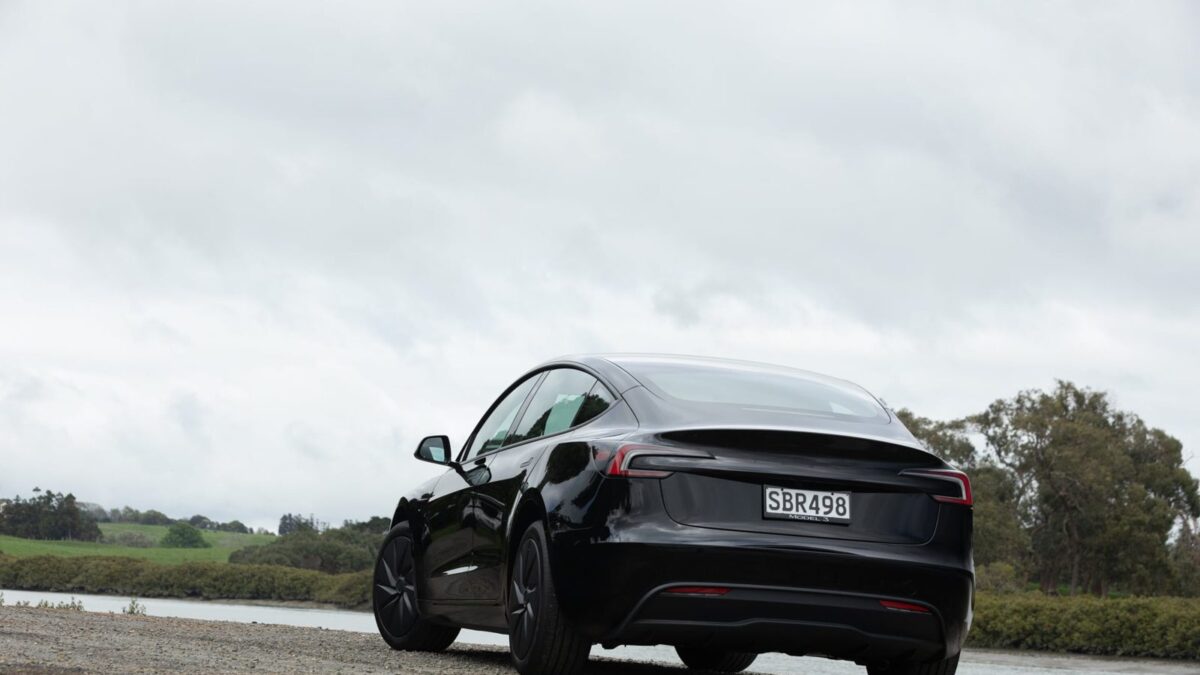
A New Zealand owner of two repaired, written-off Tesla Model 3s has lost a High Court bid to overturn a ruling that Tesla was entitled to disable their DC fast charging.
The High Court has declined to review the Disputes Tribunal decision, which found Tesla’s policy of switching off Supercharging on structurally damaged cars was reasonable, even after both cars were repaired and reregistered.
Wellington electrical engineer Peter Goodricke bought the two cars through Turners’ damaged vehicle auctions in August and September 2024. Both had been written off by their former owners’ insurers and deregistered. He had them repaired, and both passed the inspection required for reregistration.
Why Tesla disabled fast charging
Tesla monitors the NZTA register. Under its Unsupported Vehicle Policy, published on its website, it designated each car an unsupported vehicle once the register listed it as structurally damaged, and sent an over-the-air update disabling DC fast charging on 26 August and 3 September 2024.
The updates took effect after Goodricke added the cars to his Tesla account and connected them through the app, on 30 October 2024 for one car and 29 January 2025 for the other. From then on they could only be charged from a regular power point, which he said can take days. Both cars had charged normally when he first used them with only the key.
Tesla offered to inspect the cars at $1,624.43 each, with fast charging restored only if it was satisfied it was safe to do so. It said damaged high-voltage batteries can, in rare cases, cause serious fires and internal cell damage can be hard to detect.
Disputes Tribunal decisions
Goodricke took Tesla to the Disputes Tribunal, claiming breaches of the Fair Trading Act and the Consumer Guarantees Act. He did not claim against Turners, saying it had done nothing wrong.
The tribunal dismissed the claim in September 2025. The referee found Tesla’s policy was not misleading, deceptive or unconscionable, and that a buyer of a car sold as damaged takes on some risk.
“I accept that Tesla has a legitimate interest in ensuring its cars are safe, and that they are entitled to have such a policy. It may be correct that Peter does have an ability to assess the car’s battery. However, I consider that Tesla cannot know that,” the referee said.
“Ultimately, when a consumer knowingly acquires a car that is listed as damaged, I find it is reasonable to assume the consumer has taken on the risk that the car may have issues or may have a loss of functionality.”
A rehearing application, arguing the referee had not dealt with the Consumer Guarantees Act claim, was dismissed in November 2025. The referee said the act had little if any application because Goodricke bought a damaged car from a different company, advertised as such.
High Court review
Goodricke did not appeal to the District Court, telling the High Court he could not show the tribunal hearing had been run unfairly, which is the only ground of appeal. He instead applied for judicial review, representing himself.
Justice Boldt dismissed the application on 15 October, finding the grounds were in substance a challenge to the merits of the tribunal’s decision. He noted the tribunal decides cases on their substantial merits and justice and is not bound by strict legal rights.
“When this case is assessed in light of s 18(6), it is clear the referee asked himself the right question, namely whether it was reasonable for a manufacturer in Tesla’s position, concerned about the fact its high voltage batteries can become volatile and dangerous when damaged, to disable a vehicle’s fast-charging until satisfied it is safe,” the judge said.
Tesla’s remote access to owners’ cars
He also addressed Tesla’s ability to change cars after sale.
“Tesla, unlike most car manufacturers, retains the ability to reach into individual vehicles long after their sale and make alterations which limit their functionality. That power is remarkable and may be exercised only in the most tightly constrained circumstances. Self-evidently, a car belongs to its owner, who then assumes responsibility for its safe operation. That fundamental rule can only be displaced if there is a clear legal basis to do so,” he said.
Tesla’s counsel accepted the company has no unilateral right to alter a car once it belongs to someone else, and that publishing a policy on its website is not enough on its own where there is no contract with the owner. Both sides agreed Goodricke could not have used the Tesla app without first agreeing to Tesla’s terms and conditions, though there was no evidence on that point before the court.
The judge added that, although it would not have mattered if the referee had erred in law, he was satisfied the Consumer Guarantees Act had been applied correctly and was not persuaded the cars stopped being of acceptable quality after the updates. Tesla’s website makes a clear exception to fast charging for damaged and deregistered vehicles, he said.
Goodricke was ordered to pay Tesla $26,827 in costs plus $257.40 in disbursements. The judge declined Tesla’s request for increased costs, noting Goodricke was a litigant in person.
The judgment is Goodricke v Disputes Tribunal [2026] NZHC 3185.
Join the conversation