
First operational EV for DHL Express Australia
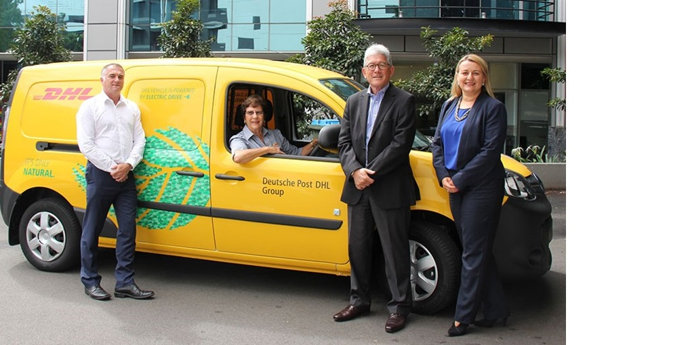
DHL Express is putting its first fully electric vehicle on Australian roads following a successful trial.
The fully-electric Renault Kangoo ZE Van and will be used as the company mail car in Sydney, driving between DHL Express offices.
The Kangoo ZE is joining a DHL Express fleet of hybrid delivery vans. It can complete a journey of an estimated 100+ kilometres on a single charge, eliminating the production of 4.75 tonnes of carbon emissions from the environment over the course of one year. It runs on a Lithium-ion battery and takes six to nine hours to complete a full charge.
“In 2016, we found that a wider rollout of electric vehicles within DHL Express Australia’s courier fleet would require more conveniently located electric charging stations in Australian cities and vans that can travel longer distances without needing to recharge,” says DHL Express Oceania chief executive officer Gary Edstein.
“Compared to small, densely populated European and Asian cities where electric vehicles are currently operating, Australian cities have unique geographical challenges regarding distance,” he says.
However, Edstein says launching the Kangoo ZE is another step towards instituting more environmentally friendly solutions across DHL Express.
“As a global company, we acknowledge the environmental impact of our day-to-day operations and our responsibility to reduce this wherever possible,” says Edstein.
“Globally, we have seen a 30% improvement in our carbon efficiency since 2008 – and we are aiming to further improve this through new green initiatives like this electric vehicle,” he says.
DHL Express has successfully introduced electric vehicles, including electric vans and scooters, on routes in Germany, Japan and Taiwan.
DHL’s parent company, Deutsche Post DHL Group, is proceeding with increased production of its StreetScooter electric vehicle in 2017.
The company announced on March 8 the target of reducing all logistics-related emissions to zero by 2050.
It has also outlined some interim goals, including increasing its carbon efficiency by 50% and operating 70% of its own first- and last-mile delivery with clean transport solutions by 2025.


Join the conversation