
Rolls Royce snubs hybrid – electric or nothing

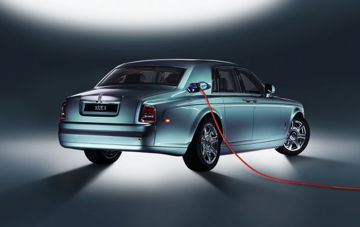
Rolls-Royce Motor Cars says it isn’t bothered with combining internal combustion engines with electric motors, insisting all-electric is the best transition.
“Electrification is the way forward and there will be no in-between steps for us like hybridisation,” says Rolls-Royce CEO Torsten Muller-Otvos to British magazine Autocar at the Goodwood Festival of Speed.
Muller says Rolls-Royce is only interested in the long-term goals of all-electric transport.
“It is the propulsion system for the future, make no error,” he says, “There is a time – nobody can predict when – when there will be no combustion engines. That will take a long time, but it will happen.”
Taking an ultra slow-burn approach, Muller reminds that the uber-luxury marque is in no hurry to innovate.
“For our customers it’s not really a requirement because many have chauffeurs. So for that reason, it exists already. I haven’t had a single customer say to me, ‘Torsten, when is the autonomous Rolls-Royce coming?'”
“Rolls-Royce brand is not, in a way, a game-changer when it comes to revolutionary technology. Our customers are doing so for reasons of utmost luxury, so there can be no imperfections,” he adds.
Rolls-Royce has produced multiple electrified, autonomous concept vehicles in the past, including the Vision Next 100 concept in 2016. It was built as part of parent company BMW’s centenary celebrations and was codenamed 103EX with an all-electric drivetrain, hand-built and touted as the poster car for RR’s future customer direction of building entirely bespoke vehicles from the ground up.
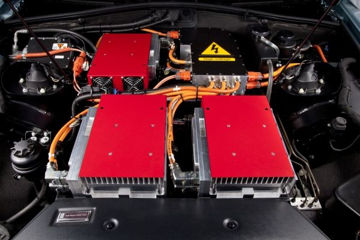
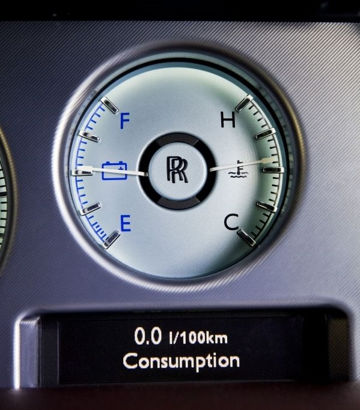 In 2011 the British carmaker also made the 102EX which it described as, at the time, the world’s first ultra-luxury battery electric vehicle, based on the Phantom. It was used as a customer test bed with clients in Europe, the Middle East, Asia and North America casting their opinions on the alternative drivetrain concept. Nicknamed the Phantom EE, its 6.75-litre V12 was replaced with a 290kW, 800Nm combination of lithium-ion battery pack and dual electric motors.
The Phantom EE achieved a driving range of about 200km at a cost of €200,000 at the time, (NZ$284,000) today.

Join the conversation