
E-waste warning from UN
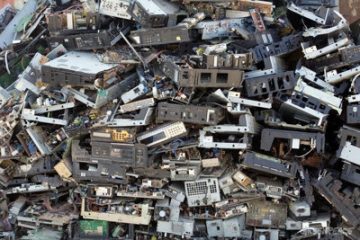
Waste from discarded electronics is piling up worldwide, prompting the United Nations to call for better recycling.
About 44.7 million tonnes of e-waste was generated around the world in 2016, up 8% from two years earlier, according to a report from the UN’s International Telecommunication Union, the UN University (UNU) and the International Solid Waste Association, news agency AFP reports.
That’s the equivalent of 4500 Eiffel Towers, the report says, adding that the amount is expected to swell “significantly” over coming decades.
By 2021, the world is likely be cluttered with 52.2 million tonnes of e-waste, today comprising domestic appliances such as fridges and washing machines, and increasingly mobile phones and computers.
It will likely include items from wrecked EVs, autonomous vehicles and related technology in future.
The waste, which presents serious risks to human health and the environment, is rarely recycled or properly discarded – most of it dumped or incinerated, the report says.
Only 20% (8.9 tonnes) of all e-waste generated last year was documented as properly recycled, while what happens to 76% of all e-waste around the globe is unknown, it adds.
“E-waste management is an urgent issue in today’s digitally dependent world, where use of electronic devices is ever increasing,” ITU chief Houlin Zhao says.
There is also an economic argument for more recycling. The total value of all raw materials in e-waste, including gold, is estimated to be worth around 55 billion euros (NZ$92.5 billion) — more than most countries’ national economies, the report says.
A growing number of countries are adopting e-waste management policies.
Today, 66% of the global population, living in 67 countries, is covered by such policies, up from just 44% in 2014, the report says.
ITU’s e-waste technical expert Vanessa Gray suggests technology companies should consider the e-waste impact of constantly pushing out new versions of products.
There are “also things that we can avoid, for example cables… that (are) not compatible with different devices,” she says.
Perhaps the most promising approach to reducing e-waste is a system where consumers no longer purchase devices, but instead only the services they provide, Ruediger Kuehr of UNU’s Sustainable Cycles Programme told AFP.
If companies retain ownership of devices and appliances, providing consumers with replacements when needed, they would have an incentive to properly collect and recycle them and improper disposal and storage of the equipment would “substantially decrease, or ideally disappear”.


Join the conversation