
Used batteries in demand
This story first appeared in the December issue of EVtalk – CLICK HERE to download the magazine FREE
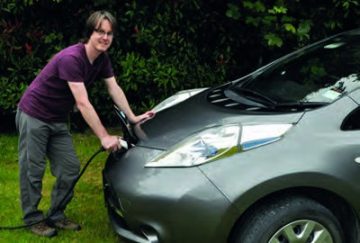 Try getting a second-hand electric vehicle battery and you might appreciate some of the issues the industry has been grappling with.
Until now, they’ve been nigh on impossible to obtain. That’s mainly because of international shipping conventions – particularly around air transport of lithium-ion batteries which are Class 9 dangerous goods.
One company involved in battery refurbishment has to rely on EV wrecking to get any, which nowhere near meets demand.
EV dealers here are keen to get a guaranteed supply so they can provide back-up in the unlikely event an EV they’ve sold has a battery problem.
Issues around second-hand lithium battery imports for EVs have been tackled by the Imported Motor Vehicle Industry Association (VIA).
The Government hasn’t been able to do much about it because the problem has mainly been centred on international conventions. However, various government departments have been helping to get the matter sorted.
“Some of our members who came to us (VIA) said they wanted to do this to give a decent warranty and be able to provide a refurbished second-hand battery,” VIA chief executive officer David Vinsen says.
“So, I went to various government departments like Customs and the Ministry of Transport to get them together with shipping company representatives and brokers and work out how to deal with it.”
Vinsen says systems and protocols are now in place so anyone contemplating getting second-hand EV batteries from overseas should first approach the VIA and then their shipping agency or others involved to work it through.
“It’s typical of what happens within our industry,” Vinsen says.
“People come to us with a problem and we research it and introduce standard operating procedures. If it were easy, everyone would be doing it.”
Problems such as the battery issue create opportunities, he says.
Carl Barlev, who founded Blue Cars in Auckland about four years ago, has been working on battery refurbishment for the past 18 months and sources replacement cells or modules from wrecked EVs.
“There’s not enough so there’s a large demand for the batteries,” he says.
An electrical engineer who has worked on power projects around the world, Barlev managed the installation of Tesla’s first supercharger stations in Norway and helped with its European expansion programme.
Passionate about sustainability, Barlev says rebalancing battery cells can add two to four years to the life of an EV.
Rebalancing a single cell can cost around $800-$900 but loss of battery capacity cannot be fixed other than by topping up the whole battery pack.
Refurbishing an EV battery could cost between $2000 and $5000.
Newer EVs have better batteries so it’s not such as issue for them.
“We use batteries that are already in the country and as supplies increase then so will demand,” Barlev says.
Putting new batteries in older model EVs might take some pressure off, especially if battery costs drop, he says.
Motor Industry Association (MIA) chief executive David Crawford says the new vehicle sector is investigating a process for servicing and refurbishing batteries and he hopes to have some idea around its commercial viability by the middle of next year.
EV batteries are generally lasting well in New Zealand, a Flip the Fleet citizen science coalition of electric and plug-in vehicles has found.
Its statistician Dr Daniel Myall says one of the most common EVs on our roads, the Nissan Leaf, has an average 2% to 4% loss of range each year.
Flip the Fleet says there’s no evidence battery capacity is greatly affected by distance travelled or how many fast charges the EV has had.
Join the conversation