
Jucy electric fleet for tourists
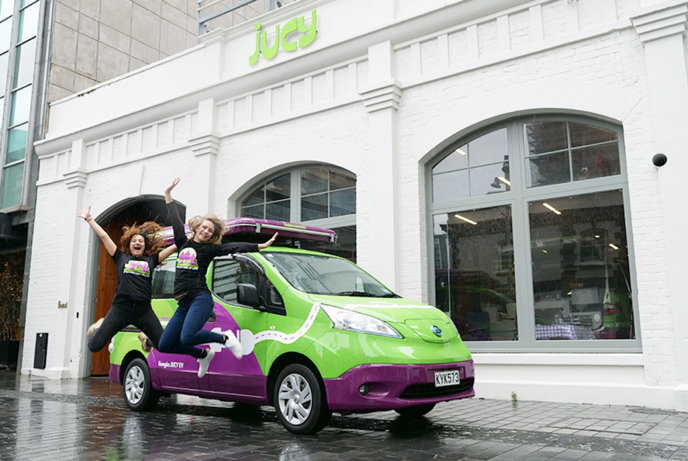
Thousands of international tourists visiting New Zealand could be driving electric campervans within two years after a new electric vehicle (EV) trial.
It will mark the first time an electric campervan has been rented to tourists in the market.
Two visiting French students, Heloise de Bokay and Solene Trinquet, who came to Jucy’s attention from an interview in EVtalk are set to travel thousands of kilometres throughout the North Island in a prototype Jucy campervan powered only by electricity.
The van is a Nissan eNV- 200, converted to a camper and the tourists plan to use it to visit around 30 destinations in the North Island over a three-week period.
Jucy chief executive Tim Alpe says the tourism rental company aims to introduce a new category of electric vehicle to its fleet to meet growing demand from millennial tourists.
 “Electric vehicles are the future of the Jucy campervan fleet and this trial is the ideal platform to test our product offering for customers.
“This market segment in particular want more environmentally sustainable travel options. At the same time, this gives our tourists more choice and cheaper running costs.”
Paris Sorbonne University environmental law student Heloise de Bokay says tourism is becoming less sustainable which is why they wanted a more eco- friendly mode of transport to explore New Zealand.
“Electric cars are a more sensible solution in your country as more than 80% of your energy comes from renewable sources compared to only 22% in France,” she says.
Alpe says further expansion of the programme will need additional investment in charging infrastructure and vehicles that can travel further distances.
“Campervans are the perfect vehicle to be electrically powered as tourists tend to drive during the day and can then recharge overnight at their campground.
“One of the biggest barriers we will face in the short term is lack of infrastructure to support EV charging.
“We are working with camping grounds to introduce suitable facilities for overnight charging but there is also a need to bring in rapid chargers on the roads between main centres.
“At the same time, there are range limitations in the vehicles that need to be overcome to ensure tourists can travel long distances across the country without the need to constantly re- charge their batteries.
“Our future as a sustainable tourist market will be short-lived if our customer experience is impacted by the range their vehicle can travel each day.”
Alpe says the company plans to introduce charging stations at their branches as well as Jucy Snooze hotels across New Zealand and Australia.


Join the conversation