
Charging up in minutes likely
 The possibility of being able to charge an electric vehicle in minutes rather than hours may be close.
Researchers have discovered a new material that could boost the performance of a carbon-based supercapacitor (or ultracapacitor), an energy storage device that can be charged very quickly and offload its power fast.
Superdielectrics research director Dr Donald Highgate says a material he originally developed for soft contact lenses is also surprisingly good at holding an electrostatic field, BBC News
reports.
Supercapacitors don’t produce electricity through chemical reactions as conventional batteries do, they create these electrostatic fields. And they don’t need rare materials such as cobalt.
Highgate is working with two universities to develop supercapacitors using the new polymer and hopes they can rival, or even surpass, lithium-ion batteries – provided they replicate prototype performance on a large scale.
So far, supercapacitors have been good at providing quick bursts of power – to start a car engine, for example, or to give trains a boost when accelerating. They’re also suited to harvesting energy from vehicles when they brake, making them an important EV component.
Seoul in South Korean plans to have 3500 supercapacitor-powered buses operating by 2020, and they’re also used in Shanghai, China.
PSA Peugeot Citroen has been using them in its cars since 2010.
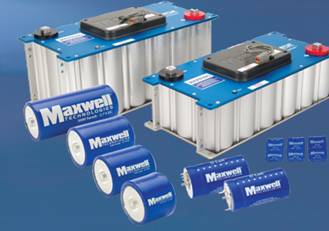
Supercapacitor maker Maxwell Technologies says more than a million vehicles now incorporate its products.
But supercapacitors haven’t been very good at holding much power or holding it for long.
Skeleton Technologies incorporates layers of graphene – a single layer of carbon atoms arranged in a hexagonal lattice – and other carbon-based materials in its supercapacitors.
These layers have a huge surface area – just 1g of graphene can cover 2000sqm, its chief executive Taavi Madiberk says.
This allows them to hold on to a lot more power.
His firm’s products are already used in hybrid vehicles, particularly buses and trucks.
Short-term, combining supercapacitors with lithium-ion batteries is probably the way to enjoy the best of both worlds, particularly in EVs, Madiberk says.

Join the conversation