
BMW iNext in 2021
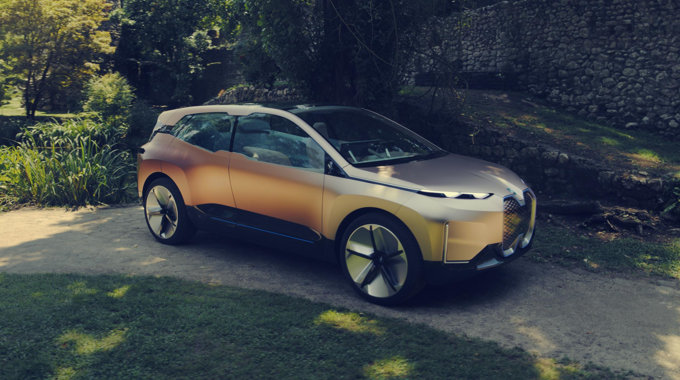
The BMW Vision iNext marks a next big step on a journey of transformation.
So says the BMW Group of its project to provide the company’s building blocks for the future.
Moving on from the electric BMW i3, the next step is complete in-car integration of autonomy, connectivity, electric and services, the car maker says.
BMW expects production of its iNext to start in 2021.
“The series-produced version of the BMW iNext will assume the role of a new technology flagship,” the company says.
“Personal mobility is set to experience significant change,” BMW AG management board member responsible for development Klaus Frohlich says.
“The possibilities opened up by autonomous driving and ever-expanding connectivity enable a whole new range of experiences and ways of shaping a journey. We have designed the all-electric BMW Vision iNext as a mobile environment that enhances quality of life.”
BMW Group design senior vice-president Adrian van Hooydonk says, “The BMW Vision iNext marks another next big step on that journey of transformation, showing how more intelligent vehicles can make our lives easier and more beautiful.”
The double-kidney grille is an “intelligence panel” housing various sensors and the windscreen extends into a large panoramic roof.
Large (24-inch) wheels are aerodynamically efficient, cameras assume the job of the exterior mirrors, while touch-sensitive illuminated graphics take the place of conventional door openers with the two large opposing doors having no B-pillar.
Rear lights extend a long way into the car’s rear end and the car’s aerodynamics are enhanced.
Drivers can either drive themselves in “Boost” electric-drive mode, or be driven in “Ease” mode which offers the driver and passengers a space for relaxation, interaction, entertainment or concentration.
Two individual seats in the front plus a one-piece bench in the rear provide room for up to four people.
The driver’s area is defined by the two visible digital display panels and the steering wheel which retracts slightly in Ease mode. The display panels switch from driving-related content to “Exploration Mode” with suggestions of places and events of interest.
The centre console has a matt, open-pore wood finish like a floating coffee table that continues through to the rear. Under the panel is a shell made from illuminated crystal glass atop a bronze-coloured base, refracting incoming light to bathe the interior.
Only when it is required by the driver or passengers does the technology become visible and operable. It is likely surfaces of wood or cloth will eventually be used for interactive displays through intelligent projection. The iNext highlights three different, visionary applications for this “shy tech” through an intelligent personal assistant (IPA), intelligent materials and intelligent beam.
The vehicle’s IPA switches on in response to the voice prompt “Hey BMW”, allowing drivers to even close their house windows.
When driving in “Boost” mode the control display can be operated using its touch functionality. But in “Ease” mode, the centre console’s wooden surface assumes this control function instead.
The intelligent beam technology can serve as both a reading light and an interactive projection screen.

Join the conversation