
New batteries mean more BMW i brand range
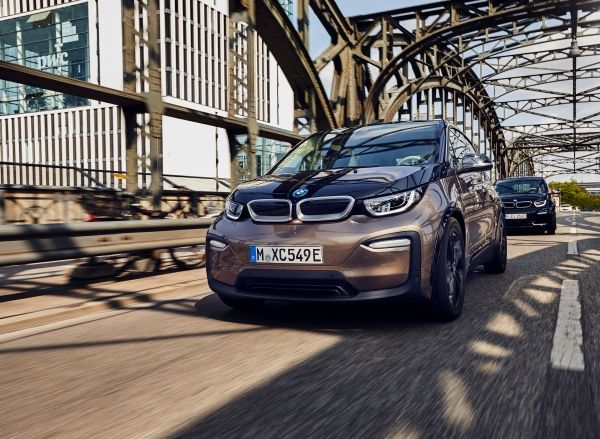
A new generation of high-voltage 42.2kWh batteries enables the BMW i3 and the BMW i3s (120Ah) to achieve an enhanced 260km range as of November 2018 production.
The two models have increased their everyday range almost 30% on the previous upper limit of around 200km.
Installed deep in the vehicle’s floor, the high-voltage battery is produced at the BMW plant in Dingolfing and consists of eight modules, each with 12 storage cells.
The battery size is unchanged even though the capacity and gross energy content are increased.
This is yet another major step towards increased range, BMW Group says. By comparison, at the market launch of the BMW i3 in 2013, the equivalent figures were 60Ah and 22.6kWh, while the second-generation battery introduced in 2016 reaches 94Ah and 33kWh.
Driving performance and energy consumption remain virtually unaltered by the increased range achieved by the latest advancements. The BMW i3, powered by a 125kW electric motor, accelerates in 7.3 seconds from zero to 100km/h, while the BMW i3s with 135kW completes the standard sprint in 6.9 seconds.
This means that the two models both set the benchmark for sporty performance within their vehicle segment.
The combined power consumption of the BMW i3 (120Ah) is between 13.6 and 13.1kWh per 100km, while the BMW i3s (120Ah) has a power consumption of 14.3kWh per 100km.
The range of the BMW i3 (120Ah) is 380 to 395km (previously 290 to 300km) according to NEDC, and 285 to 310km (previously 235-255km) under the WLTP test cycle, both according to the tyre format selected.
For the BMW i3s (120Ah), a range of 360km (previously 280 km) has been calculated according to NEDC, and a range of 270 to 285km (previously 235-245 km) according to WLTP.
In everyday conditions, both models now achieve a range of 260km (previously 200km).
The standard charging cable is designed to be plugged into a conventional household socket, with the battery able to be charged to up to 80% in about 15 hours with a charging capacity of 2.4kW.
Connection to the BMW i Wallbox enables rapid three-phase charging with a capacity of 11 kW, reaching 80% in 3.2 hours.
The power electronics and high-voltage battery in the BMW i3 and BMW i3s can also be used in conjunction with DC quick-charging stations with 50kW charging capacity, the battery taking 42 minutes to reach 80%.
The BMW i3 (120Ah) and the BMW i3s (120Ah) have a much more favourable carbon dioxide footprint across the entire vehicle lifecycle.
A future sports package is also a new option for the BMW i3.
The key element is the sports suspension, which is a standard feature in the BMW i3s and includes specific dampers, springs and stabilisers, a suspension lowered by 10mm, a widened track and 20-inch light alloy wheels in Jet Black or Bicolor finish with mixed tyres.

Join the conversation