
Carbon capture for fuel
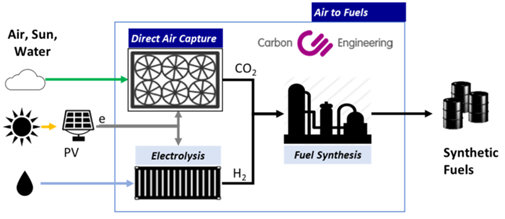
Sucking carbon out of the air to make automotive fuel has been successfully demonstrated by a Canadian company.
Carbon dioxide is removed from the atmosphere via a chemical process, then combined with hydrogen and oxygen to form fuel.
Carbon Engineering says in an update on its Direct Air Capture (DAC) and air to fuels technology project that its pilot plant in Squamish, British Columbia, continues to operate to allow extended testing and optimisation efforts with work continuing on the next growth phase.
About a tonne of carbon dioxide can be removed daily at the plant, providing about two barrels of fuel.
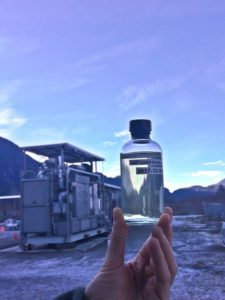 It’s working with partners and suppliers to deliver a DAC technology that is both cost effective and scalable to provide an alternative fuel for cars, trucks and aircraft.
The first step in the process involves a “wet scrubbing” air contactor which captures CO₂ and converts it into carbonate.
The second step is called a “pellet reactor” which converts the carbonate solution from the air contactor into small pellets of calcium carbonate.
The third step involves a circulating fluid bed calciner which acts like a kiln to heat up the calcium carbonate pellets so they break apart, releasing the CO₂ as a gas and leaving behind calcium oxide.
Carbon Engineering’s fuels to air technology enables synthesis of clean transportation fuels, including gasoline, diesel, and Jet-A, using atmospheric CO₂ and hydrogen split from water, and powered by clean electricity, the company says.
It says the world is transitioning to clean economies and clean fuels, with its alternative fuel cleaner burning than fossil fuels and which also can be carbon neutral on a life-cycle basis and directly compatible with existing infrastructure.
It’s now being scaled up into commercial markets. Individual DAC facilities can be built to capture nearly one million tonnes of CO₂ annually each, equivalent to the annual emissions of 250,000 average cars, Carbon Engineering says.
Overseas media reports more than seven companies worldwide are working on the idea.
Carbon Engineering’s fuel costs about 25% more than gasoline made from oil, but work is being done to reduce that.
Its plant uses some natural gas but has a carbon footprint considerably lower than for fossil fuel, and any conversion to solar or wind power could reduce it further so the fuel would be nearly carbon neutral, reports say.
The fuel is expected to particularly suit long-distance transport.
It’s also a way of reducing the atmosphere’s carbon dioxide content at a time when there’s considerable discussion around emissions and climate change.



Join the conversation