
Vector’s Tesla batteries queried

Questions are being asked about the usefulness of 24 Tesla Powerpack batteries bought in 2016 and installed at Vector’s Glen Innes substation.
Stuff claims it has a source who says Vector spent more than $10 million on the batteries, many of which have stayed in storage for more than two years.
The batteries failed to prove their worth during a subsequent outage, and another 61 are only now being installed at a Snells Beach substation, the source says, according to Stuff.
A few dozen more are apparently sitting in a store room, it says.
Vector chief executive Simon Mackenzie said in 2016 that the company had been able to defer a “conventional upgrade” of its Glen Innes substation by installing the Tesla batteries there.
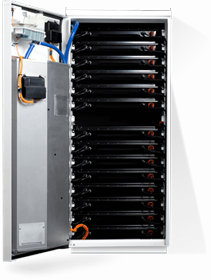 But the source says the battery bank proved “pointless” when both the power supply cables to the substation failed in July of the following year and power had to be patched in from other suburbs.
Vector spokeswoman Elissa Downey confirms the substation outage to Stuff, which she says was caused by water getting into conduits during the wet winter.
But she says the batteries had reduced the load on the Glen Innes substation by 15% at peak times, which was the real reason they were installed.
“There is a global trend towards investing in battery storage systems like the ones Vector has installed in Glen Innes and Snells Beach, as well as significant global demand for them,” she tells EVtalk.
“These types of battery systems are increasingly being considered as important cost-effective technology options to meet customer needs and manage future uncertainty around load peaks.
“If we did not invest in battery systems to understand their impact and benefits, it would be comparable to leaving customers with only land lines instead of high-speed internet services.
“Traditional network upgrades (poles, wires, transformers) still play a role where demand and usage at certain parts of Auckland warrant it. As these traditional technologies are typically more expensive and may not be necessary in future, batteries give us an option to defer investment and ultimately reduce costs for consumers where possible.
“Our Tesla batteries were purchased as part of our normal procurement process and were allocated to projects upon purchase, and those projects are all either now underway or completed, storage in the interim is to be expected as the project plans were finalised.
“The decision to invest in these battery systems is part of Vector’s network strategy. Entrust has been supportive of our strategy to invest in the best forms of technology for our networks and to ensure customers have reliable and cost-effective supply. This is of course in accordance with the expectation of the objectives of the Commerce Act – which requires us to invest in the long-term interests of consumers and has statutory obligation to promote innovation.”
Downey adds that Vector has the largest capital challenge of all lines companies operating in New Zealand as it is catering for unprecedented Auckland growth.
“Auckland’s population and housing growth means Vector is at the forefront of needing to understand and incorporate new technologies to cater for this growth in innovative and cost-effective ways, and not relying solely on traditional poles and wires.”

Join the conversation