
EV replacement for Tuk-Tuk planned
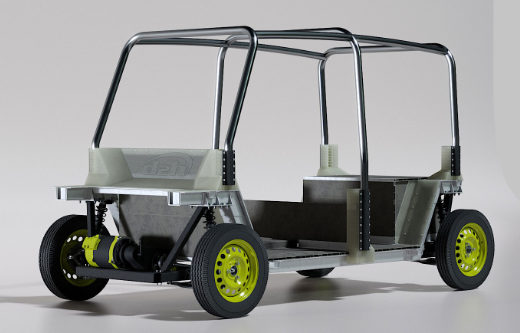
A consortium to design a low cost EV chassis with potential to provide an environmentally-compatible alternative to the aged Tuk-Tuk utility vehicle used in India and Asia is being led by a United Kingdom engineering company.
D2H is spearheading the drive funded by Innovate UK’s IDP15 scheme for industry-led research into on-vehicle technologies that accelerate the transition to zero emission vehicles in the UK and globally.
“Many EV projects target high-performance, high-value chassis concepts,” D2H engineering director Matthew Hicks says.
“While these are great engineering projects, we identified a need for a very low cost, zero emissions utility vehicle which can be adapted to different configurations and offers the potential for much greater uptake.”
Hicks says Coventive Composites and Warwick Manufacturing Group (WMG) are partners and a detailed design study has been done to create a novel chassis which can be built locally to the market it is intended for.
The concept incorporates natural fibre thermoplastics and is considerate to environmental issues, providing consumers with the option of an accessible electric-powered utility vehicle, he adds.
Coventive Composites had been developing a jute-based thermoplastic polymer.
“This material has many advantages – the jute is readily available in the target markets and is both lightweight and relatively strong,” Hicks says.
“When compared to metal alternatives, fibre reinforced thermoplastics have reduced manufacturing cycle times and energy requirements and allow high levels of detail to be moulded in, so they typically require less post processing.”
The resulting chassis is a predominantly bonded assembly.
The design meets the L7E Heavy Quadricycle EU classification, so although currently exempt from crash test assessment it has safety performance built in.
In its present form the design uses proprietary suspension, brakes and steering from a current production chassis, with front-wheel drive from a front-mounted motor and battery packs stored in between the rear wheels.
The design weight is 480kg, excluding batteries.
“While we are designing for a low voltage powertrain, we have no specific solution in mind at this stage,” adds Hicks.
“However, we envisage power and cooling sufficient for 12 hours continuous use – these are utility vehicles and need to be kept in service for long periods”.
D2H plans to move to the prototype and testing stage with the help of further partners.
“The development of the vehicle will require like-minded powertrain and battery providers, who can provide robust and very low-cost alternatives to petrol combustion units,” Hicks says.
“This a modern, clean running version of the legendary Tuk-Tuk, which has been so successful in mobilising millions of people in India, South-East Asia and South America,” he explains.
“If we can create a lighter, safer, zero emissions alternative that competes on cost and utility, then we will have done the job.”

Join the conversation