
Video: Huge car-carrying sailing ship planned
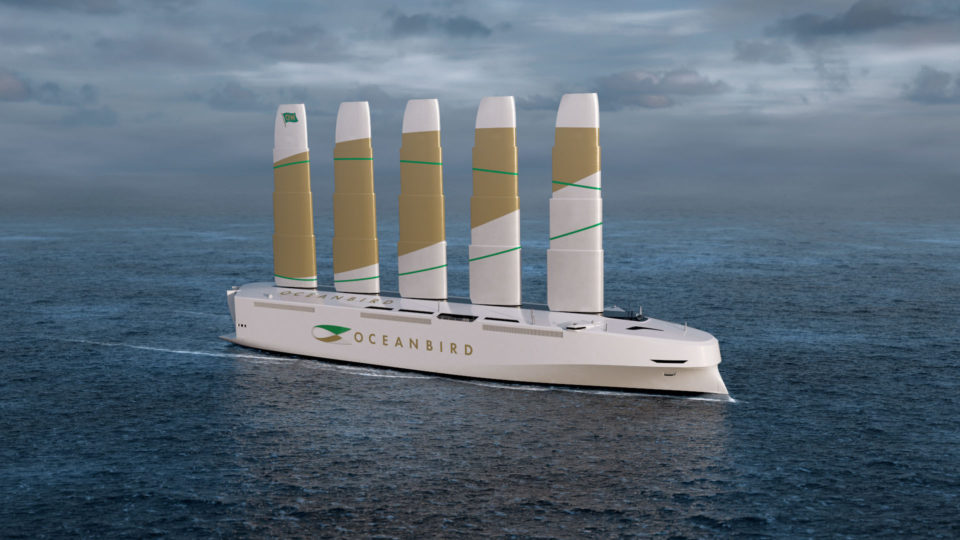
A massive sailing cargo vessel called Oceanbird capable of carrying up to 7000 vehicles is expected to be launched in 2024.
It will produce 90% less emissions than present vessels, showing that the maritime industry can bring about major change and that zero-emission shipping is possible, says the Swedish group involved which includes project coordinator Wallenius Marine, Stockholm’s KTH Royal Institute of Technology and maritime company SSPA.
This month the collaboration revealed the Oceanbird concept, with the research project wind Powered Car Carrier (wPCC) supported by the Swedish Transport Administration which has allocated 27 million Swedish krona (SEK) for the three-year development project to 2022.
The design will be ready for orders in 2021, says Wallenius Marine which owns the concept and is also contributing design and logistics expertise.
KTH is addressing Oceanbird’s aerodynamics, sailing mechanics and performance analysis while the SSPA is contributing with new testing methods, aerodynamic and hydrodynamic simulation methods and risk simulation.
Wallenius Marine’s blog
outlines the process which included a June sea trial of a model by 11 KTH naval design students.
Oceanbird will be about 200 metres long, 40m wide, and 100m high due mainly to its huge composite and metal wing-like sails. It’s expected to displace about 32,000 tonnes.
Engines will allow the freighter to manoeuvre in ports.
Many of the challenges involved in the project are being addressed by KTH Centre of Naval Architecture professor Jakob Kuttenkeuler.
Oceanbird combines aeronautic and marine engineering, he says.
Lidar is being used to determine how the wind behaves 200 metres above the ocean.
“Between SSPA’s knowledge of model testing and advanced fluid dynamics calculations, KTH’s expertise in problem solving and our design and logistical experience, I think we’re on to a winner,” says Wallenius Marine naval architect Carl-Johan Söder.
It’s expected the Oceanbird could take 12 days to cross the Atlantic compared with about seven days for a freighter now, but without consuming tonnes of fossil fuel daily.
Swedish Transport Administration chief strategist Rein Jüriado says such wind-powered freighters could become common, enabling the maritime sector to go fossil fuel free.


Join the conversation