
Zero-emission commercial aircraft concepts revealed
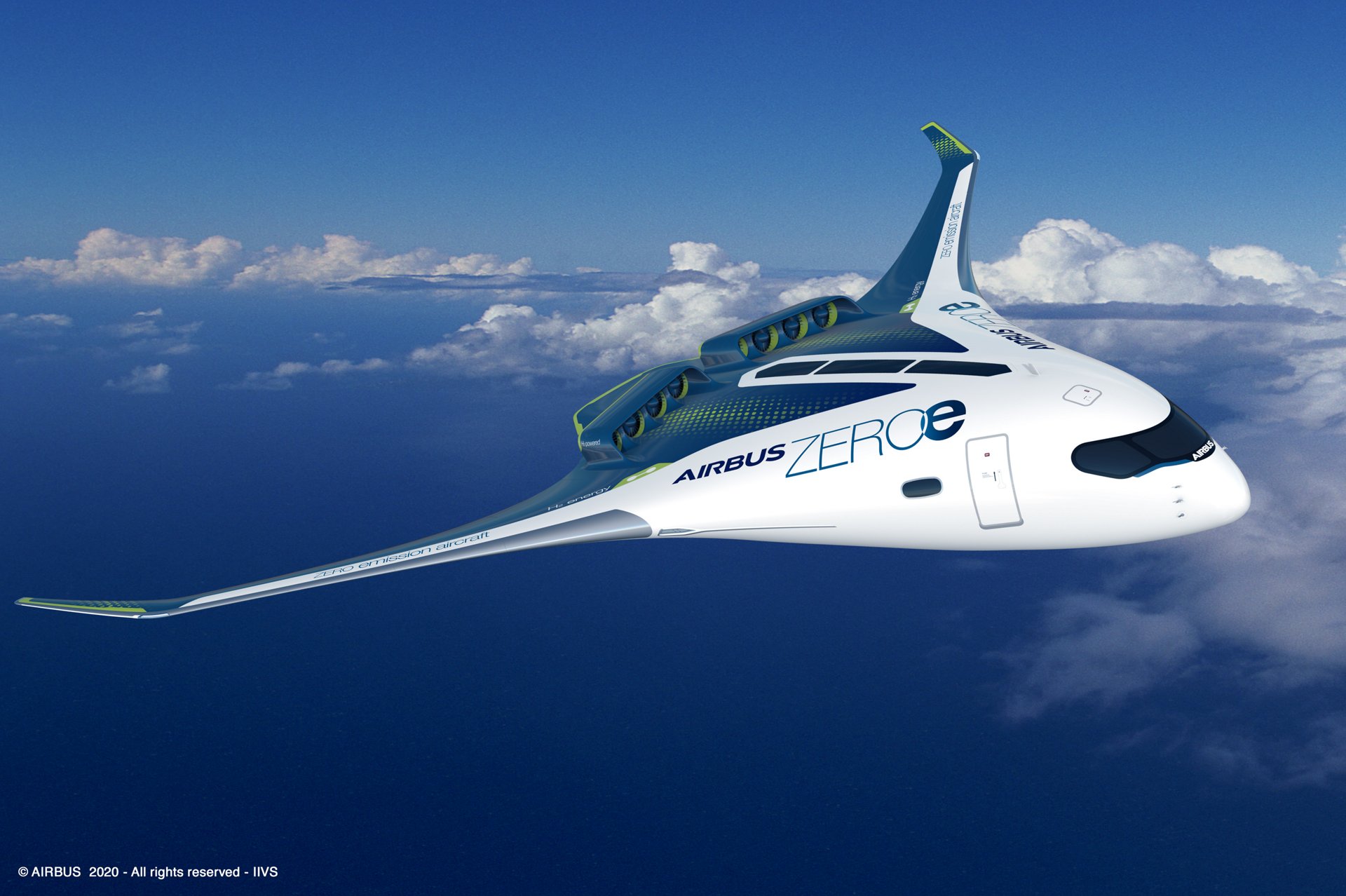
Airbus has revealed three concepts for the world’s first zero-emission commercial aircraft which could enter service by 2035.
All of these concepts rely on hydrogen as a primary power source – an option which Airbus believes holds exceptional promise as a clean aviation fuel and is likely to be a solution for aerospace and many other industries to meet their climate-neutral targets.
“This is a historic moment for the commercial aviation sector as a whole and we intend to play a leading role in the most important transition this industry has ever seen,” Airbus chief executive Guillaume Faury says.
“I strongly believe that the use of hydrogen – both in synthetic fuels and as a primary power source for commercial aircraft – has the potential to significantly reduce aviation’s climate impact.”
The three concepts codenamed ZEROe include:
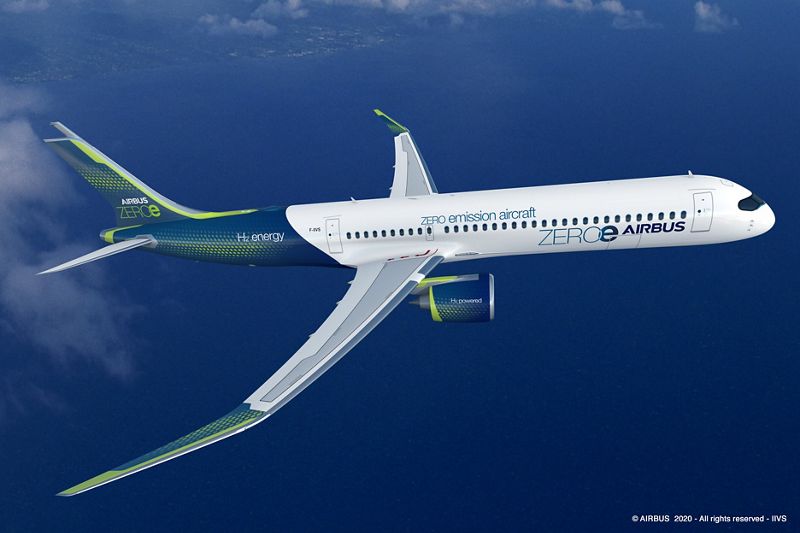
- A turbofan design (120-200 passengers) with a range of more than 2000 nautical miles, capable of operating transcontinentally and powered by a modified gas-turbine engine running on hydrogen, rather than jet fuel, through combustion. The liquid hydrogen is stored and distributed via tanks behind the rear pressure bulkhead.
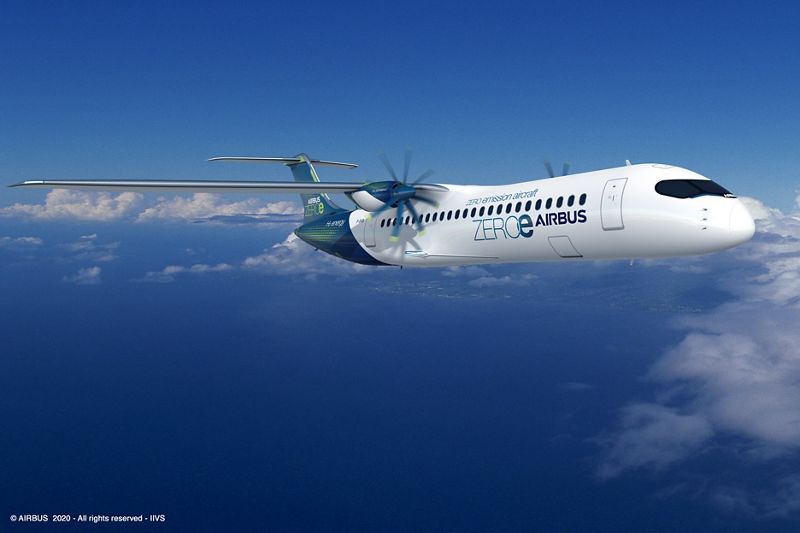
- A turboprop design (up to 100 passengers) using a turboprop engine instead of a turbofan and also powered by hydrogen combustion in modified gas-turbine engines, capable of traveling more than 1000 nautical miles, ideal for short-haul trips.
- A “blended-wing body” design (up to 200 passengers) concept in which the wings merge with the main body of the aircraft with a range similar to that of the turbofan concept. The exceptionally wide fuselage provides multiple options for hydrogen storage and distribution, and for cabin layout.
“The transition to hydrogen, as the primary power source for these concept planes, will require decisive action from the entire aviation ecosystem,” Faury says.
“Together with the support from government and industrial partners we can rise up to this challenge to scale-up renewable energy and hydrogen for the sustainable future of the aviation industry.”
Airports will require significant hydrogen transport and refuelling infrastructure to meet the needs of day-to-day operations.
Faury explains that support from governments will be key to meet these ambitious objectives with increased funding for research and technology, digitalisation, and mechanisms encouraging the use of sustainable fuels and the renewal of aircraft fleets to allow airlines to retire older, less environmentally friendly aircraft earlier.


Join the conversation