
NZ’s first electric aircraft launched
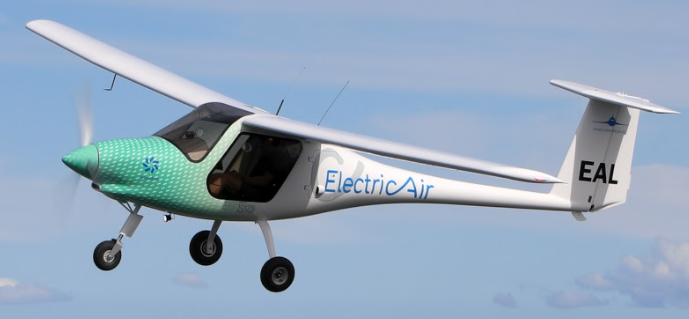
New Zealand’s first electric plane has been officially launched by Christchurch start-up ElectricAir.
The battery electric two-seat light sport aircraft manufactured by Slovenian aircraft company Pipistrel has begun demonstration flights from Christchurch.
Designed as a training aircraft, it will be available for people wanting to experience electric flight and to learn to fly in a more sustainable way.
ElectricAir founder Gary Freedman says the idea to operate New Zealand’s first electric plane began in 2016.
“I was driving an electric car but flying a petrol plane. It just wasn’t good enough, so I set out to find a solution.
“On the pretence of a family holiday in Slovenia, I visited the Pipistrel factory and flew in the Alpha Electro. I was hooked and the rest is history.”
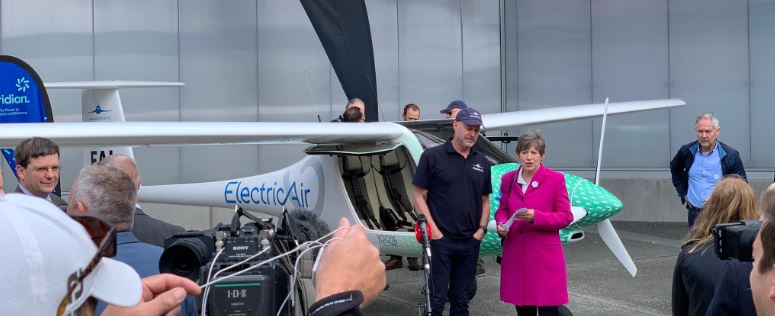
ElectricAir’s mission is to promote the uptake of electric aircraft to reduce the aviation industry’s greenhouse gas emissions.
The start-up has received support from Christchurch City Council’s Innovation and Sustainability Fund and the Christchurch Agency for Energy Trust.
Mayor Lianne Dalziel says the electric aircraft is a “perfect fit for a city of opportunity and a major step towards cutting aviation-related greenhouse gas emissions”.
“We are strongly committed to new technologies that help us set the standard for the future,” she says.
“Offering strong leadership in innovation and implementation of zero exhaust emission initiatives will help put us at the forefront of emerging technologies.”
The battery electric aircraft is just the type of innovation that the council wants to support for the city, Christchurch City Council resource efficiency manager Kevin Crutchley says.
“Aviation transportation is a significant source of greenhouse gas emissions and this initiative demonstrates a technology that reduces emissions and provides the opportunity to educate pilots and the community about this exciting new technology.”
Christchurch Airport has supported the ElectricAir project as another part of its electrification and decarbonisation programme.
ElectricAir will be the inaugural user of the newest charging infrastructure, airport strategy and sustainability general manager Rhys Boswell says.
“We use electricity to power jet aircraft while they’re parked on the ground, we offer EV and e-bike charging stations, so installing e-plane charging infrastructure was a natural next step,” he says.
“We are proud to be the launch pad for ElectricAir and to further power up to keep emissions down.”
ElectricAir believes New Zealand is a no brainer for electric planes, with one of the highest rates of short haul flights per person of any country and an electricity grid powered from predominantly renewable sources.
“It’s important that we show our commitment to sustainability and 100% renewable energy generation which is why we have chosen Meridian as our power provider,” Freedman says.
“In addition, Meridian’s Certified Renewable Energy product means that we can report our scope 2 emissions as zero, which really helps reinforce what we are about.”
Meridian’s chief customer officer Lisa Hannifin says Meridian is proud to have partnered with ElectricAir which, like Meridian, understands that electrification of transport is one of the biggest ways New Zealand can help combat climate change.
Air traffic service provider Airways also backs ElectricAir.
“By supporting ElectricAir’s operations in controlled airspace, Airways is continuing to help our aviation community explore innovative ways of reducing carbon emissions and aircraft noise while ensuring aviation safety,” Airways public affairs head Emily Davies says.
The Pipistrel Alpha Electro’s battery lasts up to 90 minutes and can be recharged in under an hour, making it ideal for pilot training.
The plane will be charged from a dedicated charging station and operates from Christchurch Airport and the Rangiora Airfield.
It is about 70% quieter than its fossil-fuelled equivalents, and simple and inexpensive to maintain as there are few moving parts.

Join the conversation