
Hyundai updates roadmap
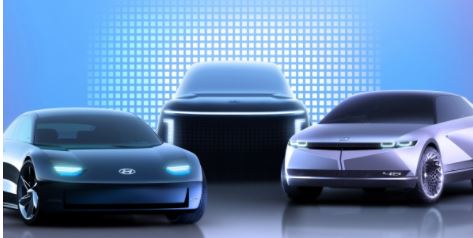
EVs, pilot-less flying cars, autonomous vehicles (AVs) and hydrogen fuel cells (FCEVs) are the four areas of focus in Hyundai’s updated ‘Strategy 2025’.
Hyundai aims to lead the global EV market mid to long-term, targeting about a 10% share, it says in the strategy disclosed at this week’s virtual ‘2020 CEO Investor Day’ forum in Seoul.
From next year Hyundai will expand its electrified line-up with the Ioniq EV brand and fully electrify its line-up in major global markets by 2040.
Starting with the launch of the Ioniq 5 in 2021, Hyundai plans to sell 560,000 EVs annually by 2025 and introduce more than 12 battery electric vehicle (BEV) models, including those built on its new EV dedicated platform E-GMP.
“Hyundai is embarking on a really exciting journey with the introduction of a dedicated BEV architecture,” Hyundai New Zealand general manager Andy Sinclair says.
“We personally can’t wait to see the Ioniq 5 and work with Hyundai Motor Company to bring it to New Zealand to provide the Kiwi public with more EV choice.”
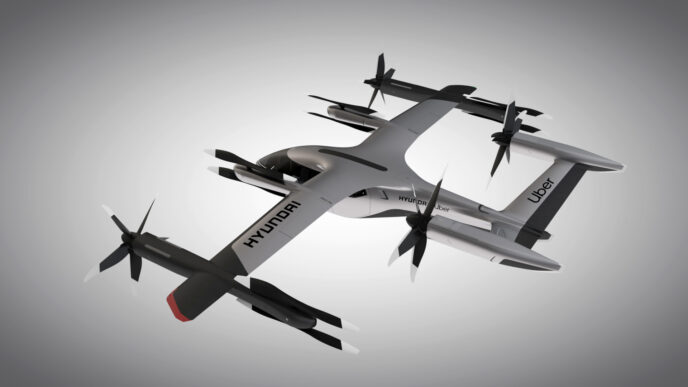
It’s especially aiming to lead the urban air mobility (UAM) sector, planning a family of air vehicles for both passenger and cargo and developing a UAM FCEV powertrain.
Hyundai will also accelerate commercialisation of autonomous driving technologies, apply over-the-air functions from 2021, offer models with Level 3 AV tech in 2022, invest 60.1 trillion South Korean won (KRW) by 2025 to support long-term growth, and account for around 5% of the global automotive market.
It has also introduced its proprietary fuel cell system brand ‘HTWO’ (H2) for boats, planes, trains and automobiles like the Nexo SUV and Xcient heavy truck.
The strategy was presented by president and chief executive Wonhee Lee and other executives to various stakeholders, including shareholders and investors.
“The year 2020 has been the first year to implement our Strategy 2025,” Lee says.
“In spite of a challenging business environment caused by the COVID-19 global pandemic, we have successfully established the foundation for business growth for the next five years. Hyundai is now equipped with new strategies to respond to rapidly changing business environment.”
The company plans to build 20 high-speed charging stations in Korea by 2021 and do network projects in other countries with various partners like Ionity in Europe.
For its Genesis luxury brand, Hyundai will introduce a dedicated BEV model and a derived EV model in 2021.
Following the Korea and US markets, Genesis plans to expand its presence in China and Europe.
An air cargo Unmanned Aircraft System (UAS) with hybrid powertrain is expected in 2026, and an all-electric UAM model optimised for intra-city operations launched in 2028.
In the 2030s, the company plans to launch regional air mobility that connects adjacent cities.
Join the conversation