
3D printed vehicles coming
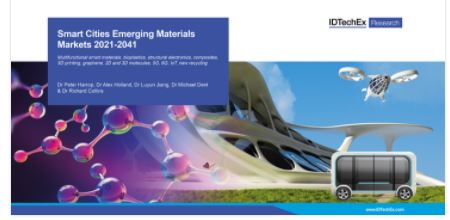
Expect a US$400 billion smart city materials market.
That’s smart buildings, new energy, food, water, travel, IDTechEX chairman Dr Peter Harrop says of the newly released report Smart Cities Emerging Materials Markets 2021-2041.
Smart cities are now much more ambitious. That means new materials are their biggest enabler, with information and computer technology dropping to an important support role, the report explains.
Consider the US$0.5 trillion NEOM smart city being reclaimed from the Saudi desert and the US$0.1 trillion Forest City being reclaimed from the Malaysian sea.
They will gain energy, food and water independence, zero emissions, resilience and verdant, affordable, delightful living from next-generation materials and good design, Harrop says.
Forest City names smart materials as pivotal.
“Of the trillions of dollars being spent on smart cities, the advanced materials part is rising to hundreds of billions yearly over the next 20 years,” IDTechEx chief executive Raghu Das says.
“Newly multipurpose buildings make food and surplus energy, eventually with no service infrastructure to them because they treat sewage, for example, and are otherwise independent.”
Das says: “Multifunctional infrastructure, equipment, and materials are making possible independence in city energy, food, and water with zero-emissions, greater security and empowerment of the disadvantaged with free travel, electricity ‘too cheap to meter’.
“Welcome the wooden high-rise building but also the 3D printing of buildings using mud, trash, or green concrete.
“3D printed vehicles arrive, such as the Olli robot shuttle replacing 10 existing vehicle types. 3D parts even use metals, inorganics, and composites, creating 3D printed electronics nowadays.”
Das believes smart cities will widely deploy multifunctional composites, structural electronics, smart glass, flexible glass and transparent electronic-electric plastic such as headlamp RadarGlass.
“A smart window can have a large microLED display, darken when the sun shines, saving air conditioning, heat insulate and make electricity at the same time. Bear in mind that residential and commercial buildings currently use 74% of all electricity and 39% of all energy in the US, most of that for heating and cooling. That could be zero.”
Green concrete, newly possible recycling (wind turbine blades, fluoropolymers, batteries) collapse the 16% of global warming caused by regular concrete and steel.
Partly, this is because they eliminate massive tidal barrages, power stations, hydro dams outside cities, and toxigens.
Flexible organics, membranes, bioplastics, advanced polymers, thermal interface materials, thermal insulation, 2D and 3D molecules, graphene, CNT, materials for 5G, 6G, and THz electronics play a part.
A US$35 billion market is ahead for the varied materials providing photovoltaic power that silicon cannot serve.
For example, a high-rise will have those solar windows hopefully with something less toxic than methylammonium borate on lead perovskite, but the façade and roof would be different. Lightweight flexible copper indium gallium diselenide facades are already a multi-billion-dollar business, with ones on the way eliminating the tiny amount of cadmium yet gaining best silicon-level efficiency. However, the roof may justify sun-tracking multi-junction lll-V compounds twice the amount of electricity per unit of area.
The IDTechEx analysts have identified more than 50 gaps in the market for smart city materials, many of which can create billion-dollar businesses.
Examples include non-toxic photovoltaic paint, solar roads not trashed by traffic, and wave power not trashed by storms.
Self-healing vehicle bodywork making and storing electricity and glowing in the dark are among well-funded serious research projects.
From the vehicle viewpoint they call that “massless energy”.
More than 200 companies develop vertical take-off city air taxis, but their autonomy systems are too expensive and their batteries inadequate.
Those materials challenges will be solved with such things as solid-state Lidar and lithium-metal batteries.

Join the conversation