
Spaceman celebrates lunar EV 50th
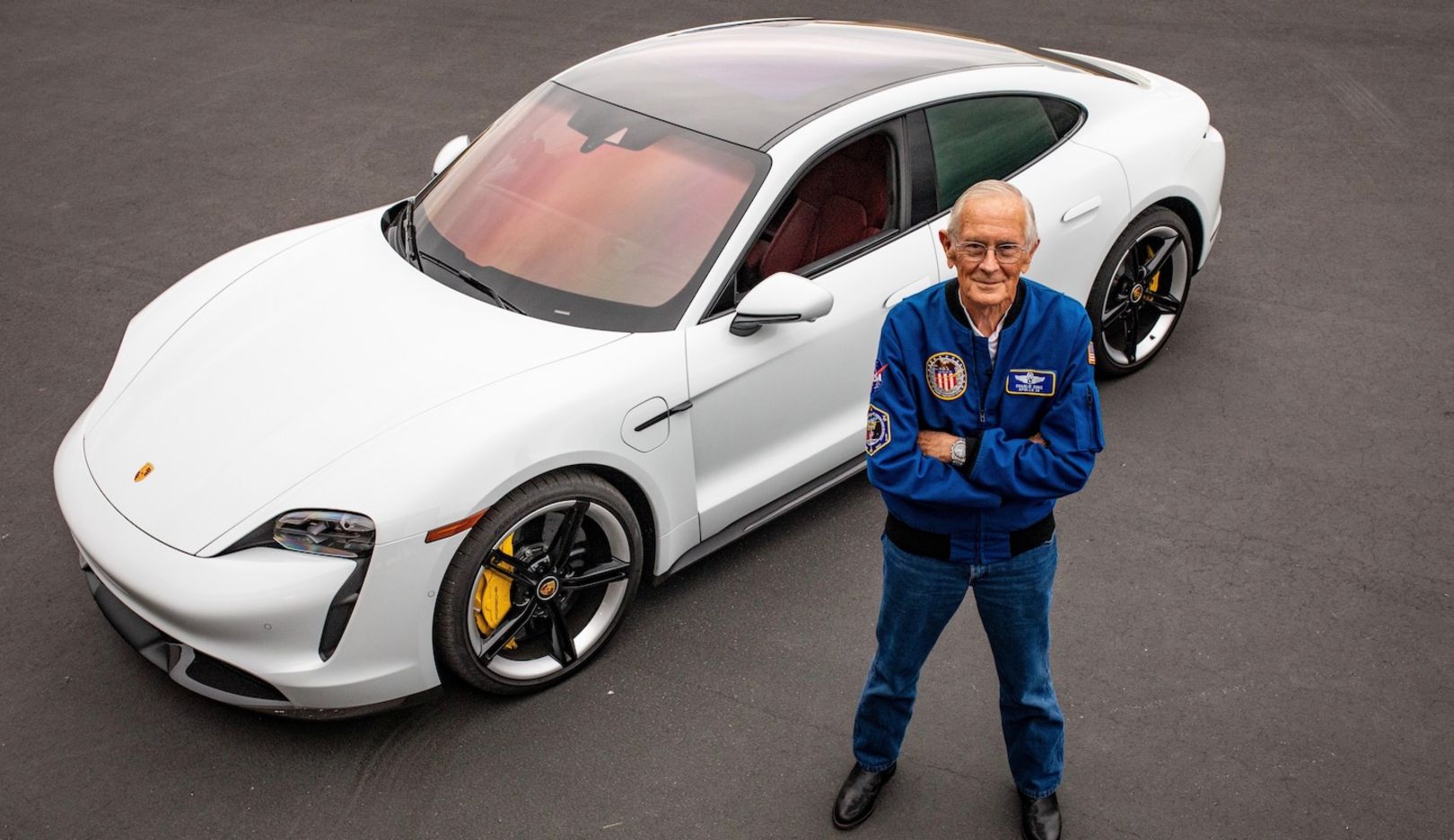
Apollo 16’s Charles ‘Charlie’ Duke became the 10th person to step onto the moon and one of six people to experience an advanced, innovative EV – the lunar roving vehicle (LRV).
But he hadn’t driven an electric car on earth until Porsche put him behind the wheel of an electric Taycan Turbo S to mark the 50th anniversary this year of the first LRV landings on the moon.
The 85-year-old former astronaut and US Air Force officer was pivotal in NASA’s Apollo programme, the voice you hear talking Armstrong and the Eagle towards mankind’s maiden lunar touchdown, before following less than three years later.
When Duke descended from the Orion lunar module onto the Cayley Plains landing site, he and fellow astronaut James Young would go on to spend more than 70 hours on the lunar surface, including numerous research missions and extensive evaluation of the LRV.
“In my view the rover was the first real reliable, rugged and dependable electric car,” Duke says.
“It had two batteries and about 100amp hours of power. Each wheel had its own independent suspension and the tyres were made out of wire, which I thought was crazy at first. But somebody had an ingenious idea because wire tyres would dig into the dust which gave you really good traction.”
July 2021 marks 50 years since the first LRV drove on the moon, with Duke’s mission the second outing of its kind.
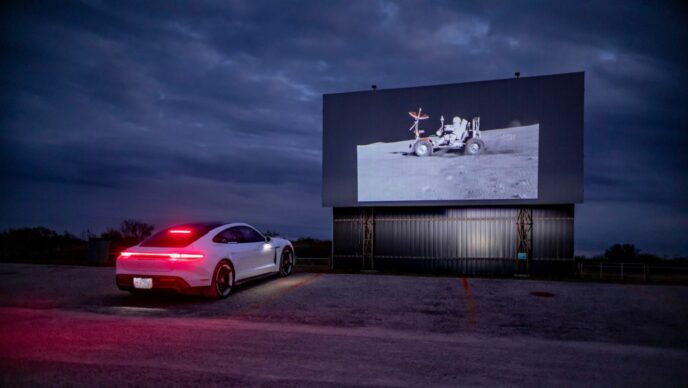
In the early 1970s the LRV was a radical piece of technology, developed in just 17 months and weighing 210kg.
Despite its rapid development and miniscule weight, the LRV needed to be tough and reliable. It also had to accompany the astronauts in their tiny command module.
“Up on the moon the car only weighed 80lbs (36.2kg),” says Duke.
“So you could pick it up, but it would carry 1200lbs (544.3kg). We turned it around, put up the seats, powered it up and drove off. Before the rover came, 400 metres was probably the limit of walking. “But with the rover we could go six or seven kilometres from the landing site and that helped to revolutionise lunar exploration as we got samples from all these places on the extremes.”
Three metres long and almost as wide, the LRV used a tubular aluminium chassis, double-wishbone suspension over torsion bars front and rear, providing 360mm ground clearance when fully loaded. Those wire wheels, overlaid with a tread pattern of titanium chevrons, were independently driven by four 0.186kW electric motors and controlled by a joystick.
“The thing would climb a 25-degree slope,” Duke recalls.
“So on the second day we drove down to Stone Mountain and we started up. It felt like I was going to fall out the back of the thing, but that wasn’t nearly as exciting as turning around and going downhill. I’m glad we were strapped in as this thing was bouncing around like crazy.”
Duke and Young covered more than 26km in their LRV, travelling as far as 4.5km from the lunar module and clocking up near three and a half hours drive time.
“I don’t think we used even half of a battery during our three-day stay up there,” Duke says.
“When we left, we left the car parked with the camera on to record lift-off. After lift-off they continued to move the camera around and the batteries went dead several days later. It was extremely reliable and I think even today if we went back with two batteries we could put them in, power it up and go again. I’ve always said, if you want an $8 million car with a dead battery, I can tell you where to go get one.”
The LRV is among three left on the moon.
However, Duke had never driven an EV on earth until Porsche offered him the Taycan at a small airport near Austin, Texas.
“It’s an amazing car, and the technology in the Taycan is an order of magnitude over our rover.”
Join the conversation