
NZ transport leaders rollout action plan to slash freight emissions
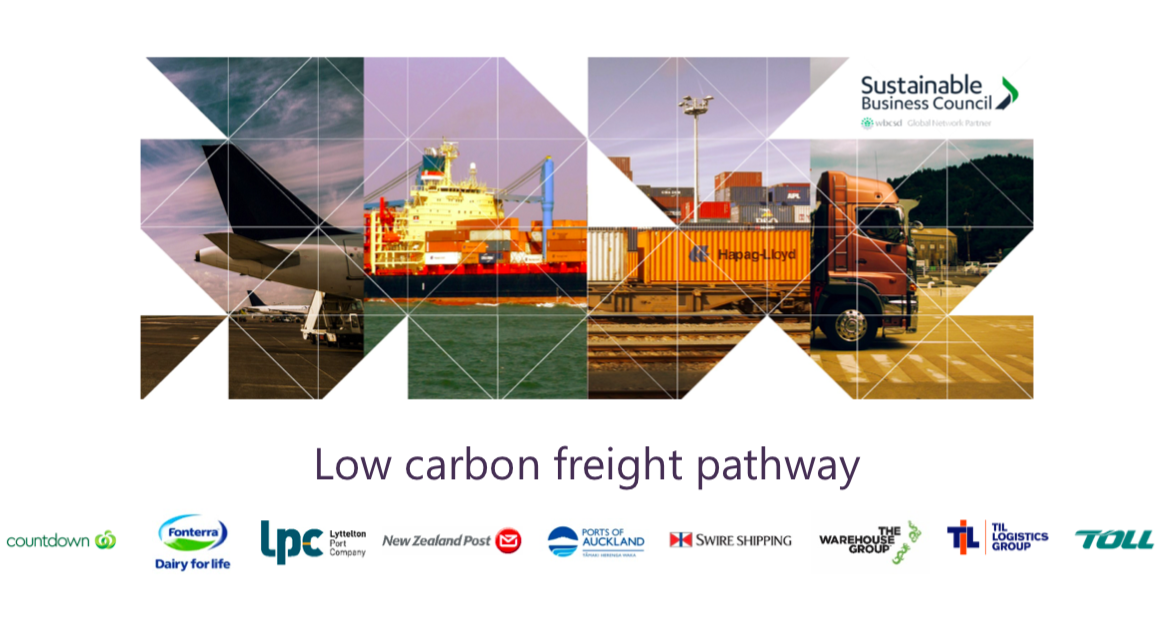

Decarbonising New Zealand’s freight system by 2050 is “ambitious but achievable” through the use of biofuels and replacing retired fleets with zero carbon vehicles.
That’s according to a new report by the Sustainable Business Council’s (SBC) freight group which is promising “aggressive and early action”.
Its nine members include Countdown, Fonterra, Lyttelton Port Company, New Zealand Post, Ports of Auckland, Swire Shipping, The Warehouse Group, TIL Logistics Group and Toll.
The Low Carbon Freight Pathway report was launched on April 16 with an event at Toll Tamaki, South Auckland.
It was attended by Transport Minister Michael Wood and industry leaders from the transport, freight and business sectors.
Toll NZ executive general manager Jon Adams, host of the event and freight group member, says the companies involved are already advancing their own decarbonisation pathway and are committed to the country’s zero carbon future by 2050.
“Every year we move around 280 million tonnes of freight across our transport system – through road, rail, coastal shipping, international shipping and air.
“That’s around 56 tonnes of freight per person in New Zealand. On current projections our freight volumes will increase by 33% well before 2050. If we do nothing, emissions will grow by over 37% by 2050. We need to act now,” Adams says.

The SBC target is to halve heavy freight emissions by 2030 so the sector is on a firm trajectory to net zero by 2050.
It says without interventions, these targets are “significantly out of reach” given projected increase in freight demand.
The Ministry of Transport estimates that by simply relying on improvements in electric truck technology, and having no significant biofuels uptake, there will be an increase in emissions by 2030 and only a modest reduction by 2050.
However, significant gross emissions reductions are possible through a transformative action plan for the sector that includes not only new technologies but also a “mind shift across the heavy freight supply chain”, the report says.
Around 17% and 56% of net emissions reductions (including residual electricity emissions) will have to come from biofuels and hydrogen together by 2030 and 2050 respectively, it says.
By 2030, it expects that 28% of net emissions reductions can be achieved through improved vehicle efficiencies, telemetrics, electric vehciles, freight flow optimisation and mode shift.
The remainder of emissions will require an increasing uptake of biofuels or hydrogen.
Ports of Auckland sustainability general manager Rosie Mercer says members of the freight group partnered to help the wider freight sector get to net zero.
“New Zealand’s freight system is vital to our economy and our wellbeing. It is a complex system and we believe that the most effective approach to decarbonisation is leadership with an approach designed and led by, and for, industry.
“This is the freight group’s goal. At the core of this approach is working in partnership with government to support a planned and staged 30-year decarbonisation programme,” Mercer says.

The report shows that the most effective pathway is to carefully manage the economic cost of the transition.
It proposes a low carbon freight pathway with three interconnected horizons of work starting immediately which includes:
• Reducing emissions by optimising the use of existing vehicles;
• Replacing fossil fuels with biofuels; and
• As vehicles are retired, eliminating them by replacing them with zero carbon vehicles.
“These horizons have different levels of intensity and time-periods allowing a staged transition. It’s an approach that provides businesses time and greater surety to best manage the transition of their fleet,” Adams says.
“Our next step is to work with the sector and to bring more partners on board the pathway. As more businesses begin the transition, the cost of decarbonisation will fall as we achieve economies of scale,” he says.

Join the conversation (1)
I don’t see any mention of rail here as a means of decarbonising freight. I find that strange