
New Kia Niro revealed
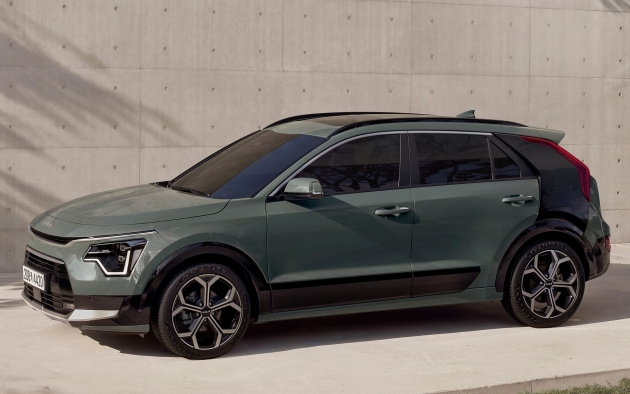
The next-generation Kia Niro combines innovation and high-tech user convenience to deliver a step change in sustainable mobility with a hybrid announced and plug-in hybrid (PHEV) and battery electric (BEV) models to be revealed later.
Niro HEV sales start in Korea this month, with sales in selected global markets due to follow later this year while more information will be available in due course.
The new Niro features a bold and stylish exterior design with aerodynamic surfaces and a spacious and minimalist interior infused with premium and sustainable materials in a larger, high-strength body.
The latest electrification powertrain options deliver choice and outstanding efficiency and exceptional safety performance is provided by extensive advanced driver assistance systems (ADAS) technologies, Kia says.
Advanced connectivity and convenience are included in the new Niro which is based on the third-generation platform, while modernistic digital displays and interior controls have been optimally placed for user-friendly operating.
An efficient Smartstream 1.6-litre GDI engine featuring improved cooling, friction and combustion technologies helps power the HEV model. The powerplant ensures highly competitive fuel efficiency, with the new Niro HEV capable of achieving 20.8km/L (based on Korean standards).
“The all-new Kia Niro heralds the next step in our journey to become a sustainable mobility solutions provider,” Kia Corporation senior vice president and global brand and customer experience head Artur Martins says.
“From the outset, our ambition was to create a car that makes it easier for people to practice a sustainable lifestyle. With its eco-friendly materials, advanced technology and range of highly efficient electrified powertrains, the all-new Niro truly delivers on its goal.”

A 10.25-inch panoramic high-definition digital display screen that integrates both the instrument cluster and infotainment features is provided, users to personalise, access and operate the vehicle’s connectivity, usability and functionality features easily.
Below the centre screen lies an integrated infotainment and climate control system that removes clutter and ensures front seat occupants can access these important controls without the need to scroll through multiple menus.
The centre console includes the Niro’s space-saving electronic dial-type shift lever, and features a variable large-capacity cupholder tray and a wireless smartphone charging pad.
By repositioning the Niro’s 12V battery from the wheelhouse to alongside the high-voltage battery at the bottom of the rear seats, boot load capacity for the Niro HEV model reaches 451 litres (VDA) – 15 litres more than its predecessor.
When combined with the 32kW permanent magnet synchronous electric motor, the HEV model produces a combined maximum power output of 104kW. Its 1.6-litre GDI engine is mated to the second-generation six-speed dual-clutch automatic transmission (6DCT).
The Niro’s Green Zone Drive Mode automatically activates the electric-only drive operation to ensure zero-emissions mobility in certain environments and situations such as residential areas, schools and hospitals based on navigation and driving history data. The driver can also set dedicated green zones into the navigation system to reduce pollution in areas such as near their home or place of work.
The amount of regeneration required can be optimised using radar and road gradient information.
A new suspension and steering system ensures a comfortable driving experience while additional insulation and padding combat engine and road noise.
Remote smart parking assist (RSPA) enables the vehicle to park itself autonomously.
It has Kia’s Digital Key 2 Touch system that allows occupants to unlock and start their vehicle via smartphone, while front and rear cameras allow occupants to record high quality videos of memorable journeys and scenic locations.
The Niro also features Car to Home which allows users to control home IoT devices such as television, lighting and room temperatures from inside the vehicle, while the Kia Connect smartphone app enables users to connect with their vehicle remotely.
Join the conversation