
Closing South Island public EV charging gaps
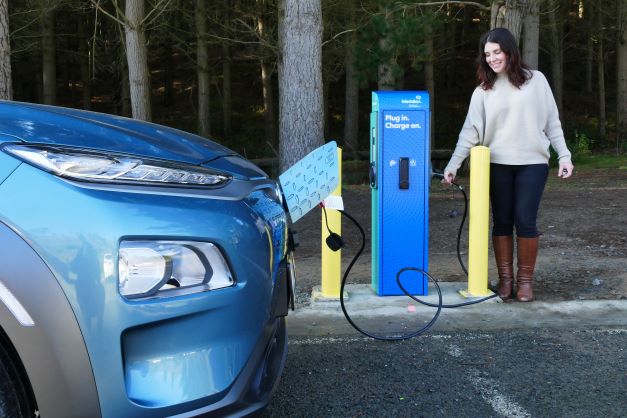
Key gaps in the South Island’s public EV charging network will be closed thanks to the Government’s Low Emissions Transport Fund (LETF).
Meridian Energy will install 10 chargers as part of its nationwide charger rollout, the 10 expected to be operational from May next year.
“This round of co-funding was strategically targeted at a few specific locations, to ensure there is good charging coverage in the South Island,” says energy and resources minister Dr Megan Woods.
“Five new locations – Kohatu, Haast, Hari Hari, St Arnaud, and Springs Junction – will receive DC fast chargers in a partnership between the LETF and Meridian Energy,” she explains.
“They represent some of the most challenging sites in New Zealand to install electric vehicle chargers, with electricity grid constraints and lower traffic volumes.”
Chargers at these locations will largely complete the government’s goal to provide fast chargers to the public at 75km intervals along state highways.
“These locations are on some of our popular tourist routes, giving travellers and locals alike the confidence to take their electric vehicle and enjoy the scenic drive without the risk of getting stranded,” says Woods.
“Being more remote, they presented some unique challenges to potential charging providers, so I’m delighted that this public good funding government assistance gets them over the line.”
The EV charging installations include two 50kW DC fast chargers in Kohatu, filling a network gap between Murchison and Nelson; two 50kW DC fast chargers in Haast, filling a network gap between Wanaka and Franz Joseph; two 50kW DC fast chargers in Hari Hari, filling a gap between Fox Glacier and Westport; two 25kW DC chargers in St Arnaud, facilitating EV traffic to Lake Rotoiti and Blenheim; and two 50kW DC fast chargers supported by three 120kWh battery energy storage system (BESS) units in Springs Junction west of Lewis Pass, eliminating a key charging infrastructure blackspot.
The LETF, administered by the Energy Efficiency and Conservation Authority (EECA), is contributing $1,065,914 in co-funding alongside $756,782 in private investment from Meridian with the higher level of Government co-funding reflecting both the higher cost of each installation and their expected levels of utilisation, says Woods.
“Meridian provided a robust solution, with two fast chargers at each site to provide redundancy,” she adds.
“They thought outside the box to provide both value for money and workable technical solutions, including the battery storage system at Springs Junction, the first of its kind in New Zealand.”
Successful applicants from a separate round of LETF co-funding, which invited applications for vehicle and technology projects, will be announced in the next few months.
Future funding rounds open later in 2022.
Click here for more information.


Join the conversation