
EV high-speed motor developed
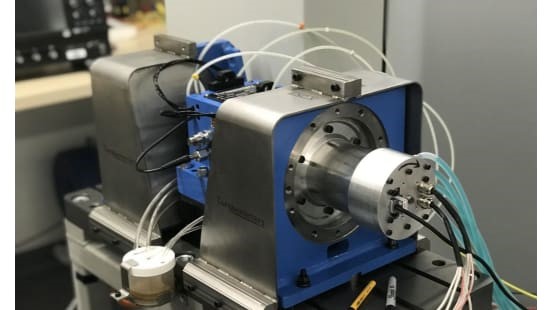
A new high-speed motor which could increase EV range has been developed by University of New South Wales (UNSW) engineers in Sydney.
It’s an improvement on the existing Interior Permanent Magnet Synchronous Machine Motor (IPMSM) predominantly used in EV traction drive and has achieved speeds of 100,000 revolutions a minute, says the university.
The maximum power and speed achieved have successfully exceeded and doubled the existing high-speed record of laminated IPMSMs, making it the world’s fastest IPMSM ever built with commercialised lamination materials, it adds.
The motor can produce a very high-power density, beneficial for EVs in reducing overall weight and therefore increasing range.
The new technology has been developed by a team headed by associate professor Rukmi Dutta and Dr Guoyu Chu from the UNSW School of Electrical Engineering and Telecommunications.
They say existing IPMSMs suffer from low mechanical strength due to thin iron bridges in their rotors, which limits their maximum speed.
But the UNSW team has patented a new rotor topology which significantly improves robustness, while also reducing rare-earth materials.
“One of the trends for electric vehicles is for them to have motors which rotate at higher speeds,” says Chu.
“Every EV manufacturer is trying to develop high-speed motors and the reason is that the nature of the law of physics then allows you to shrink the size of that machine. And with a smaller machine, it weighs less and consumes less energy and therefore that gives the vehicle a longer range.”
Chu says peak power density is around 7kW per kilogram.
“For an electric vehicle motor we would actually reduce the speed somewhat, but that also increases its power. We can scale and optimise to provide power and speed in a given range – for example, a 200kW motor with a maximum speed of around 18,000rpm that perfectly suits EV applications.
“If an electric vehicle manufacturer like Tesla wanted to use this motor then I believe it would only take around six to 12 months to modify it based on their specifications.”
The final motor is the 120th generation analysed by the program and can be used in many other applications such as heating, ventilation, air conditioning, and in high-precision CNC machines sought by aviation and robotics industries.
Another application is as an integrated drive generator (IDG) inside an aircraft engine to provide power for electric aircraft systems.



Join the conversation