
JLR to train 29,000 for electric future

More than 60% of Jaguar Land Rover and franchised retailer employees around the world will be retrained to develop, manufacture and service modern luxury EVs during the next three years.
Most of JLR’s retail technicians will be trained in electrification this financial year – to tackle emerging skills gaps.
Meanwhile, more than 9500 apprentices are in training across JLR and its retailers, with hundreds more to be hired next year.
The global upskilling drive aims to train 29,000 people in the next three years for its connected and data capabilities, and to support the rapid transition to electrification.
The company’s Future Skills Programme will see more than 10,000 Jaguar Land Rover and franchised retailer employees in the United Kingdom, and nearly 19,000 across the rest of the world trained in skills vital to electrification, digital and autonomous cars.
This underlines the company’s commitment to developing its future engineering and manufacturing skills and supports the delivery of JLR’s net zero targets.
“Our plans to electrify our product portfolio are running at pace, and we are rapidly scaling up our future skills training programme to ensure we have the right talent to deliver the world’s most desirable modern luxury electric vehicles,” says Jaguar Land Rover industrial operations executive director Barbara Bergmeier.
“Developing the skilled global workforces needed to design, build and maintain the vehicles of the future is foundational.”
The Future Skills Programme is key to the success of Jaguar Land Rover’s Reimagine strategy, which will see all Jaguar and Land Rover modern luxury cars available in pure electric form by the end of the decade.
About 80% of nearly 1300 franchised JLR retailers around the world offer electric vehicle servicing, so to tackle the skills gaps the company is ensuring the majority of servicing technicians will receive electrification training this year.
As well as technicians, Jaguar Land Rover plans to retrain thousands of highly skilled automotive engineers and production employees, who previously worked on the development of internal combustion engine (ICE) cars, to specialise in electrification, digital and autonomous cars.
JLR plant employees at all levels will require training to ensure they can work safely alongside the high voltage systems in EVs, the company explains.
Karl ’Freddy’ Gunnarsson, a JLR cell engineer, was part of the Emissions After Treatment team in his first role, working on diesel catalytic converters, before joining the battery cell team in January.
He and his team are working to increase the energy density of JLR batteries to maximise the vehicle range. This is partly achieved by changing the cell format, which allows for packing more cells into the battery, and by upgrading the cell chemistry.
“The transition from working on internal combustion to electric was fairly straightforward,” says Gunnarsson.
“Both require a good understanding of material chemistry, and I was able to dedicate around 30% of my time to independent learning. Now, working on electric vehicles, I can see the longevity of the programme and how it supports the company’s Reimagine strategy.”
The company is also bolstering its global apprenticeship programme by adding hundreds of apprentices to the JLR and retailers’ schemes around the world.
JLR has about 47,000 people directly employed and employed by its franchised retailers.
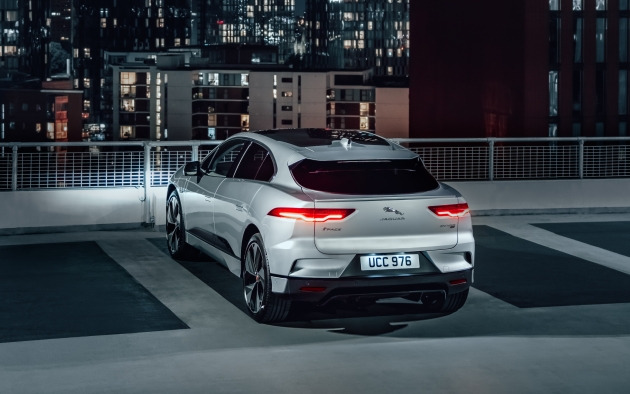
Every new and refreshed model line offers fully electric, plug-in hybrid (PHEV) or mild hybrid variants. Customers can choose from eight PHEV options and 11 mild hybrid options, as well as the battery electric Jaguar I-Pace.
Jaguar will become a pure-electric luxury brand from 2025, while Land Rover will welcome six all-electric variants in the next five years,

Join the conversation