
Bike/scoot and ride trial
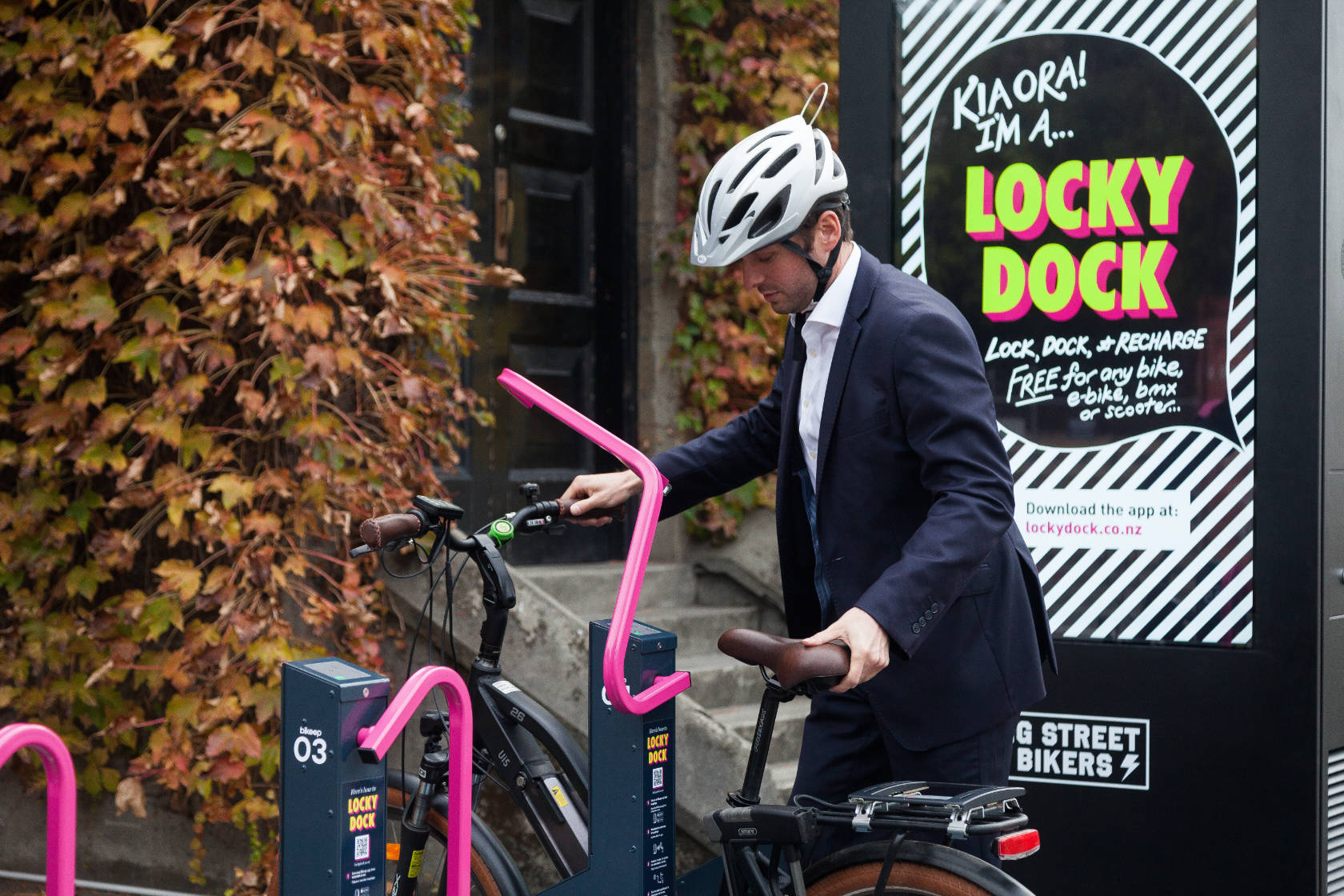
Rather than have car park and rides, bikes such as electric bikes (e-bikes) and e-scooters could be used to link suburban commuters with public transport.
So say University of Auckland School of Architecture and Planning researchers who have received Waka Kotahi NZ Transport Agency Innovation funding for a project to investigate that.
Park and ride facilities were not so long ago considered an innovative and sustainable travel option, allowing those living in the outer suburbs of a city to connect with public transport, the university explains.
Parking lots are always full, commuters trying to get into them are causing traffic jams in surrounding areas, and it’s increasingly recognised that the valuable land used for such large carparks could be put to better use, it adds.
“Car trips to and from public transport are among the highest polluting vehicle trips,” says principal investigator Dr Tim Welch.
“Often, these trips by car are under five kilometres, begin with a cold engine and are driven at slower speeds – all of which equate to higher rates of pollutant and greenhouse gas emissions. Bikes or scooters would easily replace those short car trips.”
The project will involve setting up a station-based micromobility hub, with e-scooters, e-bikes, and powered bike racks within a three-minute walk of a station, or a 10-minute ride from the station.
The six-month trial will be done at Panmure rail station and bus interchange.
“The idea of micromobility hubs is new to New Zealand, but they have been successfully implemented in other countries, such as in the Netherlands, in the UK, and in the US,” says Welch. “The aim of the project will determine how effective they could be here.”
The project will be done in collaboration with shared e-scooter and e-bike provider Beam, and Big Street Bikers which installs and maintains electric and app-driven secure bike racks called Locky Dock.
The project is also being done in collaboration with the Micromobility Research Partnership (MRP), a global partnership that undertakes collaborative research projects to educate stakeholders about more sustainable transport choices.
The technologies and apps used in the trial will be integrated into the participants’ app ecosystems and Auckland Transport’s mobile app. The project will also involve data collection from user surveys, observation, and through data sharing between collaborating partners.
The hub will include the installation of a container that will accommodate the equipment, provide shelter and space for repairing scooters and bikes, with solar panels to draw power for e-bike charging. In addition to the primary micromobility hub, a series of mini hubs will extend the reach of the hub network beyond the rail station areas.
Panmure Station was chosen as the area is one of the more ethnically diverse suburbs in Auckland, says Welch. Like many suburban rail stations and bus interchanges, its car parks are heavily used. “However, many car trips could be substituted with e-scooter, e-bike and pushbike trips if residents were able to easily access or securely park them.”
The project aims to solve what is known as the ‘last and first mile’ problem around public transport, by using technologies that exist but aren’t typically available in outer suburbs.
Welch, who has nearly 20 years of teaching, researching and consulting on transportation behaviour, will be working alongside university colleagues Dr Mohsen Mohammadzadeh from the Urban Planning department and Dr Subeh Chowdury, Department of Civil and Environmental Engineering.
This project is the first of its kind for both Auckland and the rest of the country, says Big Street Bikers co-founder Andrew Charlesworth.
“It combines all the key elements making it easier for people to choose other transport options, instead of defaulting to the car.
“We know people are crying out for change on how they spend their time and money, and also want to play their part in tackling climate change.”
Beam New Zealand sustainability head Frederick Conquer says Beam’s main objective is to improve accessibility to a broader range of riders and communities.
“This project will help encourage active transport in an under-served area of the city and support the wider public transport system.”



Join the conversation