
Drive Electric welcomes private-public infrastructure initiative

Drive Electric welcomes the announcement in Budget 2023 that $120 million will be invested to enable the roll-out of public charging infrastructure in New Zealand in partnership with the private sector.
The adoption of EVs in New Zealand has accelerated in the past two years, and by 2030, the Climate Change Commission estimates that 67% of vehicles coming into New Zealand will be electric, says Drive Electric.
“With the uptake of EVs exceeding expectations, New Zealand needs a robust national network of charging sites to underpin this demand,” says Drive Electric chair Mark Gilbert.
“The International Energy Agency’s analysis shows that New Zealand’s public charging infrastructure is well behind that of comparative countries.”
Gilbert says the Budget 2023 announcement is significant because it should enable major charging providers to work alongside the Government to accelerate the roll-out of public charging infrastructure for all Kiwis.
“Some sites for public chargers are not currently economically viable as demand for charging in certain areas remains low, but chargers are needed to enable greater EV uptake by Kiwi families,” he explains.
“Additionally, the real costs associated with connecting to the electricity network can make it difficult for investment in charging sites to stack up. In some cases, it can take close to a decade for a large charging site to pay for itself, depending on what it costs to install and connect to the electricity network.”
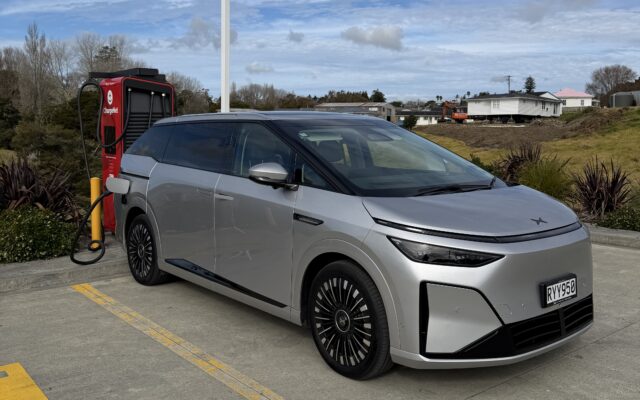
Gilbert says various competitors are already installing a range of charging stations including the likes of ChargeNet, Tesla, Meridian, Jolt, Z Energy, and BP, and have plans to further rollout their charging networks.
“Success will come down to how these funds are deployed,” says Gilbert of the Budget 2023 announcement.
“This new funding needs to be well targeted, in partnership with the charging sector, to ensure charging sites are installed where demand is low today, but forecast to grow, or where it is not yet economic to invest. This is very important for equity, access, and confidence in the charging system.”
Gilbert says it’s worth noting that government investment won’t be necessary at many public charging sites as the economics for investment already stack up.
“The Government has an essential role to play in enabling the private sector to deliver private and public charging, by ensuring regulatory settings are fit-for-purpose and other barriers are addressed,” he adds.
“Drive Electric members are working with relevant agencies on the development of the National EV Charging Strategy to ensure the delivery of a charging ecosystem in New Zealand.
“Ultimately, electrifying New Zealand’s transport system will help to decrease transport costs for families, reduce emissions, and decrease air pollution.
“In the future many New Zealanders will own, share, and hire EVs, so let’s get on and do what’s needed to create a robust charging network to underpin the transition to a clean transport system.”
Drive Electric also welcomes the Budget 2023 announcement regarding the clean heavy vehicle grant scheme to provide grants towards the purchase of zero on-road emissions heavy vehicles, including trucks, heavy vans and non-public transport buses.
“This grant will be useful to accelerate the uptake of these technologies, while they become economic,” says Gilbert.
“However, we expect this investment will need to go further in time.”
Join the conversation