
Solar EV charging – a NZ$4.1b market in 10 years
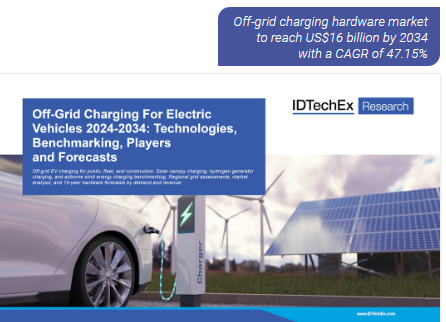
IDTechEx predicts more than 180 million EVs to be sold annually by 2044, with solar EV charging bypassing the grid and becoming a NZ$4.1 billion (US$2.5b) market by 2034.
Its research report Off-Grid Charging For Electric Vehicles 2024-2034: Technologies, Benchmarking, Players and Forecasts explores the challenges and solutions associated with charging EVs in the context of constrained electricity grids.
The South African utility grid is subject to frequent load-shedding, periods when demand exceeds supply, and utility operators are forced to impose rolling black or brownouts of up to 50% capacity, says IDTechEx technology analyst Mika Takahashi.
“This is a problem for all forms of domestic and industrial electrical use but becomes an especially pronounced problem for commercial EV operators.
“Fleet operators often must charge at predesignated times to maximise uptime and complete all planned routes,” says Takahashi.
“If the grid fails during a charging spot, the entire schedule may be adversely affected by factors beyond an operator’s control.
“This is an unusual grid situation; however, it presents a possible worst-case scenario for grid-congested and EV-saturated regions.”
In 2022, a heatwave in California prompted the state government to ask EV owners not to charge to conserve energy. The growth in EV sales will only make such problems more widespread, says Takahashi.
South Africa also has a very carbon-intensive energy mix, with about 70% of power generation from coal.
“This directly translates into higher lifecycle CO2 emissions from EVs powered by the electrical grid,” says Takahashi.
“Whilst South Africa has a particularly fossil fuel energy mix, the source of electricity plays a critical role in the lifecycle emissions of an electric vehicle.”
Takahashi says one possible solution being trialled in South Africa, amongst other places, is harnessing distributed renewable microgrids to form the backbone of charging networks.
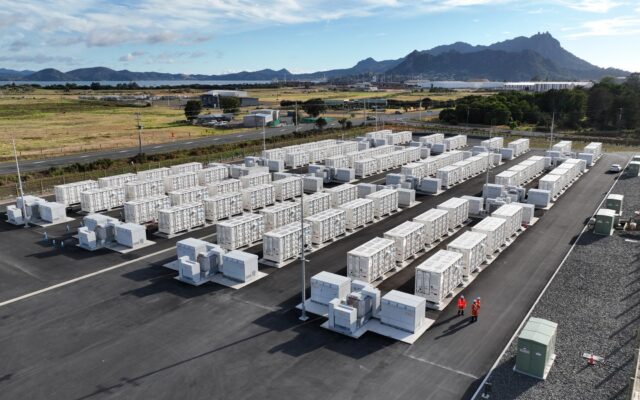
“By integrating a solar farm, large-scale energy storage (ES), and high-powered charging outlets, Vrendal-based Zero Carbon Charge plans to build an e-truck charging network. “Not only does this decouple charging from an unreliable grid, it also avoids placing excess electrical demand on utilities, avoids the need for costly grid expansions, and provides free and 100% renewable energy for the trucks to operate on.
“This is not limited to South Africa; the USA, in particular, has also seen a boom in companies offering grid-free solar-powered charging.
“In the US, many of the products are smaller scale and transportable, allowing easy setup for EV users who want quick access to EV charging.”
Takahashi sees the main challenge with distributed solar generation for EV charging is the low power output of photovoltaic panels.
“Most produce around 250 Watts per square meter, which is relatively low. In fact, to charge at 22kW (generally considered Level 2 fast charging), a solar canopy would need to be at least 10 x 10 meters, a considerable footprint, especially in an urban environment.
The other challenge is storing energy, as charging will not always be required constantly, so an on-site battery is required to store the generated electricity.
“Without an integrated on-site battery, charging is impossible when there is no sunlight,” says Takahashi.
“Larger solar farms with integrated energy storage can become islanded microgrids, and with enough on-site storage and photovoltaic production, potential grid-independent fast charging is possible.”
IDTechEx predicts solar charging systems will make up a sizeable portion of the overall US$16 billion off-grid charging infrastructure hardware market by 2034.
Hydrogen fuel cell charging is likely to emerge as a key solution for use cases requiring much greater power per area, with a particular expected focus on electrified construction sites, says IDTechEx.
More niche technologies include airborne wind energy (AWE) which harnesses high altitude winds for distributed power generation.
Click here for more information.

Join the conversation