
Electric hydrofoil for tourism unveiled
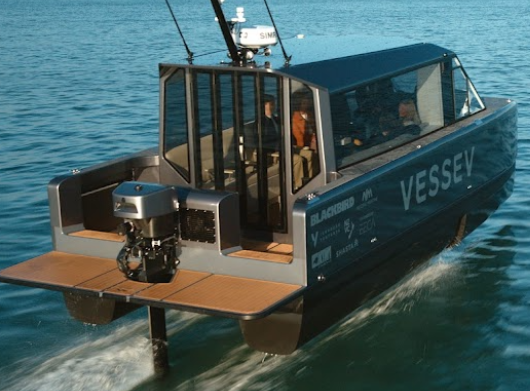
The complete VS-9 hydrofoil vessel billed as the “world’s first premium tourism hydrofoil” has been unveiled.
Its cabin and interior are shown too, the VS-9 touted as enhancing passenger comfort and operational efficiency.
The VS-9’s onboard passenger experience redefines marine transport with a luxurious cabin interior inspired by premium automotive design and a super smooth ride alike to travelling on a quiet waterborne airplane, says Vessev, a global leader in sustainable marine technology.
The nine-metre VS-9 can take up to 10 passengers at a service speed of 25 knots and is set to open new opportunities for water transport and tourism, says Vessev.
“Traditionally, larger vessels are required to deliver a comfortable passenger experience as they can handle the impact of waves and wake, says Vessev chief executive Eric Laakmann.
“By flying above the waves, the VS-9 delivers a large vessel experience on an agile platform that can be berthed and charged in nearly any marina.
“One way of looking at the impact of this vessel is that our waterways today are like roadways, where the only comfortable mode of transportation are very large multi-passenger buses – i.e. ferries. These large vessels are here to stay, but they will be augmented with point-to-point services delivered by vessels such as the VS-9.
“It’s like introducing a limo into a world of buses,” he says.
“Through enhanced comfort and reduced operating costs, the VS-9 platform delivers an entirely new transportation experience that hasn’t truly been viable until today.”
The VS-9 is designed and built by Vessev with input from Fullers360 and its decarbonisation team NetZero Maritime.
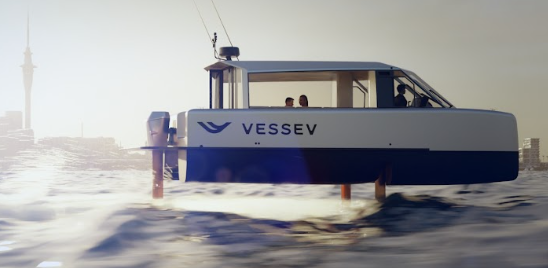
As the vessel accelerates the America’s Cup-derived foils cause the carbon fibre hull to rise out of the water where it skims 50cm above, clear of turbulent waves and wake, the company says.
Laakmann says the VS-9 derives inspiration from private jet travel as well as premium automotive marques, such as Rivian.
“The full standing height cabin also includes wraparound glass with panoramic views of the environment around them,” he says.
“Our goal was to make sure the passengers are connecting with only two things – those on the journey with them as well as their surroundings. We’ve accomplished exactly that.”
Vessev’s lead designer Alain Brideson says the objective was to create something that is beautifully utilitarian.
Fullers360 chief executive Mike Horne says flying on the VS-9’s foils and relaxing into its stylish interior is an unmatched feeling.
The New Zealand ferry operator has already ordered the VS-9.
“We are thrilled to see the vessel progress further toward taking its first commercial journey on the Waitemata,” says Horne.
“Introducing the VS-9 into the Fullers360 fleet and eventually bringing larger electric foiling vessels to life is incredibly exciting for our industry”.
The catamaran with a flat wing deck from bow to stern presents many different options for configuration.
Laakmann says that in the recreational sector Vessev has already had many enquiries and will launch “different variations of the VS-9 in support of boaters who also want to propel a more liveable world”.
Vessev is working through further enhancements to the vessel’s performance and applying learnings to plans for larger foiling vessels with capacity for more passengers and suitable for a range of routes.
The VS-9 entered the water for the first time in May 2024 and was relaunched in the completed configuration in August at Auckland’s Westhaven Marina where it is undergoing sea trials before gaining certification by Maritime New Zealand.
Laakmann says few people have been aboard an electric hydrofoiling vessel.
“Ten years from now though, as this becomes the new way that we move on the water, that is all going to change”.


Join the conversation