
EV battery tech breakthroughs
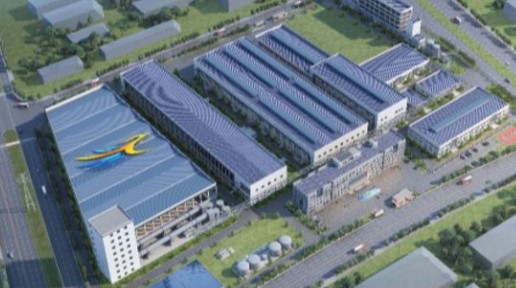
During the last quarter of 2024 Firebird Metals made progress on its Chinese lithium manganese (cathode component) iron phosphate (LMFP) battery strategy and established partnerships to develop the Oakover manganese project in Western Australia.
Firebird subsidiary Hunan Firebird Battery Technology (HFBT) received preliminary design approval from the Jinshi High-Tech Industrial Park Committee for its proposed battery-grade high-purity manganese sulphate plant in Jinshi, Hunan (artist’s impression pictured).
In a key technological breakthrough, Firebird’s pilot calcining kiln demonstrated energy savings of up to 70% compared to conventional kilns, reducing energy consumption to 80-100kWh per tonne of feed.
Firebird entered a strategic collaboration agreement with Central South University to develop a processing method for LMFP as a cathode active material (CAM), strengthening its LMFP strategy.
Early-stage test work is due to start at Firebird’s research and development centre in Jinshi, with initial results expected Q1 this year.
Firebird had A$3.1 million cash at December 31, 2024.
The company also received A$889,546 through the Australian Government’s Research and Development Tax Incentive program, bolstering its financial reserves.
Meanwhile, Blue Current is working on a dry and high-performing solid-state battery
Following CES week in early January, Blue Current indicates key market trends revolving around safety, performance and sustainability.
Solid-state batteries will lead a consumer-driven transition from hybrid to all-EV vehicles through enhanced safety and performance, says Blue Current chief executive Susan Stone.
She says CES week and post CES week trends include EV innovations addressing consumers’ “range anxiety” for short- and long-distance travel that hold promise for the next gen of all-EVs.
The transition from lithium to earth-abundant materials like silicon for batteries will increase scalability in EV manufacturing and production, Stone says.
Honda shared a first look at its solid-state production facility in late 2024, featured on InsideEVs.
“A battery composition that can deliver on Honda’s promise of 620 miles (997.7km) in a full charge by 2030, with a scalable composition, will be the winning energy storage solution.
“An increased focus on reducing thermal events in EVs and other battery-powered transportation devices is a top priority,” says Stone.
“We’ve recently seen abandoned EVs catch fire in the wake of last fall’s hurricanes and January’s wildfires – something that can pose danger to nearby structures and emergency responders, even if not an immediate risk to the cars’ owners.”
CNET posted some of CES 2025’s EV solutions.


Join the conversation