
Mobile hive takes 120,000 bees on North Island tour
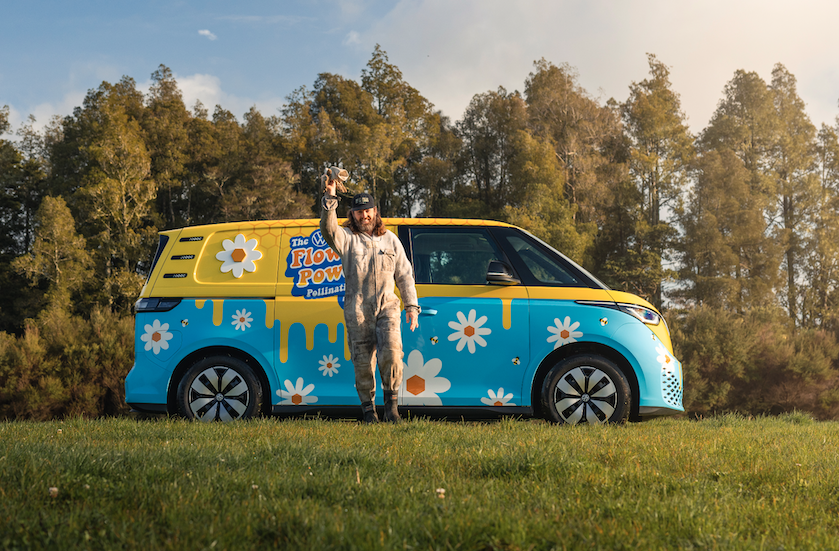
A Clevedon beekeeper will take 120,000 bees on a North Island road trip next month in what’s believed to be New Zealand’s first mobile hive project.
James Green from Hidden Honey will lead the Volkswagen Pollination Tour using an electric ID. Buzz van that’s been converted into a fully functioning mobile hive. The project aims to raise awareness about the importance of pollination to New Zealand’s food production.
Green, who has spent eight years caring for honeybees alongside his two brothers, says the tour will demonstrate how communities can support pollinators through simple actions like planting bee-friendly flowers and creating safe spaces for native species.
“Bees aren’t just pollinators – they’re tiny gardeners of Aotearoa,” Green says. “Every garden, every patch of flowers, helps our native landscapes and our food grow strong. We want Kiwis to feel that connection and see how easy it is to make a difference, one backyard at a time.”
Electric van becomes mobile hive
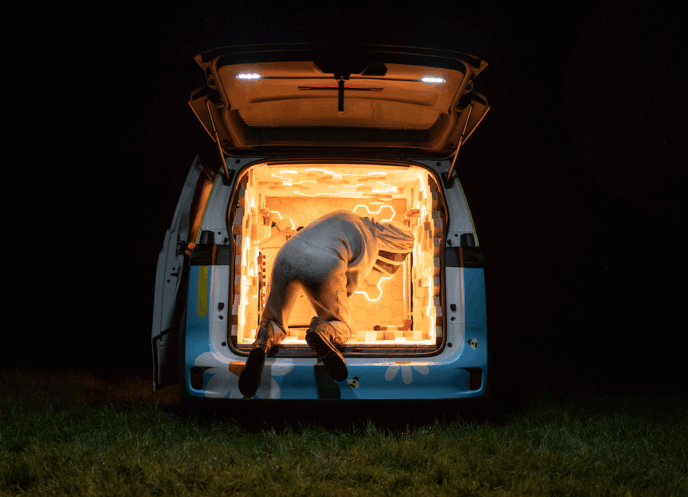
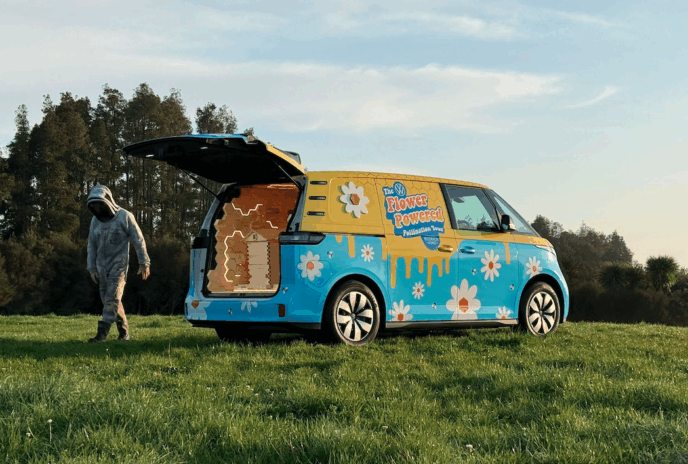
The tour vehicle, nicknamed “Polly the Pollinator,” is a modern take on the iconic Volkswagen Type 2 Kombi that symbolised the 1960s Flower Power movement. The electric van has been fitted with two active bee colonies, complete with entry and exit tubes that allow bees to come and go freely for pollination activities.
The interior features climate control systems designed to replicate natural hive conditions and keep the colonies comfortable during travel. Green will oversee the bees throughout the tour to ensure their welfare.
“Bees are incredible little beings, quietly shaping our world,” Green says. “Following them on this journey is a way to celebrate that magic, and hopefully inspire Kiwis to plant flowers, nurture their gardens, and give a little love back to the land.”
Three-stop North Island tour
The tour begins on October 12 at Clevedon Village Farmers Market before travelling to Whanganui on October 18 and concluding in Wellington on October 26. At each stop, Green will distribute wildflower seeds and give communities the opportunity to observe the hives up close.
The bees will return to Green’s Clevedon farm after the Wellington event, settling back into their permanent home following the two-week tour.
Green says the project combines education, community engagement and sustainability while highlighting how declining flowering habitats and changing land use are affecting pollination rates in parts of New Zealand.
“We’re taking our buzzing friends on the road to meet communities, kids, and gardens across the North Island,” he says. “It’s not just about bees, it’s about showing how every small action, every flower, can help our environment thrive.”
Much of New Zealand’s food production relies on pollination, with the process essential for crops ranging from apples and strawberries to the dairy pastures that support the country’s flat white culture.
The mobile hive project represents what organisers describe as a first-of-its-kind initiative designed to connect urban and rural communities with the vital role pollinators play in maintaining New Zealand’s ecosystems and food security.


Join the conversation