
China bans flush door handles from 2027
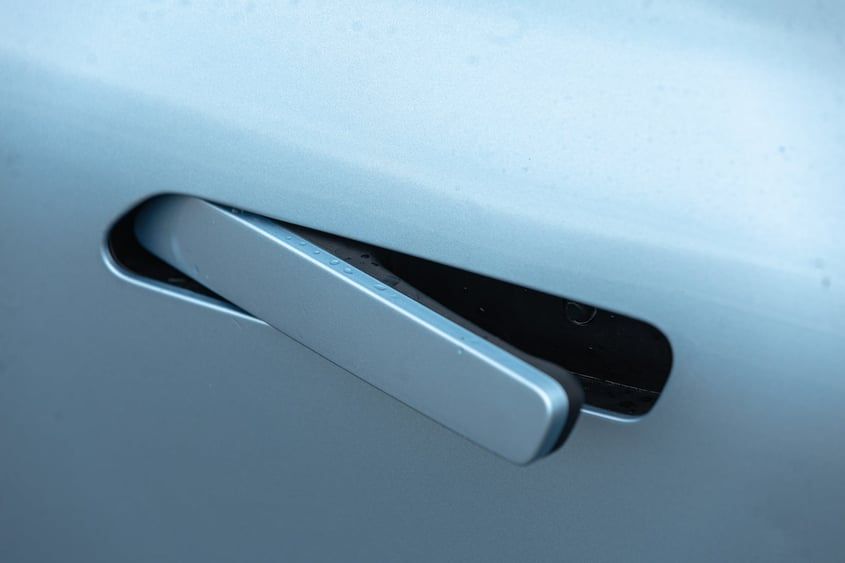
China has moved to ban hidden or flush door handles from all new locally manufactured vehicles, with the ruling set to take effect from January 1 2027.
The announcement was made last week by China’s Ministry of Industry and Information Technology, with manufacturers of vehicles already approved for production given until January 2029 to make the required changes.
Flush door handles first entered the automotive mainstream with Tesla’s early Model S and Model X vehicles. While they offer benefits in terms of design and aerodynamics, safety concerns around their use on electric vehicles (EVs) have prompted the ban.
The primary concern centres on victims being trapped inside vehicles following collisions, where the electrical systems powering pop-out handles may fail or become inaccessible.
Technical requirements and industry impact
Under the new Chinese regulations, door handles must feature a recess of at least 60mm by 20mm behind the handle. Vehicles must also display clear interior signage showing exactly how to operate the handle.
Chris Liu of Omdia told AP it would not be surprising to see other countries follow China’s lead.
“China is the first major automotive market to explicitly ban electrical pop-out and press-to-release hidden door handles,” he said. “While other regions have flagged safety concerns, China is the first to formalise this into a national safety standard.”
The move could have significant implications for the New Zealand market, where many popular EV models – including various Tesla models and several Chinese-manufactured vehicles sold locally – currently feature flush or pop-out door handles.
If other markets adopt similar safety standards, manufacturers may need to redesign door handle systems globally, potentially affecting vehicle aesthetics and aerodynamic efficiency that flush handles were originally designed to improve.
The ruling represents a notable shift in automotive safety regulation, prioritising occupant escape accessibility over design and efficiency considerations that have driven the adoption of flush handles across the EV sector.


Join the conversation