
Australia’s EV industry calls for policy certainty to unlock charging rollout
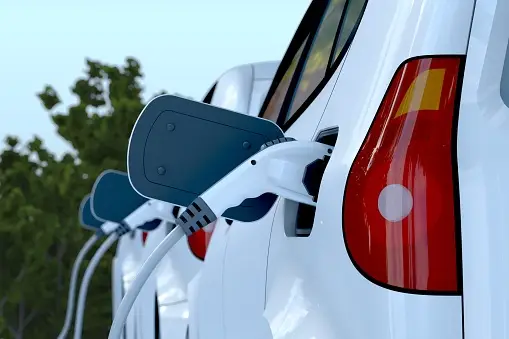
Australia’s electric vehicle charging sector is calling on governments to remove regulatory barriers and provide policy certainty, warning the country’s exposure to fuel price shocks highlights the urgent need to accelerate the transition away from imported fuels.
In a joint statement, EV charging operators and industry stakeholders say recurring fuel volatility is not just a transport issue, but an energy security and economic resilience challenge.
They say the private sector is ready to invest billions of dollars in charging infrastructure by 2030, but only if the right policy settings are in place.
“The private sector is ready to do the heavy lifting. What we need from government is certainty,” the group says.
Charging operators say they are prepared to expand infrastructure across metropolitan, regional and highway locations, with a focus on reliable and accessible services, while building a competitive market that supports innovation and improved customer experience.
They have also committed to working with governments, councils and industry on site identification and rollout planning, alongside supporting open access and interoperability to improve charging access for users.
Nexa Advisory chief executive Stephanie Bashir says the shift to EVs mirrors the uptake of rooftop solar and batteries, with consumers seeking to reduce exposure to volatile energy costs.
“EVs are the next frontier for Australians wanting to take control of their cost of living, now the we have shown the world what gets people investing in rooftop solar and batteries. To make that a real possibility for everyone, charging infrastructure has to roll out – everywhere, fast,” Bashir says.
Despite strong investment appetite, the industry says regulatory and infrastructure barriers are slowing deployment, particularly around grid connections, pricing structures and access to network capacity.
Smart Energy Council chief advocacy officer David McElrea says connection challenges are a major constraint.
“Right now, the biggest barrier to rolling out EV charging at scale isn’t demand or technology — it’s the basic plumbing of the system,” McElrea says.
“We’re seeing wildly inconsistent connection costs and delays of up to two years, which is holding back investment that’s ready to go.”
Tesla says barriers are not due to a lack of market interest, but rather network-related constraints.
“If there is a market insufficiency, it lies not in a lack of commercial interest, but rather in DNSP-controlled barriers: limited visibility of hosting capacity, delays in connection approvals, and inconsistent or unaffordable access charges,” Tesla says.
A key concern for the sector is maintaining a competitive market structure, particularly around the role of regulated network businesses.
The group is calling for a clear separation between monopoly network operators and the competitive EV charging market, warning that allowing DNSPs to own or operate charging infrastructure could deter private investment.
EVX chair Sean McGinty says uncertainty around market structure is already slowing investment.
“The spectre of monopoly DNSPs, which control 90% of the input costs of EV charging, entering the competitive EV charging market is slowing investment in EV infrastructure. Perversely creating the problem they’re spruiking to be saviour of,” McGinty says.
The industry is urging federal, state and territory governments to adopt a coordinated, partnership-led approach to EV charging rollout, supported by clear national policy and improved planning across councils, networks and industry.
Clean Energy Council chief executive Jackie Trad says consistent policy settings are essential to building confidence and accelerating uptake.
“Reliable, widely available charging gives people the confidence to purchase electric vehicles, helping Australians make the switch. Support for the charging industry will drive investment, create jobs, support local energy use and improves the nation’s resilience to withstand global fuel supply disruptions,” Trad says.
The Victorian Government has been acknowledged for committing to remove barriers to competitive market delivery, while New South Wales’ EV strategy has been described as a positive initial step.
Industry stakeholders say recurring fuel shocks highlight the need to reduce reliance on imported oil and build a more resilient transport energy system, with electrification seen as a key part of that shift.
AGL general manager electrification and innovation Jane Butler says the opportunity is significant but depends on getting the policy framework right.
“To capture the EV opportunity, we need the right policy settings to support timely and effective development of charging infrastructure that keeps cost to consumers as a central tenet,” Butler says.
With EV adoption rising and demand for charging increasing, the sector says the current moment represents a critical opportunity to accelerate the transition.
“Our message is simple: the fuel crisis should be a catalyst for action,” the group says.



Join the conversation