
Video: Kia PV5 – The courier’s new best friend?
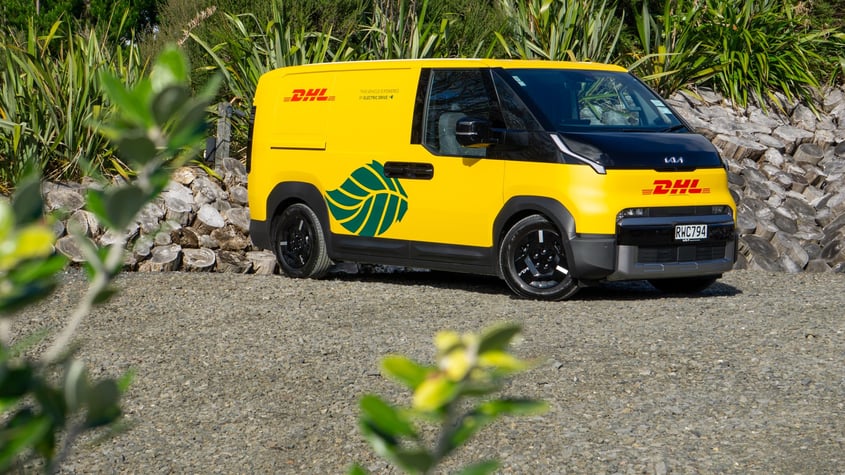
Just when you thought Kia was done with its expansive EV offering, but a very important addition has just landed in the form of the PV5 Cargo. And while this futuristic PV5 is quite an impressive offering in its own right, it’s just the start for the PV family.
A seven-seat PV5 Passenger variant is set to land within the year, and a high roof version of the PV5 Cargo will arrive early next year. In late 2027, the PV7 will arrive, which will be similarly sized to a Toyota Hiace. This will be offered in both Cargo and Passenger variants. And finally, a Sprinter-sized PV9 will launch in 2029, offering enormous amounts of cargo space, still on the same electric underpinnings.
A Courier’s Best Friend
At 4695mm long, the PV5 Cargo is significantly smaller than the diesel-powered cargo vans we know in New Zealand, and more akin to the other electric vans currently on sale such as the Farizon V7E or the VW ID.Buzz. But this is a selling point according to Kia New Zealand, as it’s targeted at city-based delivery drivers that need to zip in and out, whilst reducing down time.
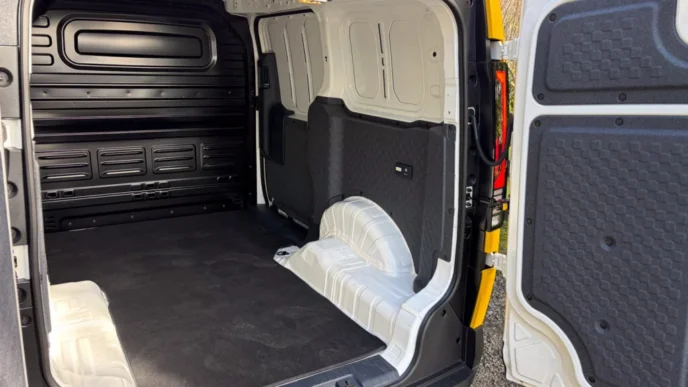
On the inside, it features 4420-litres of cargo space, across an area that measures 2255mm long, and 1565mm wide. This loading area is 1520mm high, and the rear step height is 419mm.
The PV5’s payload rating is 765kg, and it can tow just 750kg, no matter whether or not the trailer is braked.
As for pricing, it’s all quite simple. The PV5 Cargo starts at $64,990. If you want six doors, it’s $500 extra. If you want any colour that isn’t white, it’s $1,500 extra. If you want 22kW AC charging (over the standard 11kW) it’s $2,000 extra.
Zippy, but not Fast
The PV5 is powered by a 71.2kWh lithium ion battery, which sits in the floor of the van. It provides a driving range of up to 416km (WLTP).
As mentioned, it can charge at 11kW with an AC charger, which will take around six and a half hours to charge from 10 to 100 per cent. With the optional 22kW AC upgrade, this charging time drops to around three hours and 15 minutes.
As for DC charging, it is rated up to 150kW, which will take around 30 minutes to charge from 10 to 100 per cent.
Performance-wise, the PV5 uses a single electric motor on the front axle, which produces 120kW and 250Nm. Kia claims a 0-100km/h time of 12.4-seconds, which seems slower than what it feels.
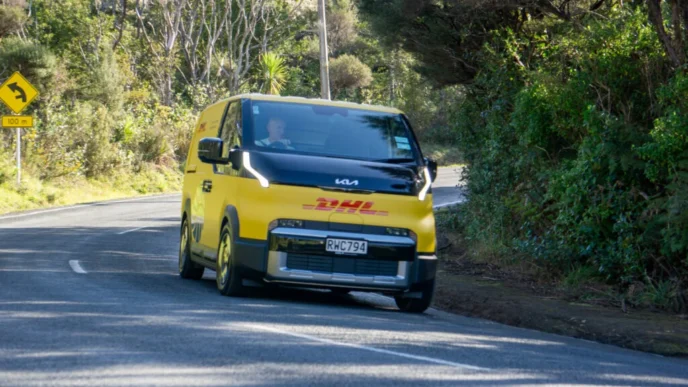
With its tight steering system and impressive ride, I’d argue that it drives more like an SUV than a traditional cargo van. It uses double wishbone suspension up front, with a torsion beam rear, but you don’t get the harsh rear axle jolts I’m used to experiencing from driving empty cargo vans.
As for safety, the PV5 has an impressive array of advanced features such as adaptive cruise control, lane-keep assist, and autonomous emergency braking. It isn’t as advanced in this department as some of its passenger models, but it’s adequate for a van.
The Kia PV5 was awarded a five-star ANCAP safety rating in June 2026.
Simple but Effective Cabin
While the exterior of the PV5 is very futuristic-looking, the interior is a far more familiar affair.
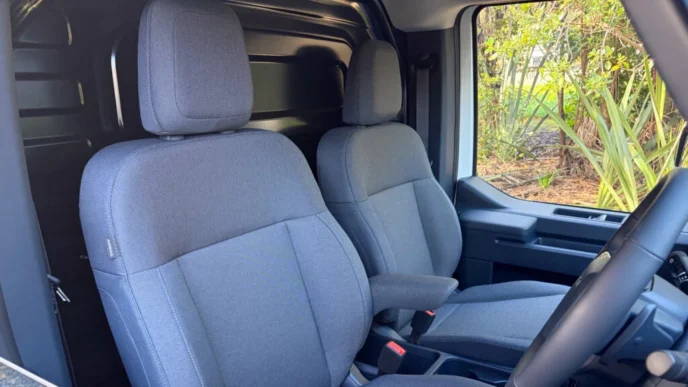
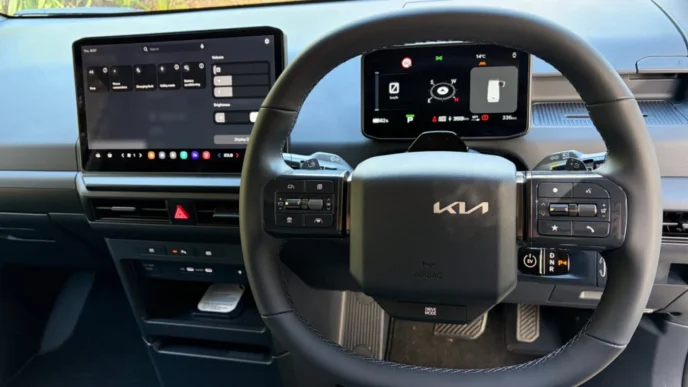
It gets a pair of seats with basic cloth upholstery and manual adjustment. There’s also not too much adjustment to be had, considering the solid bulkhead behind the cabin. As expected, the seating position is very upright, and the pedals felt slightly offset from the driver’s seat, which took some getting used to.
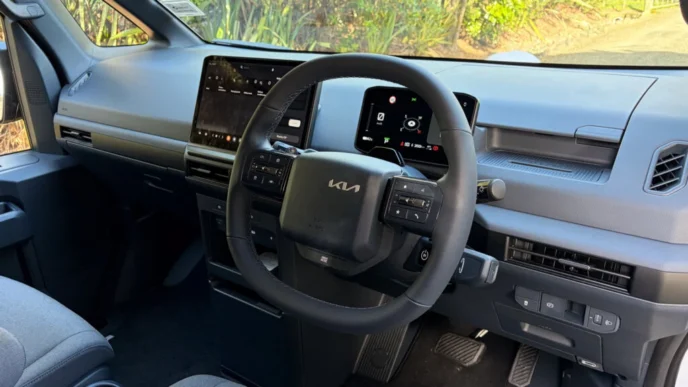
As for tech, the PV5 gets all the modern staples including a 7.5-inch digital cluster, and a 12.9-inch infotainment display. You get built-in navigation on this system, with wireless Apple Carplay and Android Auto connectivity. Kia also offers over-the-air updates for the PV5.
There’s one 100-watt USB C outlet, and a wireless phone charger below it. There’s also a heap of storage all around the cabin, with a particularly useful glove box thing behind the steering wheel.
While the majority of the cabin is a fantastic exercise in practical simplicity, I will say the rear-vision mirror is a massive oversight. Where a lot of vans with solid bulkheads will fit a digital rear-vision mirror, the PV5 has retained an entirely useless mirror.
The Goldilocks Van?
Once a niche offering, the electric van segment now features a fair few competitors, with Kia’s PV5 looking like the most complete.
At the cheaper end of the scale there’s the Farizon V7E. This one seems to currently be the most popular choice at $55,990.
Then there’s Volkswagen’s ID.Buzz with its German engineering and retro styling coming in at a hefty $99,990. It’s a similar story for Ford’s electric Transit, which is offered from $98,990.
Kia might face a tough challenge winning over buyers from the Farizon, considering the almost five-figure price difference, but it will be the Korean’s reputation for reliability that will get these PV5s over the line.

Join the conversation