
Ampere marks its first year of operation
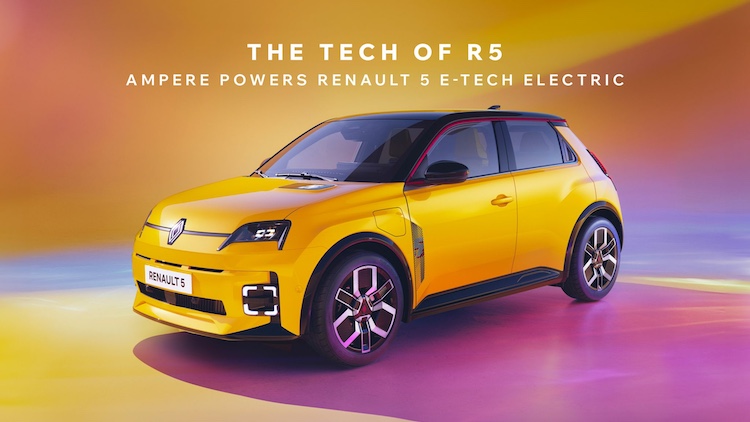
The Renault Group’s electric vehicle division, Ampere, has celebrated its first year of operation.
Ampere is responsible for developing and manufacturing electric vehicles for the Renault brand and developing such vehicles for Alpine, Mitsubishi, and Nissan.
Despite the slowdown of EV sales in Europe, Ampere predicts the market will grow by 25% annually in the next five years.
Ampere’s ElectriCity manufacturing hub in northern France produces the Renault Megane, Scenic, and 5 and 4 electric vehicles at the Douai, Mauberge, and Ruitz plants in collaboration with the powertrain plant at Cleon.
Ampere says it has reduced its manufacturing time to produce the electric Renault 5 to fewer than 10 hours.
“We’ve designed Ampere to deliver unique technology and customer experience, to catch up with the best in a record time,” Renault Group and Ampere chief executive Luca de Meo says.
“The significant advancements made by Ampere in just one year prove that it is the most substantiated response of Europe’s automotive industry to new competitors from the East and the West,” he says.
Ampere announced one year ago that the fully electric Renault Twingo development is on track. It will be ready to be on the market in 2026 with a selling price under 20,000 euros.
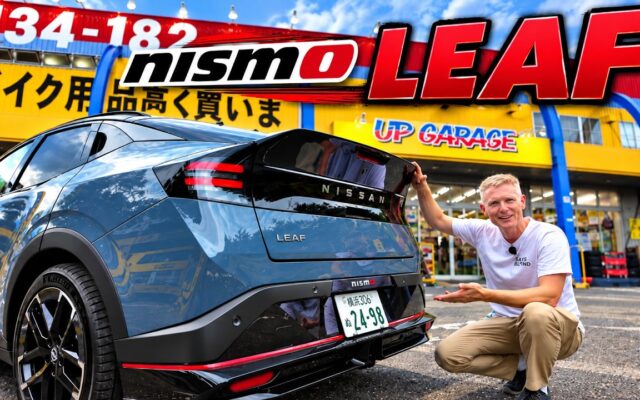
Nissan asked Ampere to explore the development of its next A-segment EV. This car would leverage the newly implemented breakthrough processes, benefit from Ampere’s cost-reduction roadmap, and reduce development time.
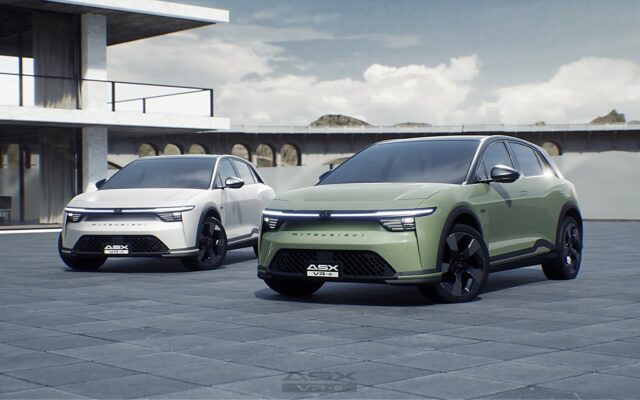
This demonstrates Ampere’s strong position as a Tech platform for major brands: Alpine with A390 developed on AmpR Medium, alongside A290, developed on AmpR Small and manufactured in Douai; Nissan with its compact EV designed and manufactured by Ampere, and future A-segment EV, and Mitsubishi with its C-SUV EV developed on AmpR Medium platform and manufactured in Douai from 2025.
To speed up the development of its EVs, Ampere relies on the Advanced China Development Centre, which was created to gather a team working closely with Chinese partners. Such an integrated team aims to learn from the ecosystem’s development processes and maximise them for the Ampere and Renault Group teams.
Ampere also successfully integrated LFP (Lithium, Iron, Phosphate) technology into its cars alongside NMC (Nickel, Manganese, Cobalt), demonstrating its agility and capacity to drive significant transformations in record time and significantly reduce costs. With cell-to-pack technologies and work on cell-to-chassis, Ampere offers its customers the best autonomy at the best price, depending on their usage.
By 2028, Ampere will be ready to deliver the next technology leap in chemistry with cobalt-free batteries, gathering the energy density of the NCM, the cost and safety of LFP, and less than a 15-minute charge. It foreshadows the objective to double around 2030 the energy density of NCM thanks to a cobalt-free cathode and a Li-Metal anode applied to a structural Solid-State Battery.
Ampere will have, in 2026, the first European SDV with FlexEVan, one example of the validity of its horizontal approach, allowing it to reduce costs while keeping the IP of what is core. This approach is critical in the Software, with Google and Qualcomm, but also in the batteries with four partners based in Europe, and in power Electronics, to accelerate in this field representing a significant part of the cost of an electric powertrain.
The combination of these advancements over the past year allows Ampere to be well on track with its 40% cost reduction roadmap between the first and second generation of C-segment EVs in 2028, thanks, in particular, to LFP and new technologies such as cell-to-pack.
The next generation of C-segment EVs will offer 2028 the best efficiency thanks to a breakthrough in energy integration, thermal management, and embedding other new technologies, such as the third generation of the rare-earth free motor. With these cars, Ampere plans to be at the best level of the competition and catch up two generations in one.
Ampere recently unveiled the work done to address a significant engineering and innovation challenge that led to the birth of Renault Emblème.
Convinced that decarbonisation can only be achieved by playing as a team, Ampere gathered cutting-edge technologies across critical areas to turn its ambition into an up-and-running car.
Join the conversation