
Auckland’s first electric-hybrid ferry nears service launch

Auckland’s first plug-in electric-hybrid fast ferry is a step closer to entering passenger service following months of testing and sea trials.
Stakeholders, dignitaries and local politicians became the first passengers onboard the new vessel this morning ahead of its expected entry into service next month.
Owned by Auckland Transport and operated by Fullers360, the new electric-hybrid ferry is part of Auckland’s Mission Electric programme aimed at reducing emissions across the public transport fleet.
The first vessel, named Waitematā 1, is expected to begin operating on the Devonport to Downtown Auckland route in June, with a second vessel due to arrive later this year.
The ferries cost about $20 million each, with around 49% funded by Auckland Council, including support from the Climate Action Transport Targeted Rate, and 51% funded by NZTA.
Auckland Mayor Wayne Brown says the new ferries will improve reliability on one of the city’s busiest ferry routes.
“Commuters and visitors alike will welcome a new, modern, quiet hybrid ferry on this essential link between Devonport and Downtown Auckland,” Brown says.
“Auckland has an aging ferry fleet meaning breakdowns, cancellations, frustrated customers and more cars on the road, so replacing the fleet with brand new vessels is an important part of giving customers confidence in our fleet network.”
Auckland Transport chief executive Stacey van der Putten says the project supports the city’s emissions reduction goals while improving network resilience.
“The electric hybrid ferries will be a fantastic asset for our city and support our commitment to reduce transport emissions over time and improve the resilience of our public transport network,” van der Putten says.
“The first vessel has performed well during sea trials and performance of the electric propulsion and onboard systems have consistently met expectations. We’re excited to welcome onboard our first public transport customers to the new vessel next month.”
Waitematā 1 can carry up to 300 passengers and has been designed for rapid transit ferry services. Features include floor-to-ceiling windows, tables with USB charging ports, fold-up luggage compartments and covered storage for up to 28 bikes.
Fullers360 chief executive Mike Horne says the vessel represents a major milestone for the company and Auckland’s ferry network.
“Delivering Waitematā 1 for Auckland has been a landmark project for our people as we help roll out the future of ferry travel,” Horne says.
“In recent months, our crews, engineers, and operational teams have tested the electric-hybrid ferry across real routes and harbour conditions. This hands-on validation is critical.”
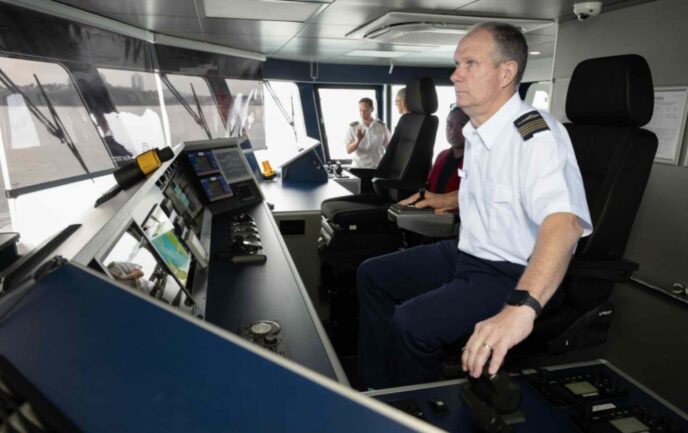
Horne says the company worked closely with Auckland Transport throughout the development process.
“Working in partnership with Auckland Transport, Fullers360 has turned decarbonisation ambition into an operational ferry, leading procurement and project management and ensuring the vessel would perform on Auckland’s harbour, not just on paper.”
Fullers360 says testing indicates the ferry can deliver energy costs about 70-75% lower than an equivalent diesel vessel when operating electrically. The company says replacing one diesel ferry on the Devonport route with an electric-hybrid could reduce diesel consumption by about 790,000 litres annually and cut CO2-e emissions by 2500 tonnes per year.
The propulsion system operates similarly to a plug-in hybrid vehicle, using onboard batteries for short and medium journeys while retaining a diesel generator for longer trips and operational resilience.
Charging infrastructure is currently being expanded across Auckland’s ferry network. A fast ferry charger installed at Half Moon Bay has already been used for testing and commissioning, while additional charging infrastructure is under construction at the Downtown Ferry Terminal and will be completed in stages over the next 12 months.
Until the Downtown charging system is fully operational, the ferry will initially operate using its onboard generator before progressively transitioning to fully electric operation.
The two electric-hybrid ferries were built by Q-West boatbuilders in Whanganui and designed by Incat Crowther, with HamiltonJet propulsion systems, energy storage systems and electrical integration.
Join the conversation