
AWD or RWD? We drove two MG S6s to Hamilton to find out

Is all-wheel drive actually worth the extra money on an EV? It is one of the most common questions buyers face now that so many electric models come in both rear-wheel drive and all-wheel drive flavours, and it is the question we set out to answer in our latest video.
The test cars are a pair of MG S6s, a model we see as a genuine Tesla Model Y rival at a sharper price. The entry rear-wheel drive car lists at $57,000 with a claimed 530 km of range. The all-wheel drive version asks $64,000, drops range to 485 km, and cuts the 0-100 km/h time from 7.3 seconds to 5.1.
So you pay $7,000 more, lose 45 km of range, and gain a couple of seconds. Worth it? Rather than guess, Richard Edwards and Gavin Shoebridge charged both cars to full and set off from Auckland to Hamilton on a preset course, deliberately skipping the motorway early on in favour of Great South Road to get a realistic mix of urban and open-road running.
The consumption gap showed up quickly. Around town the rear-wheel drive car averaged 12.1 kWh per 100 km against 13.4 for the all-wheel drive, roughly the ten percent difference the spec sheets suggest. By Bombay, with rural speed limits in play, the figures had climbed to 13.7 and 14.9 respectively. On fast charging rates, that works out to around $1.50 extra per 100 km for the all-wheel drive car, and that is before either car touched the motorway.
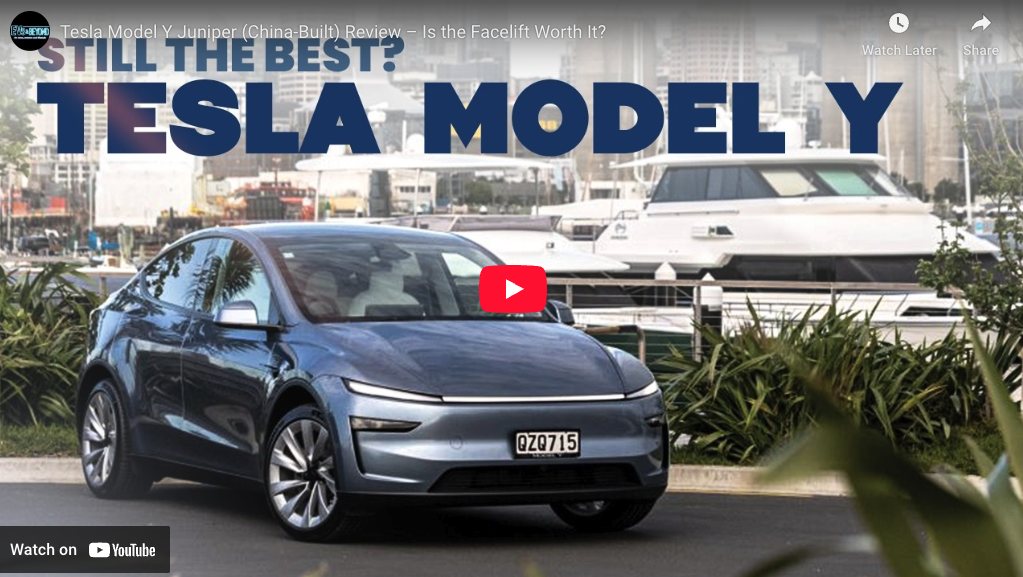
The video also takes a wider look at the AWD-or-not question across the market. Some picks are easy: for the Tesla Model Y, the rear-wheel drive version keeps strong charging speeds, excellent range and more than enough performance. Others go the other way. The Leapmotor C10 makes a case for all-wheel drive at a modest premium, the Kia EV9 deserves the bigger battery and dual motors if you are spending that much anyway, and the MG4 XPower earns its extra $11,000 by halving the standard car’s 0-100 km/h time to 3.8 seconds.
Along the way there is a plain-English explainer on WLTP, the lab test behind every EV range claim, and why real-world figures typically land 10 to 20 percent below it. Treat it as a ruler for comparing cars, not a promise. There is also praise for MG’s Pilot Custom feature, which lets you silence the regulatory beeps and bongs in a couple of taps, though annoyingly it resets every time you park.
The pair’s early verdict? For most Kiwi buyers, most of the time, the rear-wheel drive car is the smarter buy. All-wheel drive earns its keep when there is serious towing involved, or when the performance step is big enough to matter. Whether the motorway leg and an impromptu drag race change that thinking, you will have to watch to find out.
Watch the full video on the EVs and Beyond YouTube channel.


Join the conversation