
Battery electric rail fleet coming to Lower North Island
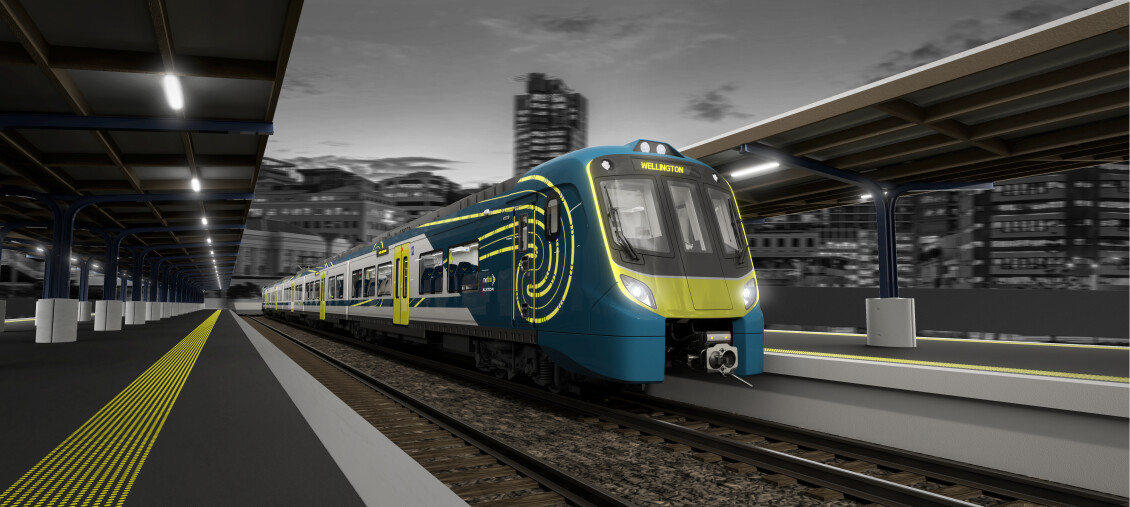
New Zealand will soon be home to the Southern Hemisphere’s first fleet of battery-electric trains, following the signing of an $802.9 million contract with French rail manufacturer Alstom.
Eighteen new battery electric multiple units (BEMUs) will replace the diesel-hauled trains currently operating on the Wairarapa and Manawatū lines.
Transport Minister Chris Bishop says the investment is a milestone for the Government’s Lower North Island Rail Integrated Mobility Programme (LNIRIM).
“The new train fleet will significantly improve travel times and passenger experience on the Wairarapa and Manawatū lines,” Bishop says.
“These new trains will replace the ageing diesel locomotive-hauled fleet which dates back to the 1970s and has frustrated commuters for years. They will deliver faster, more frequent and more reliable services for passengers travelling between Wellington, the Wairarapa and the Manawatū.
“This upgrade will enable the doubling of peak services on both lines and additional off-peak services. We expect up to 15-minute travel time savings for commuters between Wellington and Masterton, and increased speeds on the Wairarapa line.”
The Government is funding about 90 per cent of the trains and infrastructure upgrades, with Greater Wellington Regional Council and Horizons Regional Council covering the remainder.
Greater Wellington chair Daran Ponter says Alstom was selected through a global two-stage procurement process.
“With a focus on providing passengers with comfortable and accessible rail journeys, we welcome Alstom to the LNIRIM programme to design and build trains for New Zealand conditions and to maintain the fleet for 35 years,” he says.
“Designed for New Zealand conditions, the new trains switch to batteries on tracks without overhead power, using technology proven in countries like Japan and Germany.”
Horizons chair Rachel Keedwell says the fleet has been named Tūhono, meaning “to connect or unite”.
“Tūhono trains will help our regions thrive by improving access to work, education and recreation for heartland New Zealand,” she says.
The BEMUs feature modern design, improved passenger comfort and the ability to run on both electrified and non-electrified tracks, cutting emissions while improving reliability. The new fleet is scheduled to enter service from 2030.

Join the conversation