
Big battery for Huntly
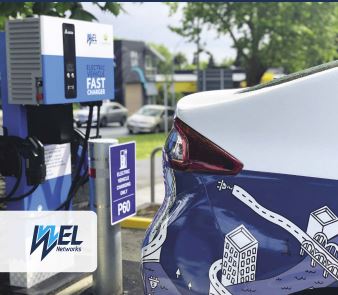
A 35MW Battery Energy Storage System (BESS) to help charge EVs and back up the grid will be built in Rotowaro Road in Huntly starting July 2022, expected to be commissioned in December next year.
WEL Networks and Infratec have begun major contracts for the supply and build of New Zealand’s largest battery storage facility, both also exploring new solar farm options that will complement the battery storage to ensure renewable power to local consumers at low cost.
WEL Networks and Infratec have begun major contracts for the supply and build of New Zealand’s largest battery storage facility, both also exploring new solar farm options that will complement the battery storage to ensure renewable power to local consumers at low cost.
The project will play a pivotal role in the reduction of emissions in the Waikato and will support New Zealand’s Net Zero goal of becoming 100% renewable by 2030, the pair say.
“This is an exciting development which will deliver significant value to WEL’s network customers,” says its chief executive Garth Dibley.
“The battery will support the charging of electric vehicles, maximising the benefits of solar power and providing back up during grid emergencies.”
Infratec chief executive Grant Smith says high quality technologies have been selected and the company is now working with its local contractors.
The major equipment supply contractors include Saft and Power Electronics NZ, while local electrical and civil contractors will be used where possible as part of the construction and installation phases.
Saft energy storage solutions executive vice president Hervé Amossé says Saft are proud to pioneer the utility scale energy storage system with WEL Networks and Infratec in New Zealand.
“This first network-scale battery system will contribute to the country’s Net Zero ambition by 2030, allowing for more renewable energy to be installed and connected to the network and providing essential services to enhance grid stability and resilience.”
Power Electronics NZ operations director Brent Sheridan sees New Zealand as a key market for storage solutions with future generation growth mainly led by solar and wind technology.
“Both these forms of generation work perfectly in combination with batteries to provide a continuous and stable energy supply,” he explains.
“Power Electronics has seen this trend internationally, in particular in the US and Europe, where traditional energy generation from sources such as coal and nuclear are being replaced by vast solar and wind farms.”
The battery will store enough energy to meet the daily demands of more than 2000 homes and be capable of providing fast reserves support for the North Island grid.
It may help allow Genesis Energy to remove coal from its gas and coal-fired 953MW Huntly Power Station, with Genesis Energy chief executive Marc England reported as saying that by 2025 Genesis will only use coal in its thermal units in abnormal market conditions, adding it’s Genesis Energy’s intent to remove coal completely by 2030.
it may use biofuels instead and could test wood pellet fuel this May.

Join the conversation