
BMW iX3 first through ANCAP’s new ‘Stages of Safety’ regime with five stars
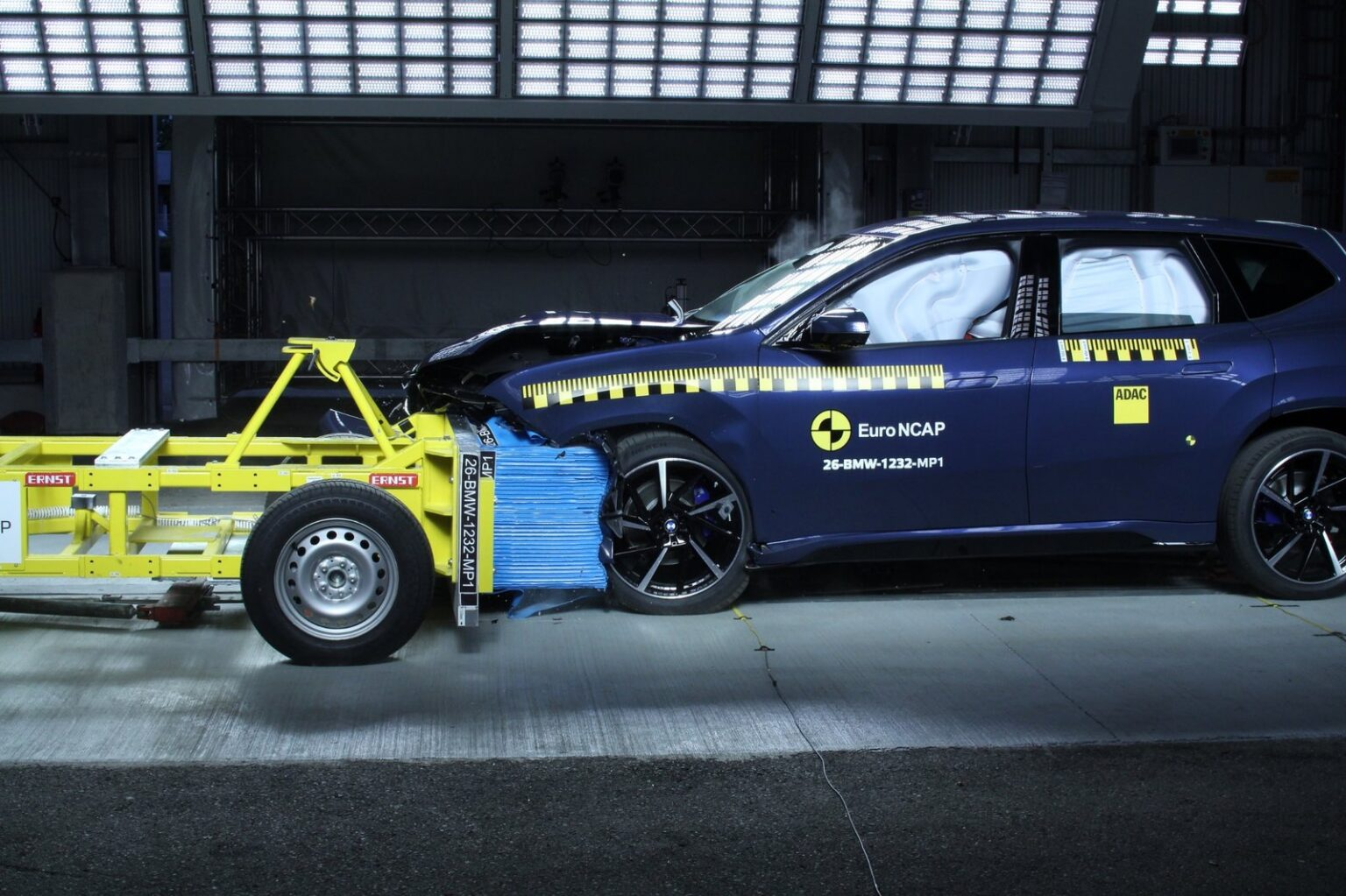
The new fully electric BMW iX3 has become the first vehicle rated under ANCAP’s tougher 2026-2028 protocols, achieving five stars and setting an early benchmark for the safety body’s new “Stages of Safety” assessment structure.
The electric medium SUV scored 71% for safe driving, 83% for crash avoidance, 86% for crash protection and 95% for the new post crash category. The rating covers the 50 xDrive variant in New Zealand, which goes on sale this month, and runs through to December 2034.
The result is the first public output of the most significant overhaul of ANCAP’s rating system since 2020, restructuring assessments into four pillars covering safe driving, crash avoidance, crash protection and post crash performance.
ANCAP chief executive Carla Hoorweg says the change is a major moment for the organisation.
“The uplift in terms of the safety criteria and the changes that we’ve made switching to these Stages of Safety approach are really significant,” says Hoorweg. “This is a really important milestone in terms of the evolution of safety and the expectations for manufacturers in terms of what they’re bringing to market.”
Hoorweg says the new structure should also make more sense to consumers, with crash protection now assessed as a whole rather than split by occupant type or road user.

“Instead of separating it out by occupant or vulnerable road user or counterparty vehicle, it’s all in together. So how well does the vehicle perform in a crash to protect both those in it and those outside the vehicle as well?”
Crash testing still catching manufacturers out
While physical crash performance has largely plateaued at the top end, Hoorweg says the live tests remain essential, pointing to a run of unexpected failures.
“We have seen these component failures over the last sort of 12 months, which have surprised us,” she says. “Unless you do those crash tests, you don’t uncover some of the systems that are in place that may not function well.”
She says ANCAP is still seeing vehicles arrive without long-established equipment such as seatbelt pretensioners and load limiters.
“They’ve been around for years, but then some manufacturers choose not to include them. And what we really see is the impact on the dummies in those cases is much more severe.”
From this year, serious component failures attract an automatic 50% score deduction per test.
Will more cars miss five stars?
Asked whether the tougher protocols will see more vehicles fall short of five stars, Hoorweg is cautious, noting the jump is smaller than the shift from the 2018 to 2020 criteria.
“You can’t really speculate on what any car’s going to get until you put it through the programme,” she says. “We know five stars is achievable for manufacturers and it always has been. They just need to focus on making that a priority.”
She warns manufacturers who do not engage with ANCAP’s information requirements will pay a price. “There are certain things that we require input on, and if we don’t receive that input, it’ll affect the score.”
The RAV4 question
The comments come as Toyota sells its new RAV4, New Zealand’s top selling vehicle, unrated, with the brand openly acknowledging the car as launched would not achieve five stars under the new criteria. Structural and software changes are expected late this year and into next.
Hoorweg says that is a commercial call for Toyota, but one with consequences.
“Bringing a car to market without a safety rating has consequences for fleet purchases in particular and will rule that car out for a lot of fleet purchases,” she says.
With the RAV4 due to be tested in Europe before the end of the year, ANCAP opted not to spend its own funds testing the car locally. “It’s up to us to advise customers and ask them to consider purchasing vehicles that do have a star rating, because their safety performance is known.”
How the iX3 performed

Hoorweg says the iX3’s result shows the new bar is achievable from day one.
“It has done really well across the board. And I think that’s been incredibly encouraging in terms of where the protocols are sitting, that it’s absolutely possible for vehicles to achieve that level of safety.”
In ANCAP’s new on-road driving assessment, which takes vehicles on an extended drive across local, metropolitan and regional roads to test speed limit recognition, the iX3 correctly identified 73% of speed change events, equivalent to 92% of the distance driven.
“That’s doing really well and demonstrating that it is possible to deliver systems that actually are accurate over a long run drive. So really that’s setting the bar for other manufacturers to follow,” says Hoorweg.

The iX3’s 95% post crash score was helped by its eCall automatic emergency notification system, provided to owners in Australia and New Zealand, along with effective battery voltage isolation and post-crash fire risk management. The electric door handles remained extended and operable after all crash tests, with a manual release also confirmed.
ANCAP’s assessment notes the iX3’s autonomous emergency braking comfortably exceeds Australian, New Zealand and European regulatory requirements, while lane departure avoidance was a standout. Maximum scores were recorded in all side impact tests, and a small adult female dummy featured in the front passenger seat of the frontal offset test for the first time.
Not everything was perfect. The iX3 cannot detect seatbelt misuse or an out-of-position front passenger, its AEB cannot override driver mis-acceleration towards a pedestrian, and the car-to-motorcycle crossing scenario scored just 16%. Pedestrian pelvis protection was also weak at 17%.
Old and new ratings to run side by side
Hoorweg says buyers should expect a mix of 2023-2025 and 2026-2028 ratings in showrooms for some time, with vehicles tested in Europe under earlier protocols retaining those ratings when they arrive here later.
“If a car’s been tested to those earlier protocols, we’re not coming in and retesting to a higher standard,” she says. “It is important then for people to be looking at the date stamp, because that’s what’s going to tell you which protocols the vehicle was tested to.”
Other changes from 2026 include a new full-width frontal crash barrier, rollover curtain airbag assessment, “pothole” hazard avoidance testing, a motorcycle T-bone AEB test, and lane keeping systems now scored on how naturally they interact with drivers, with irritating systems marked down.
Join the conversation