
Watch:BMW reveals 805km iX3, NZ deliveries from mid-2026
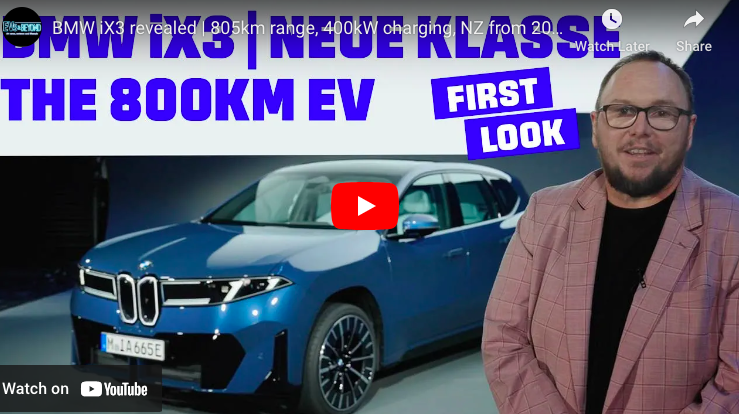
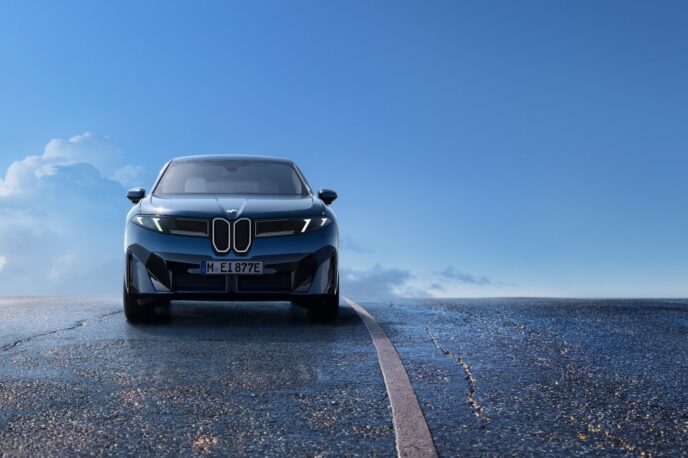
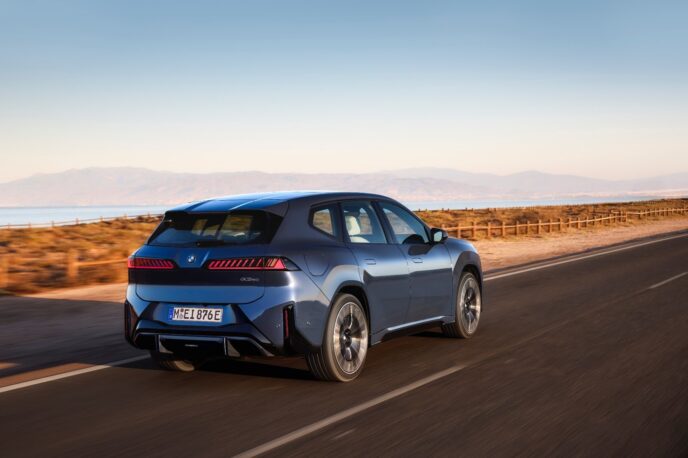
BMW has pulled the covers off its next-generation iX3, with the most eye catching point not being its unique looks – but more its astounding 805km WLTP range on a single charge.
BMW unveiled the next-generation electric SUV at the IAA Mobility show in Munich, marking the first model in the company’s Neue Klasse (New Class) range. The vehicle represents what BMW calls a “milestone in the transformation of the BMW Group” and introduces sixth-generation eDrive technology.
“The Neue Klasse is our biggest future-focused project and marks a huge leap forward in terms of technologies, driving experience and design,” says Oliver Zipse, Chairman of the Board of Management of BMW AG.
“Practically everything about it is new, yet it is also more BMW than ever.”
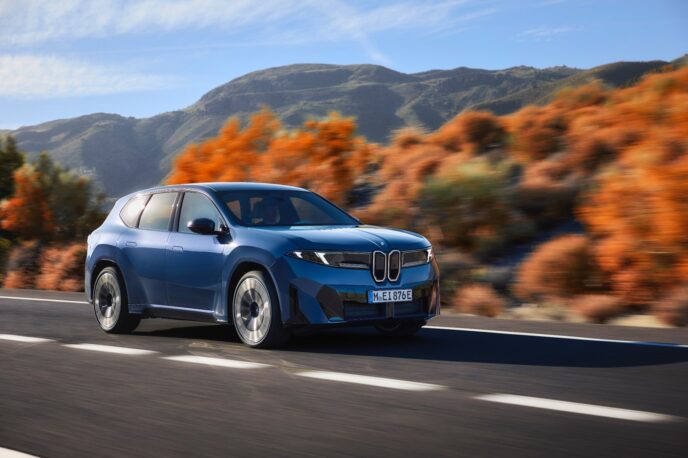
Only the BMW iX3 50 xDrive has been detailed at this point, but other options including rear-wheel drive and smaller battery options are set to follow. New Zealand deliveries are confirmed to commence from mid-2026.
Efficiency breakthrough with massive range
The combination of the 108kWh usable battery and advanced sixth-generation eDrive technology means BMW has cracked new frontiers of efficiency, with an average consumption figure of under 14kWh per 100km – bettering current efficiency leaders Tesla and Hyundai.
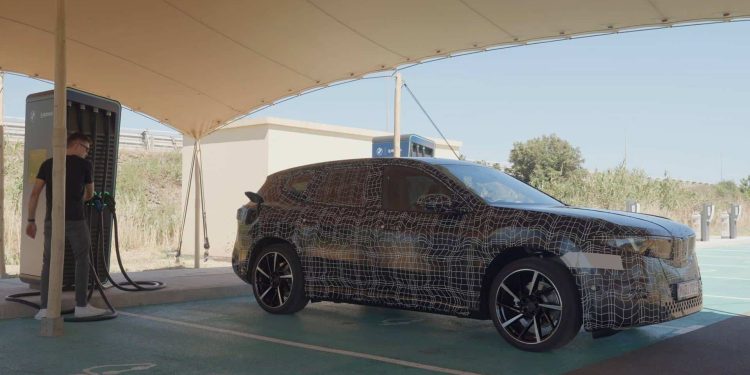
The BMW iX3 50 xDrive launch variant features 800V technology, enabling a maximum charging rate of 400kW at compatible DC rapid charging stations. This allows drivers to add more than 350 kilometres of range in just 10 minutes, while charging from 10 to 80% capacity takes 21 minutes.
The vehicle can also charge at 400V DC stations and supports up to 11kW AC charging, offering a zero to 100% charging time of 11 hours.
The dual-motor configuration produces 345kW of power and 645Nm of torque, enabling acceleration from zero to 100km/h in 4.9 seconds and a top speed of 210km/h. BMW says the new eDrive system delivers a 40% reduction in energy losses, 10% weight reduction, and 20% lower manufacturing costs compared to the previous generation.
The high-voltage battery uses new cylindrical cells with 20% higher energy density and 30% faster charging speed than fifth-generation BMW eDrive technology. Bidirectional charging functionality is planned for the New Zealand market in the form of Vehicle-to-Load (V2L) applications, with further details to be announced.
New design language and technology platform
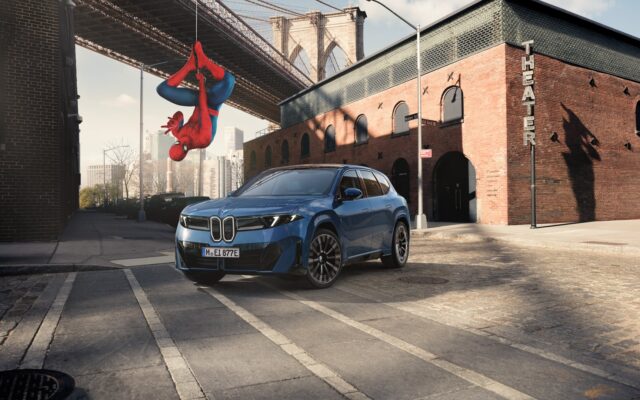
The iX3 introduces BMW’s new design language, featuring vertical kidney grilles that reference the original Neue Klasse models from the 1960s, and a drag coefficient of 0.24. The design uses what BMW calls “monolithic surfaces and a small number of precise lines” to create an eye-catching silhouette.
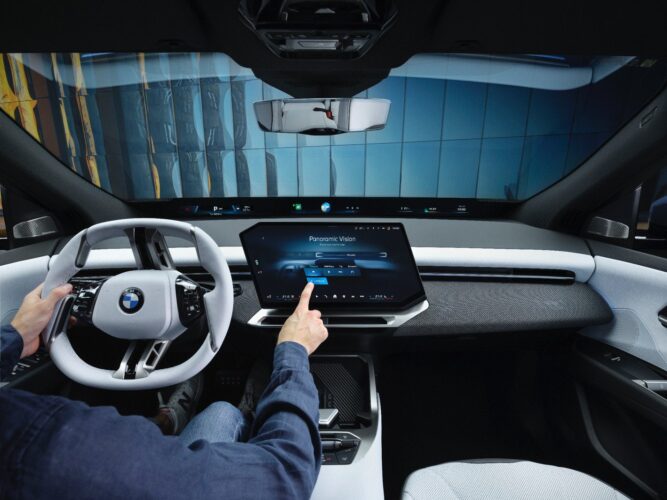
Inside, the BMW Panoramic iDrive system spans the full width of the windscreen, projecting information across 110 centimetres from A-pillar to A-pillar. A 17.9-inch central display with matrix backlight technology complements the system, angled at 17.5 degrees towards the driver.
The vehicle incorporates four high-performance computers that BMW calls “superbrains,” managing driving dynamics, automated driving, infotainment, and comfort functions with 20 times more processing power than previous systems.
One of these, the “Heart of Joy,” processes information up to 10 times faster than conventional control units and enables 98% of braking manoeuvres to be carried out using recuperation only.
The new electronics architecture divides the wiring harness divided into four zones, reducing weight by 30% compared with previous technology and enabling around 600 metres less wiring. Digital smart eFuses replace classic safety fuses and contribute to a 20% improvement in overall efficiency.
Practicality and choice
The BMW iX3 measures 4782 millimetres in length, 1895 millimetres in width, and 1635 millimetres in height, with a wheelbase of 2897 millimetres. Load capacity can be expanded from 520 litres to a maximum 1750 litres, with additional storage space of 58 litres under the bonnet.
Nine paintwork finishes will be available from launch in New Zealand, including new Polarised Grey metallic and Ocean Wave Blue metallic options. The BMW iX3 50 xDrive comes fitted as standard with 20-inch light-alloy wheels, with exclusive 20-, 21- and 22-inch options available.
Three interior design themes are offered: Contemporary with Veganza seat surfaces in three colour variants, M Sport package with black seat surfaces in Veganza/M Performtex, and BMW Individual Merino leather in Black. Standard specification includes leather-free interior appointments, two-zone automatic climate control, alarm system, telephony with wireless charging, seat heating and electrically operated seat adjustment.
Sustainability focus
BMW says the new iX3’s product carbon footprint over its full lifecycle is 34% smaller than its predecessor. Around one-third of the new BMW iX3 is made from secondary raw materials, with the product carbon footprint in the supply chain 42% smaller than the previous model.
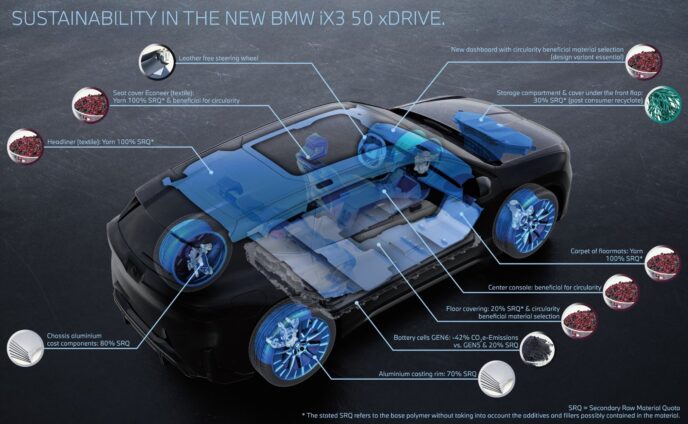
The yarn for the headlining and floor mats is made from 100% recycled materials, while thermoplastic components for the storage space under the bonnet are made from 30% recycled marine plastic. Aluminium swivel bearings and hub carriers are made from 80% secondary raw material, with wheel rims cast from aluminium with 70% secondary material content.
The new Gen6 cylindrical cells in the high-voltage battery have a 42% smaller product carbon footprint than the Gen5 battery cells in the predecessor model, thanks to increased use of electricity from renewable sources and secondary raw materials in manufacturing.
Production at BMW Group Plant Debrecen does not use fossil fuels in normal operation, with electricity needed to make the new BMW iX3 provided 100% by renewable sources.
When using energy sourced from the European electricity mix, the fully electric BMW iX3 50 xDrive will have a smaller product carbon footprint than a comparable combustion-engined model once it has covered around 21,500 kilometres. If charged exclusively using electricity from renewable sources, it only needs to cover 17,500 kilometres before reaching the same point.
We did the math for NZ, and with our 90% renewable electricity the break even is over 3000km quicker than Europe at 18,250km.
EVs and Beyond is attending the reveal event in Munich and will feature a comprehensive video review on our YouTube channel shortly.
Join the conversation