
BYD partners with Nuro on electric autonomous delivery vehicle
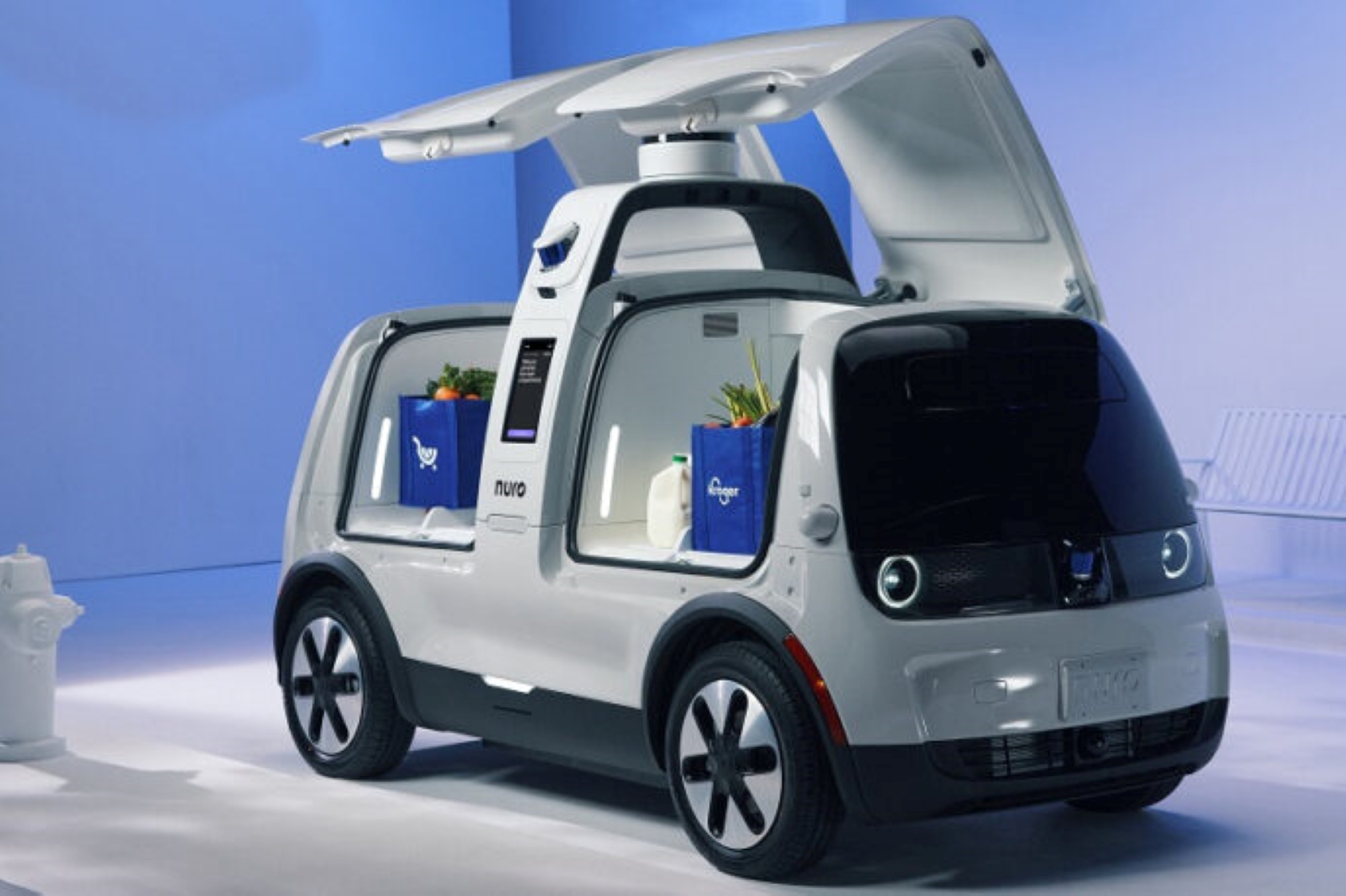

Chinese automotive manufacturer BYD is partnering with US autonomous vehicle company Nuro to begin producing its third-generation electric autonomous delivery vehicle.
It follows Nuro’s recent investor funding round which secured $600 million led by Tiger Global Management.
The automotive production grade vehicle has twice the cargo volume of Nuro’s current R2 model and will also feature modular inserts to customise storage and new temperature-controlled compartments to keep goods warm or cool.
Safety enhancements include an external airbag to further improve safety for pedestrians outside the vehicle, as well as a multi-modal sensing suite, including cameras, radars, lidar, and thermal cameras.
Nuro was founded in 2016 by Jiajun Zhu and Dave Ferguson, former principal engineers of Google’s self-driving car team.
Nuro specialises in developing zero-occupant vehicles designed specifically for transporting goods and not passengers.
The company has launched two generations of autonomous vehicles, introduced delivery service with industry leaders including Domino’s, Kroger, and 7-Eleven, and announced a multi-year partnership with FedEx.

“BYD is one of the largest OEM networks of electric vehicles in the world, and we are thrilled to partner with them to help us move one step closer to scaled commercial operations,” Nuro co-founder and chief executive Jiajun Zhu says.
“We look forward to transforming the hardware components of BYD’s globally sourced electric vehicle platform into innovative autonomous vehicles capable of operating on public roads at our new facility here in America.
“Through our partnership with BYD, we plan to produce autonomous vehicles at scale that can improve road safety, air quality, and overall access to goods.”
Nuro integrates technologies such as autonomous driving, control modules and sensors while BYD will finish assembly of the hardware platform at its Lancaster plant in the US using globally sourced components. Nuro will then complete the vehicle manufacturing process by installing and testing the autonomy systems that will make the platform capable of operation at the company’s new facilities in southern Nevada.


Join the conversation