
BYD files six more solid-state battery patents, targets 2027 trial production
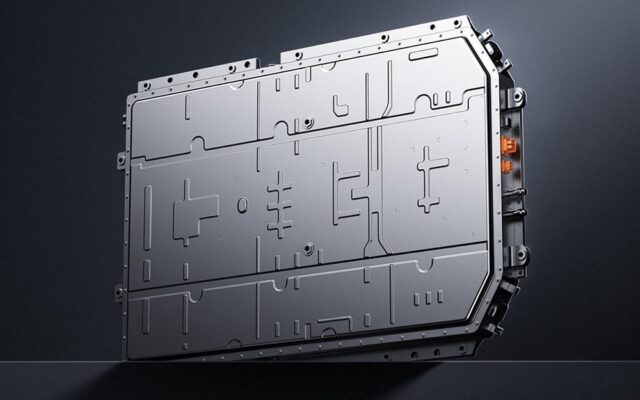
BYD files six more solid-state battery patents targeting the solid-electrolyte contact problem, with small-scale production of dual-electrolyte cells planned for 2027.

BYD has filed six further solid-state battery patents, all attacking the same fundamental problem: keeping solid electrolytes and electrodes in reliable contact as a battery charges and discharges thousands of times.
The filings, first reported by battery industry outlet libattery.net and detailed by CarNewsChina, follow a patent granted in late July covering BYD’s dual-electrolyte cathode approach, which pairs small-particle halide electrolytes with larger sulphide particles in a composite electrode.
Four of the new patents cover materials chemistry. One adds an ion-conducting interlayer between the halide and sulphide materials to prevent unwanted chemical reactions and extend cycle life. Another positions a buffer electrolyte between the cathode material and the sulphide electrolyte, with a stated aim of avoiding thermal runaway.
A third proposes a dual-layer cathode that combines monocrystal materials, which resist fracturing during charging cycles, with polycrystal materials that offer better performance under heavy charge and discharge loads. The fourth describes a tri-material cathode using lithium-treated metal oxides and sulphides to cut internal resistance.
The remaining two patents point towards manufacturing. One applies ionic liquid wetting agents in a gradient across the electrode to improve the solid-to-solid interfaces, while the other proposes a quality control metric requiring at least 60% of each cathode particle’s perimeter to be in contact with electrolyte particles.
According to libattery.net, BYD is aiming to begin small-scale production of the dual-electrolyte cells in 2027, with trial cells to be evaluated in camouflaged test mules.
Years from a showroom
Solid-state batteries promise higher energy density and faster charging than today’s lithium-ion cells, while solid electrolytes reduce the fire risk associated with liquid ones. The technology underpins claims of future EVs with 1500km or even 2000km of range.
The industry remains cautious on timing, though. CATL chairman Robin Zeng said in June that engineering and manufacturing constraints mean mass-market adoption of solid-state cells remains years away.
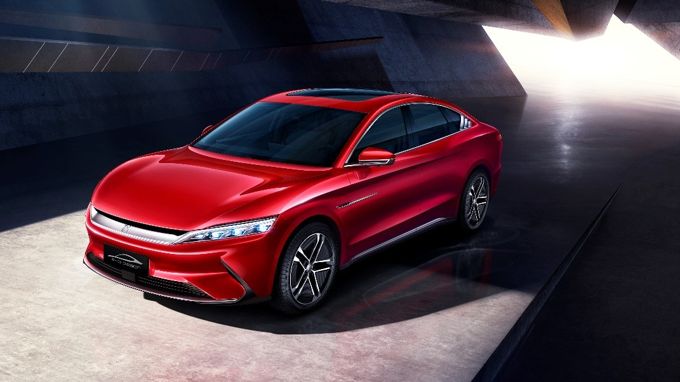
For New Zealand, where BYD has become one of the biggest sellers of electric vehicles, the practical impact is longer-term. The brand’s current line-up runs lithium iron phosphate Blade cells, and even if the 2027 trial production goes to plan, solid-state technology would take several more years to reach volume models sold here.

Join the conversation