
Clean marine and construction EVs get funding
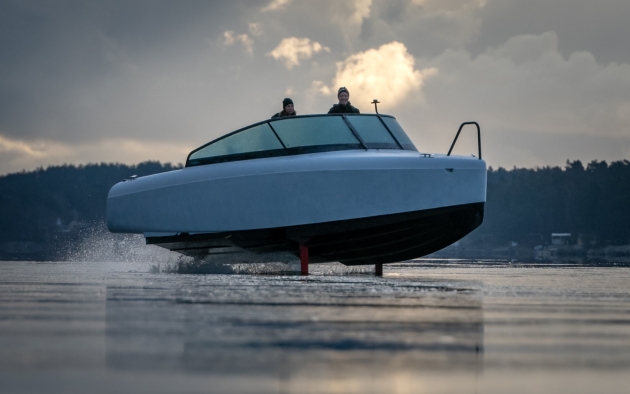
About 19 innovative transport projects, including the country’s first electric 90-tonne dump truck, a road construction crew using zero-emissions equipment, and an electric hydrofoil ferry, are among recipients of $6.4 million in Government co-funding under its Low Emission Transport Fund (LETF).
The round seven and eight funding will leverage $18.2 million in applicant investment.
“Whilst electric cars are taking off, a significant amount of fossil fuels are used in marine and off-road settings and are seen as areas that are harder to decarbonise”, says energy and resources minister Megan Woods.
“These projects will prove the potential of electrification and other low-emissions technology.
“This kind of backing de-risks projects like these so there is more and faster uptake of similar technology.”
The 19 projects from the two rounds cover the maritime sector, as well as off-road equipment and technology, the Government funding leveraging $18.2 million in applicant investment.
“Each year, the maritime and off-road sectors together use an estimated 1.6 billion litres of petrol and diesel accounting for around 13% of our total energy-related greenhouse gas emissions,” Woods explains.
“Reducing emissions in these areas is vital, not just to meet our emissions targets and tackle climate change, but we’ll also reap significant co-benefits, especially in the marine sector,” she says.
“Our oceans, lakes and rivers are taonga, so everything we do to reduce pollution on the water will let us continue to enjoy it with minimal harm.”
The LETF, administered by the Energy Efficiency and Conservation Authority (EECA), supports the demonstration and adoption of low-emission transport technology, innovation and infrastructure to accelerate decarbonisation of the New Zealand transport sector.
The fund focuses on activities in the transport sector that move people and/or goods on roads, off-road, and in the marine and aviation sectors.
Each round of the LETF will provide co-funding to a particular area of interest (unlike the previous LEVCF, in which each round welcomed the full range of applications).
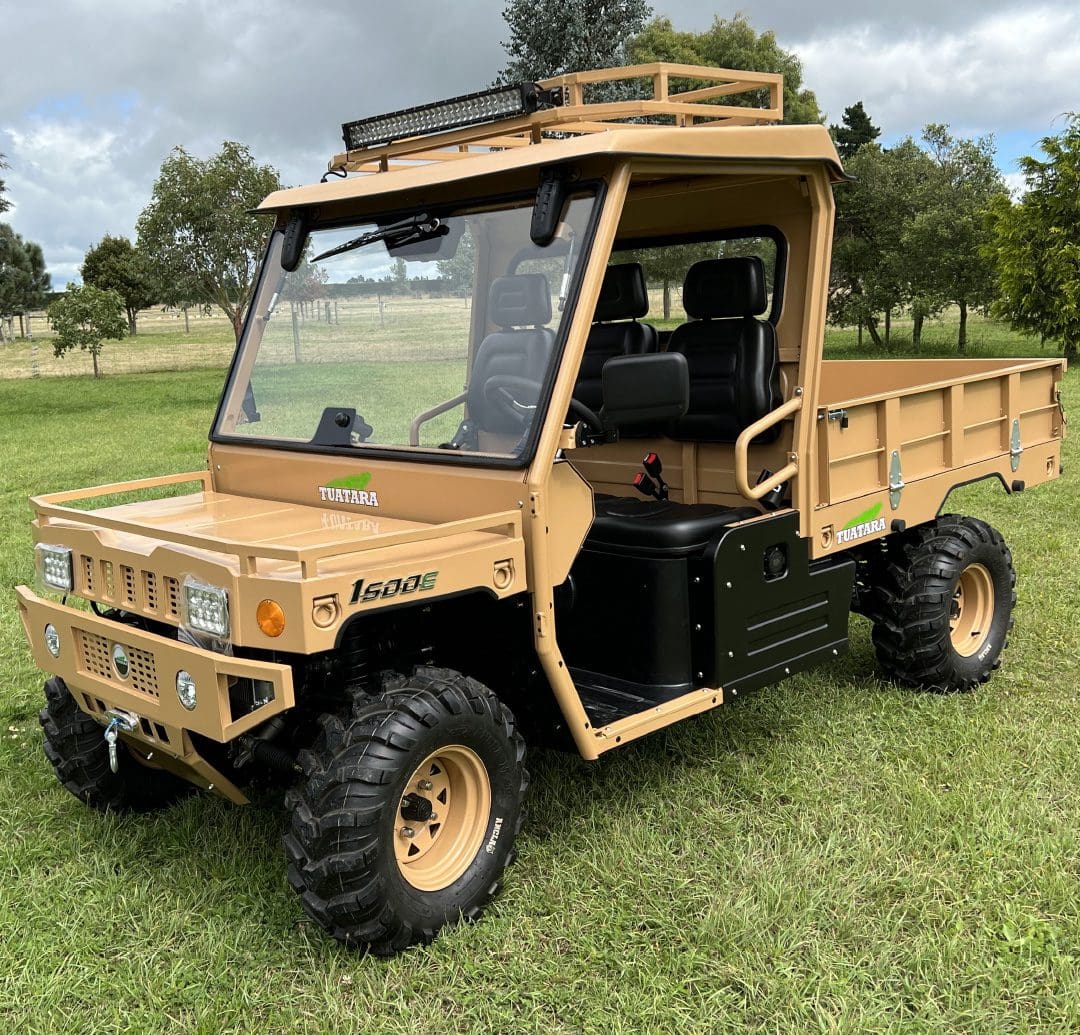
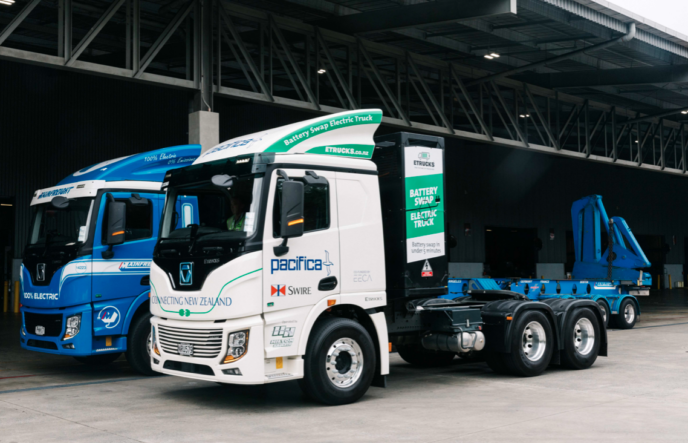
Round 7 (vehicles, technology and off-road) recipients included Firth Industries ($137,000) for trialling an electric wheel loader in manufacturing concrete, Reliance Transport ($500,000) for a reach stacker and 16-tonne fork hoists along with microgrid installation for a 350kW charger, TDX ($498,625) to demonstrate three electric wheel loaders including one pre-production Volvo 20-tonne electric wheel loader, Fletcher Concrete and Infrastructure ($499,500) for a Winstone Aggregates’ pilot of a 90-tonne electric dump truck in Belmont Quarry, Leach & Co ($104,000) to replace a diesel-powered wheel loader with an electric XC968EV 19,850kg wheel loader in Southern landfill operations, and Brian Perry Civil ($432,855) to create a zero emission construction crew to support a goal of 30% carbon reduction by 2030 – using an electric excavator, tipper and wheel loader and installing 60kW and 90kW chargers.
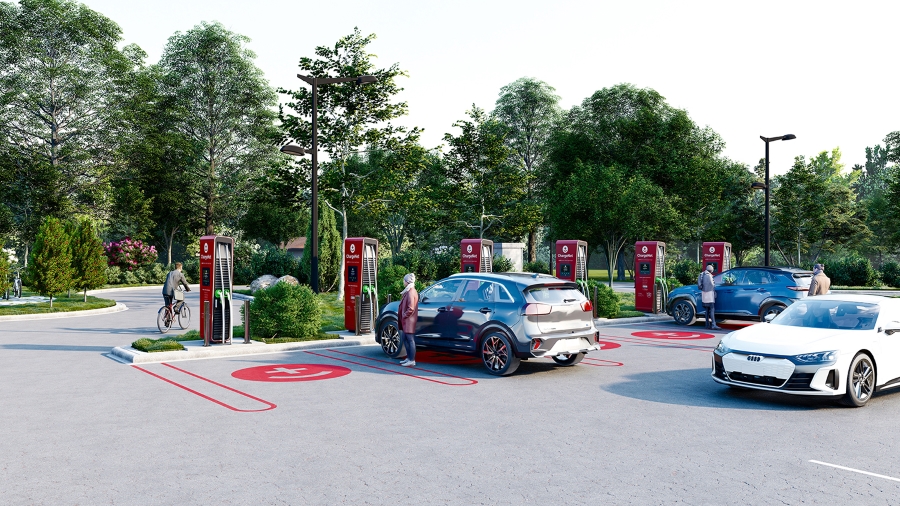
In technology sector funding, ChargeNet NZ ($500,000), OpenLoop and Z Energy are working together on a trial for roaming capability between their public EV charging networks.
Vehicle funding includes Red Phase Technologies ($500,000) trialling a grid integrated, grid supporting battery electric storage system (BESS) integrated with four ultra-fast chargers which aims to prove the potential of BESS to enable fast deployment of charging stations by minimising grid upgrades.
Another is Outback New Zealand Nomad Safaris/Info & Track/Info & Snow ($217,125) which will replace one of its diesel 25-seat coaches with an electric 25-seat coach for visitor transport to the Routeburn Trailhead in summer and Coronet Peak and The Remarkables ski fields in winter.
Fruehauf NZ ($200,000) wants to demonstrate Model Schmitz Cargobull 13.5m refrigerated electric trailer technology for the transport of food and chilled goods to NZ Transport Operators, while Isaac Construction ($285,500) plans to implement an electrified road crew, testing the viability of current battery electric technology in the construction industry.
Round 8 (maritime) recipients feature Naut ($498,000) to demonstrate a mass manufacturable 111.85kW electric outboard propulsion system on a seven-metre vessel, and Real Journeys ($240,000) for Realnz to electrify two tender craft used for an overnight boat – one co-funded by EECA and the other fully funded by Real Journeys trading as Realnz.
Others include Seachange New Zealand ($500,000) and Fullers360 to demonstrate a next-generation, zero emission electric hydrofoiling passenger vessel to transport passengers across the Hauraki Gulf, Evocean Electric Power and Propulsion ($39,850 to design and build an electric vessel for marina security and work boat use, EV Maritime ($200,508) to build an intelligence platform to harness insights from data onboard its vessels, designed to increase operational efficiency and resilience in electric ferries; CentrePort ($500,000) which is working with StraitNZ to reduce transport emissions, by enabling shore-based power to Cook Strait ferries moored at King’s Wharf in Wellington; Next Generation Boats ($300,000) to bring an electric hydrofoiling boat (Candela C-8) and use it as a technology demonstrator for NZ businesses involved in tourism and marine transport (water taxi, light ferry), and Electric Wave ($267,000) to install electric marine charging infrastructure.
Join the conversation