
Ditch cars for ‘active’ transport – report
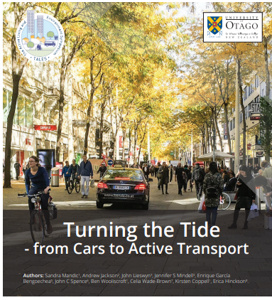 Leave the car and take a more active form of transport such as cycling, walking or “wheeling” to reduce emissions and improve health, a new report suggests.
Even electric vehicles are not seen as a complete answer in the Turning the Tide – from Cars to Active Transport report from the University of Otago.
“Electric vehicles will play an important role in reducing the carbon created by our transport system (transport contributes to 17% of New Zealand’s greenhouse gas emissions). However, this is a medium-term fix which is unlikely to have a significant impact on our carbon emissions over the next three to five years,” the report says.
“While it will become increasingly important, electric vehicles will not be a sufficient solution. Even if we managed to change 30% of New Zealand’s vehicle fleet to electric motors by 2030 (and that would be an ambitious target), that could be cancelled out by the forecast 30% increase to our population over that period. We therefore need to put in place additional changes to reduce carbon from transport.”
The 28-page report, developed by a group of leading New Zealand and international experts who work in the active transport field, considers the health and environmental benefits of walking and cycling and sets out actions to get people out of cars and living healthier lives.
It’s the outcome of The Active Living and Environment Symposium (TALES) in Dunedin in February which brought together public heath, transport, environment and sustainability experts from around the world to address the environmental impact and long-term health implications of a transport system favouring motorised transport in New Zealand.
While cars bring convenience and can provide superb access, they also come with costs such as roading infrastructure, loss of life, environmental destruction, health and more, the report says, adding that Kiwis only walk for transport less than 10 minutes daily.
The report suggests national targets double the proportion of walking trips to 25% of all trips by 2050, double the proportion of cycling trips each decade so that 15% of trips are by bicycle by 2050 and to double the proportion of trips by public transport each decade so that 15% of all trips are by public transport by 2050.
“We recognise that these targets are ambitious as this would mean reducing the percentage of car trips from 84% in 2018 to 45% by 2050,” the report says.
It recommends clear accountability to deliver against those targets, and strong governance – including setting a nationally coordinated and funded programme of education and promotion of active transport.
The report advocates a commitment to design cities for people and not for cars. “As a minimum, this means creating more areas in our towns and cities where there is a 30km/h speed limit. Ideally, we should be creating more areas in our cities and towns where there are no cars during the day.”
Meetings to discuss the report’s recommendations include Wellington on April 30, Christchurch on May 1, Auckland on May 6 and 7, and Dunedin on May 14.
Visit www.otago.ac.nz
for more information.

Join the conversation