
Driverless vehicle tech to make roundabouts safer
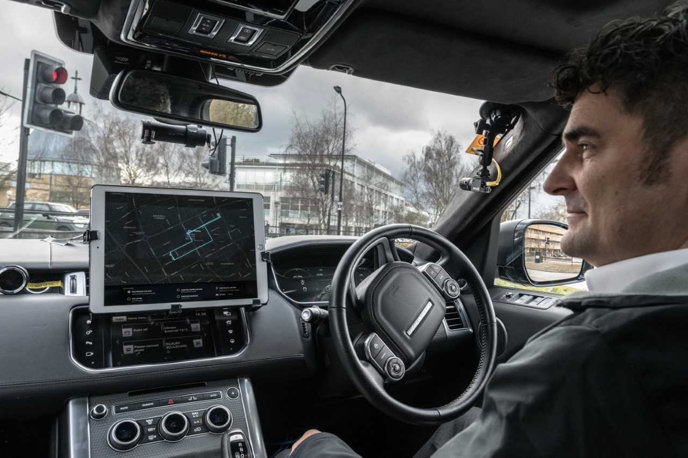
An autonomous driving research project may help reduce crashes at New Zealand roundabouts.
About 9% of all accidents involving injuries at New Zealand intersections occur at roundabouts, Ministry of Transport statistics show.
AutopleX is a multi-million-dollar project in the United Kingdom which will develop vehicles that can see around corners and through obstacles – improving the capability of self-driving vehicles.
 This will enable automated cars to communicate with all road users and obstacles where there is no direct view, effectively helping them see, so they can safely merge lanes and negotiate complex roundabouts autonomously.
Jaguar Land Rover New Zealand general manager Steve Kenchington says the technology may help prevent accidents at roundabouts here by combining connected, automated and live mapping technology to allow self-driving cars to ‘see’ and ‘talk to’ each other.
“Someone is killed or seriously injured on a roundabout almost every day in New Zealand,” he says.
“The new self-driving technology being researched will help make navigating this type of intersection a lot safer for all road users.
“The fact that this is being developed in the UK is significant as in many ways NZ has more similar driving conditions to that market as compared to the USA where self-driving technology is also being researched.”
Kenchington says there is about one roundabout for every 127 intersections in the UK but only about one for every 1118 intersections in the USA.
Jaguar Land Rover is leading the AutopleX project to enable automated cars to communicate with all road users and obstacles where there is no direct view.
The car maker is developing fully and semi-automated vehicle technologies, offering customers a choice of an engaged or automated drive, while maintaining an enjoyable and safe driving experience, Kenchington says.
The company’s vision is to make the self-driving car viable in the widest range of real-life, on and off-road driving environments and weather.
Join the conversation