
E-scooter speed restrictions for busy Auckland areas
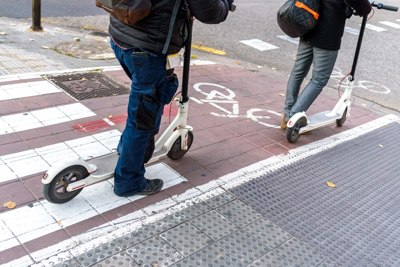
A 15km/h limit is being placed on electric scooters in specific Auckland high use areas designated “slow-speed zones”.
The limit has been encouraged by the Auckland Council and Auckland Transport (AT) in Takapuna, Devonport, Ponsonby Road and nearby Jervois Road (College Hill to Curran Street), Karangahape Road, Auckland’s CBD and waterfront, Parnell, Newmarket, Mission Bay, Kohimarama, St Heliers and Auckland City Hospital in Grafton.
These areas will be “geo-fenced” so that technology automatically slows an e-scooter when its GPS determines it’s in one of the speed restricted areas.
Both the council and AT cannot impose the speed restrictions but encourage operators to do so – each operator proposing geo-fencing in their applications.
Meanwhile, the council says another e-scooter operator, Flamingo, will join Lime and Wave in an Auckland trial ending October 31.
A maximum 1875 scooters are licenced to operate across three tiers during the trial – 175 more scooters than in the original trial, with the extra scooters assigned to the tier three (outer suburbs) area where riders can link with public transport.
An updated code of practice for e-scooters encourages operators to introduce slow-speed zones via geofencing., something Lime has already done, and includes stricter conditions around safety and risk management, incident reporting and investigation, maintenance, and quicker removal of improperly parked scooters.
Safety measures are a key priority in the second Auckland trial to October, the speed restrictions expected to improve safety and reduce the accident risk to e-scooter riders and others sharing pathways with them.
The trial is led by Auckland Council licensing and regulatory compliance general manager Craig Hobbs who is impressed with the way the programme has progressed since e-scooters were first suggested for Auckland’s streets.
“This time last year, we had barely heard of e-scooter ride-share schemes, let alone anticipated having fleets of e-scooters on our streets and footpaths. Since mid-October 2018 we have learned a huge amount about how these businesses work, public uptake and perception of e-scooters and how our own licensing framework supports micro-mobility ride-share initiatives like this.”
AT chief executive Shane Ellison says micro-mobility modes of transport are becoming increasingly popular.
“Ride-share scooters encourage people to connect with public transport and offer an alternative to cars for short trips.
“We are also seeing more and more privately-owned e-scooters across the city – which confirms that Aucklanders are embracing scooters as a transport mode and that we need to factor this into the transport equation in our region.”
He says AT and the council will continue to work with operators to incentivise safe rider behaviour.
“While we have little influence right now on the rules for where e-scooters can be ridden, how fast they can go and wearing of helmets, we have done as much as we can to promote public safety.
“We are also continuing our advocacy to central government for a national regulatory framework for e-scooters.”
Rules for using e-scooters are set by the NZ Transport Agency under national road user rules. E-scooters can be ridden on the footpath or on the road and on separated cycleways (but not on painted, unprotected cycle lanes that are part of the road). There are no regulations requiring helmet wearing while riding e-scooters, although helmet wearing is recommended by the NZTA.

Join the conversation