
E-scooters no longer ‘boys’ toys’
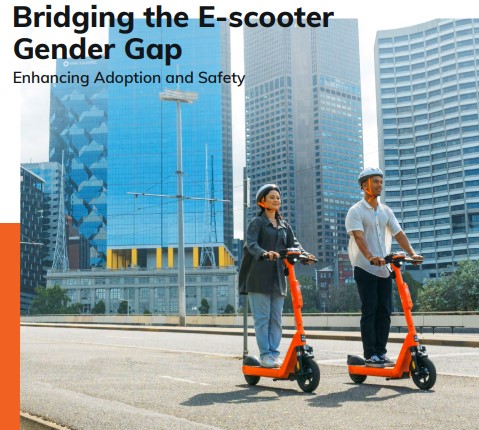
Electric scooters are now widely adopted as a mainstream transport option and no longer considered niche “boys’ toys”, says Neuron Mobility in a study Bridging the E-scooter Gender Gap: Enhancing Adoption and Safety from more than 10,000 Neuron riders.
Research found that 51% of New Zealand riders are using e-scooters to commute to work and study – higher than any other country. Globally, only one third (33%) of trips are for commuting.
New Zealand’s rider gender gap is slightly larger than the global average with 37% female (compared with 40% globally), 60% male (59% globally) and 3% other (or prefer not to say) compared to 1% “other” globally.
Young Kiwi riders (18-34 years) now account for 70% of all female riders versus 51% of males – the highest percentage of younger female riders across all other countries globally, says Neuron.
Other key drivers and factors affecting adoption are city infrastructure, including providing protected lanes, running 24-hour services, the unequal distribution of domestic tasks between males and females, and the suitability of women’s clothing and footwear.
The report suggests how cities and micromobility operators can make e-scooter programmes safer and more inclusive to all.
It highlights how significant advancements in e-scooter design, construction, and regulation in recent years have transformed e-scooters from being regarded as niche “boys’ toys” into a mainstream transport option.
However, the report also reveals that globally there remains a gender gap in e-scooter ridership.
The most prevalent age range for all riders globally is between 25 and 34-years-old.
There are very few riders over the age of 65, and of these older users males (3%) were three times as likely than females (1%) to ride.
Various factors have contributed to the gender gap including the stark differences in risk tolerance, with female riders prioritising safety to a greater extent, as opposed to males who are far more interested in the speed and handling of the e-scooters.
Early adoption of private e-scooters was predominantly led by younger men, and this accelerated their uptake of rental e-scooters which are now seen in many cities in New Zealand.
Neuron’s global focus group identified that 73% of riders called for cities to provide more protected lanes, stating they would significantly increase ridership.
Workers in the hospitality and healthcare sectors claim to use e-scooters during off-peak times when public transport may be less frequent and taxis and rideshare services more expensive.
Riders who travel at night were found to be very reliant on e-scooters, while women also indicated that e-scooters were potentially safer when travelling alone at night, improving their sense of personal security compared to walking or public transport.
This suggests operating 24-hour services to support the night time economy, shift workers and personal security at night would also increase e-scooter adoption – recognised by cities in New Zealand including Dunedin which changed to 24-hour services in March 2022 and Palmerston North which did so in July 2023.
Many women note that e-scooters are less suitable for tasks involving caring for young family members and for weekly supermarket shopping.
Some women also say their clothing choices, such as high-heel shoes, could make e-scooters impractical for certain trips with other forms of transportation more likely to be chosen in those cases.
“Although there is still a gender gap in terms of riders, it’s clear more New Zealand women than ever before are seeing e-scooters as a great way to travel,” says Neuron Australia and New Zealand head Jayden Bryant.
“The research will help us as well as policymakers, urban planners and city transport teams create more inclusive and safer e-scooter programmes for all.”


Join the conversation