
Europe EV demand slows, prompting changes
European demand for battery electric vehicles (BEVs) slowed in the first half of this year.
So says JATO Dynamics, adding there are “worrying signs of deceleration across the previous drivers of growth” and that it’s “vital” industry does all it can to dispel EV market uncertainty during the next six months.
“Europe’s growth is becoming more moderate – still far from levels seen pre-pandemic due to a more complex operating environment, including emissions regulations, increasing prices of vehicles, and barriers facing the adoption of electric cars,” says JATO Dynamics global analyst Felipe Munoz.
“Since the semi-conductor shortage, electric vehicles (EVs) have been the main driver of growth. It’s therefore vital that over the next six months, the industry does all it can to dispel uncertainty surrounding the EV market, including how EU tariffs on imported electric cars from China will impact the affordability of these vehicles.”
European EV demand also fell in May, says JATO Dynamics.
Its data for 28 European countries shows new passenger car registrations increased by just 4.4% between January and June 2024, compared to the same period last year, with volume increasing from 6,559,213 units in H1 2023, to 6,847,842 units in H1 2024.
During the first half of 2024, registrations of electric cars from Chinese brands totalled 70,000 units – a 26% increase compared to H1 2023.
“Similarly, their market share for BEVs also jumped from 5.97% to 7.37% over the same period,” says Munoz.
“Among all car groups, this was the third largest increase of market share, only outperformed by Volvo-Polestar (+2.9 points) and BMW Group (+2.2 points).”
JATO Dynamics says that during H1 2024 total registrations increased more than the volume of BEVs, that SUVs, compact cars, vans, and sports cars were growth drivers while Tesla and Ford recorded the only volume drops over the period.
“Measures taken by the European Union to impose tariffs on BEV imports from China, target models that accounted for 17% of BEV registrations in Europe during H1 2024, excluding potential units imported by Tesla,” says Munoz.
The Volvo EX30, made in China, was the third most registered electric passenger car in Europe during H1 2024. The fourth most popular was the MG4 – also made in China.
Geely Group – the owner of Volvo, Polestar and Lotus – increased its BEV registrations by 52%, compared to H1 2023, outselling Hyundai-Kia, Mercedes, and Renault Group.
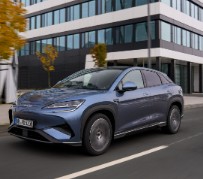
BYD registered 17,000 electric cars – 14,000 more compared to H1 2023 -allowing it to outsell Nissan, Smart, Toyota, Polestar, Citroen, Dacia, Ford, Mini, Porsche, and Mazda. As a result, BYD is now Europe’s 16th best-selling BEV brand – the second Chinese brand following MG, which held eighth place in the BEV ranking.
Xpeng registered 2214 electric cars compared to 51 in H1 2023; Great Wall Motors doubled its volume to 2123 units; ZEEKR secured 821 units compared to 0 in H1 2023; Hongqi increased its units to 366 units marking a 266% uplift; while Voyah secured 225 units, compared to eight units in H1 2022.
“It’s clear that China has significantly helped to drive growth in the market,” says Munoz. “Without these competitive prices coming from China, consumers will face higher prices, meaning we could see demand fall over the next few months.”
In H1 2024, the European BEV market was led by Volkswagen Group with 178,000 units. However, its volume was 14% lower than H1 2023, following a 24% drop posted by the Volkswagen brand, and a 55% drop by Porsche, says JATO Dynamics.
“While the Volkswagen ID.3 and ID.4 have been receiving updates, both are relatively old at nearly five and four years old, respectively, meaning it has been difficult for the German OEM to gain attention among new potential customers.
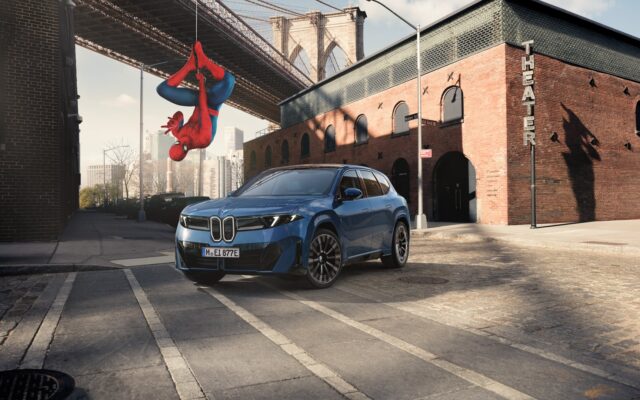
“In contrast, BMW Group and Chinese OEMs gained significant traction during the first half of 2024. BMW Group secured almost 10% share within the BEV market, up from 7.5% in H1 2023. This comes thanks to strong results of its BMW iX1; i4; the introduction of the i5 (the top-selling electric large car); iX2; and the Mini Countryman.
“BMW as a brand, registered more electric cars during H1 2024 than the Volkswagen brand.”
Munoz says: “Sharp domestic competition is the driving force behind the extraordinary level of progress observed in China. However, the associated impacts of market saturation, oversupply, and a price war mean that for many, overseas expansion will be critical to fulfilling growth ambitions.”
The Tesla Model Y and Model 3 continue to lead the European BEV ranking, but the former is no longer the region’s most popular model in the overall ranking – falling to eighth position and posting the deepest drop from the first to the 73rd position in the overall ranking, says Munoz, adding 2024’s facelifted Model 3 is doing well, with a 37% increase. “However, its growth may be impacted due to European consumers not favouring sedans.”
Meanwhile, Ford will delay going all-electric in Europe by 2030.
Wavering customer adoption of EVs – fuelled by high battery costs and the removal of government incentives – is the main reason for Ford’s renewed focus on hybrid powertrains.
Irrespective of its plans to continue offering internal combustion engine (ICE) models in some form after 2030, Ford will only be able to sell electric cars in the United Kingdom from then, given the new Labour government’s plan to reinstate the 2030 ban on new ICE car sales, according to some reports.
Ford recently revealed the new Capri as its third electric passenger car for Europe, following the Mustang Mach-E and Explorer, and will introduce electric versions of the Puma and Tourneo Courier next year.
Join the conversation