
EV battery gains ease range concerns
Electric vehicle battery capacity and driving range have increased sharply over the past 15 years, helping address one of the key barriers to EV adoption as fuel prices continue to climb.
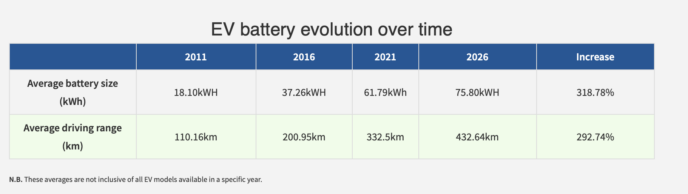
Analysis by Compare the Market shows average EV battery sizes have grown 319% since 2011, while average driving range has increased 293% over the same period.
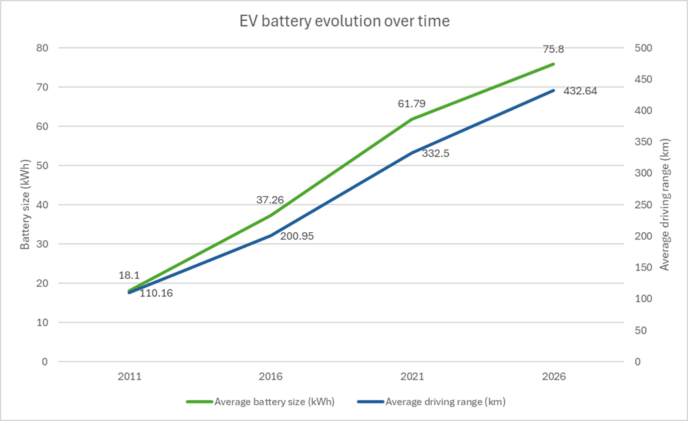
Fifteen years ago, EVs were limited to a small number of compact models, with an average battery size of 18.1kWh and an average range of 110.16km.
By 2026, the study found average battery capacity has risen to 75.8kWh, with average driving range reaching 432.64km, reflecting significant advances in technology and broader model availability across different vehicle segments.
The analysis suggests improvements in range are helping to reduce “range anxiety”, a key concern for buyers considering a switch from petrol or diesel vehicles.
While larger batteries can increase the cost of charging, the increased range means drivers need to recharge less frequently, helping offset overall running costs.
Compare the Market head of energy Meredith O’Brien says evolving electricity pricing structures are also helping reduce charging costs for EV owners.
“Some plans offer lower rates at night while you recharge your EV at home. Time-of-use tariffs charge more for electricity at peak times, but less at lower electricity demand times like the middle of the night or during the middle of the day, when wholesale costs are very low or negligible as renewable energy, such as solar, is being fed back into the grid. EV electricity plans often have an even lower off-peak charge rate often referred to as ‘super off-peak’,” she says.
“Paying attention to the time-of-use tariffs and the times they kick in can help you reduce charging costs when recharging at home. These plans offer good value for EV owners who recharge at off-peak or super off-peak times, but it’s still important to compare energy plans to ensure you’re getting the best overall deal and not missing out on potential savings.”
The report also highlights a growing range of EV body styles now available, from small city cars through to SUVs and commercial vehicles, giving buyers more choice than in the early years of the technology.
It suggests drivers can further reduce charging costs by aligning charging times with lower electricity tariffs, using smart chargers, or taking advantage of solar generation where available.
The analysis is based on data from the Electric Vehicles Database, comparing battery capacity and driving range across vehicles available in 2011, 2016, 2021 and 2026.



Join the conversation